Signs Your Foundation Needs Immediate Repair

One day your windows start sticking a little more than usual. A few weeks later, you notice a hairline crack zigzagging up the living room wall. Maybe a door no longer latches without a hard shove, or the floor feels slightly uneven when you walk across it. None of these seem like emergencies on their own, so it is easy to shrug them off as quirks of an older North Texas home. But in the Dallas area, where soil shifts dramatically with heat, drought, and sudden storms, these “small” changes are often early signs that your foundation is under serious stress.

Knowing when those signs cross the line from cosmetic annoyance to structural warning is critical. Foundation problems rarely fix themselves; they grow, and they often grow quietly. By the time the symptoms are obvious, repairs can be more invasive and more expensive. Homeowners throughout Dallas, Richardson, Plano, Garland, and surrounding communities regularly discover that what they thought was a simple drywall issue was actually a symptom of a sinking or heaving foundation. Understanding what to look for – and when to call a professional like Dalrock Foundation Repair – can be the difference between a manageable repair and a full-blown structural crisis.

Immediate foundation repair is not just about protecting the value of your home. It is also about protecting safety and peace of mind. When the base of your house moves, everything built on top of it is affected: plumbing, framing, roofing, even brick exteriors. If you recognize the signs early and act quickly, you can stabilize your home before the damage spreads. The key is learning to read what your house is trying to tell you.

Cracks That Mean Trouble

Almost every house in Dallas will develop some cracks over time, especially in drywall and at the corners of doors and windows. Not every crack is a reason to panic. However, certain types of cracks are classic signs that your foundation needs immediate attention. The most concerning are wide, expanding cracks, typically wider than 1/8 inch, that appear suddenly or continue to grow. If you can slide a coin into a crack, or if you notice it lengthening or widening over a few weeks, that is a strong indicator of active movement beneath your home.

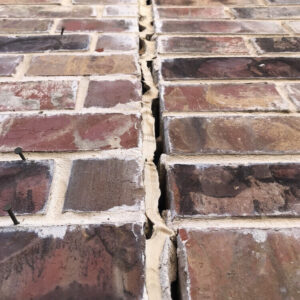
Look closely at the pattern and location of the cracks. Stair-step cracks running through brick or masonry on the outside of your house are particularly worrisome. These usually follow the mortar lines in a zigzag pattern and often show up near corners, above garage doors, or around windows. Such cracks usually indicate that one part of the foundation is settling or sinking differently than the rest, creating stress that transfers to the brick façade. Vertical cracks that are noticeably wider at the top or bottom can also signal differential settlement that should be evaluated immediately.

Inside the home, diagonal cracks that radiate from the corners of doors and windows are more telling than small hairline vertical cracks in the middle of a wall. When these diagonal cracks pair with other symptoms, such as doors sticking or gaps forming between trim and walls, it is time to take them seriously. Homeowners in Dallas often see these after long dry spells, when the expansive clay soils contract and pull away from the foundation, allowing it to drop or tilt.

Another red flag is a crack that reappears after you have patched and painted it. If you have repaired the same crack more than once and it keeps coming back, that is your home signaling active foundation movement. Cosmetic repairs can hide the problem for a short time, but they cannot stop a shifting slab or pier-and-beam system. When cracks are persistent, growing, or appearing in multiple areas at once, it is time to call a foundation specialist like Dalrock Foundation Repair for a thorough assessment.

Doors, Windows, And Gaps

A house that once operated smoothly but suddenly feels “out of square” is often experiencing foundation movement. Doors and windows are among the first components to show distress because they are framed precisely and do not tolerate much shifting. If you find yourself repeatedly planing down a sticky door or slamming it shut to get the latch to catch, you may be dealing with more than just humidity or worn hardware. When the foundation moves, the door frame can rack out of alignment, causing sticking, rubbing, or visible gaps.

Pay attention to doors that used to work but now drag on the floor, scrape the jamb, or no longer line up with the strike plate. Interior doors that suddenly swing open or closed on their own, instead of staying where you leave them, can also indicate that the frame is no longer plumb. In many Dallas homes, homeowners first notice an issue when bedroom or bathroom doors will not latch without force, or when closet doors start rubbing at the top or bottom. These changes, especially when combined with wall cracks, should not be ignored.

Windows tell a similar story. Windows that are difficult to open or close, where you have to push hard or wiggle them to move the sash, can be reacting to a shifting wall. Gaps between the window frame and the surrounding drywall or trim are another warning sign. If you can see daylight where you did not before, or if caulk lines are splitting and pulling apart, the wall is moving relative to the frame. This is common in areas like Dallas where soil moisture fluctuates widely between seasons, causing the foundation to move up and down.

Another visual cue is the presence of gaps where there should be tight joints: between baseboards and floors, between crown molding and ceilings, or where cabinets meet walls. When the foundation drops or lifts unevenly, the rigid finishes in your home can separate, leaving shadow lines and cracks. These gaps are not just cosmetic problems; they are the house flexing around a moving base. If you notice several of these issues at once, especially in one section of the home, it often points to foundation trouble that calls for immediate professional evaluation.

Uneven Floors And Sloping Rooms

Floors should feel solid and relatively level underfoot. When you start to sense a slope, dip, or bounce, it can be a sign that your foundation is no longer supporting the structure evenly. In slab-on-grade homes common throughout Dallas, uneven floors often mean that one portion of the slab is settling. You might notice that furniture no longer sits level, marbles roll on their own, or chairs tend to drift toward one side of the room. These subtle shifts can be early indicators that the foundation is moving.

In pier-and-beam homes, which are also found in older Dallas neighborhoods, sagging or bouncy floors can signal issues with the beams, joists, or piers supporting the structure. If the soil beneath the piers shifts or moisture causes wood components to deteriorate, sections of the floor can drop or flex. Homeowners often describe feeling a “soft spot” or noticing that floor tiles crack more easily in certain areas. While some movement can occur over decades, rapid or noticeable changes in floor level should be taken seriously.

One practical way to check for floor issues is to use a simple ball or level in different rooms. If the ball consistently rolls in the same direction, or if a level shows a clear slope across the room, this can confirm what your feet are already telling you. However, precise measurements and interpretation are best left to professionals. Dalrock Foundation Repair, for example, uses specialized tools to measure elevation changes across your home and determine where the foundation is settling or heaving.

Ignoring uneven floors can lead to more than annoyance. As the foundation continues to move, the stress on framing, plumbing, and finishes increases. Cracked tiles, separated hardwood planks, and broken grout lines are common follow-up issues. In severe cases, cabinets can pull away from walls, countertops can crack, and interior doors may go out of alignment. When you see these patterns forming together, it is a strong sign that immediate foundation repair should be considered before the damage spreads further.

Exterior Red Flags Around The Home

Many of the most telling signs of foundation distress are visible outside the house. Start by walking slowly around your home and examining the exterior walls, especially the brick or stone veneer. Stair-step cracks in brickwork, bulging sections of wall, or bricks that appear to be pulling away from window or door frames are serious warning signs. In Dallas, where the clay soil can expand dramatically after heavy rain and shrink during drought, these stresses commonly show up on the outside of the structure first.

Next, look at the gaps and separations around exterior elements. Gaps between bricks and window frames, doors, or garage openings indicate that parts of the structure are moving independently. If you can see caulking that has stretched, torn, or pulled away, or if trim boards are no longer tight against the siding, this often reflects underlying foundation movement. These are not merely cosmetic; they show that the building envelope is being distorted as the base shifts.

Check the alignment of your roofline and fascia as well. A sagging roofline, wavy fascia boards, or uneven eaves can sometimes be traced back to foundation movement affecting the load-bearing walls and framing. In some cases, you might even see a slight tilt when you view the house from a distance. While roofing problems can have multiple causes, when they appear alongside wall cracks and door issues, they strengthen the case for foundation trouble that needs urgent attention.

The condition of your driveway, sidewalks, and patios can also offer clues. While concrete flatwork often cracks in North Texas, pay attention to large, offset cracks where one side of the slab sits higher than the other, or where sections are noticeably sinking toward the foundation. These patterns can indicate soil movement around the home that may be affecting the foundation as well. If you see these issues combined with changes to your home’s structure, it is wise to bring in a specialist like Dalrock Foundation Repair to evaluate the overall picture.

Plumbing, Moisture, And Soil Movement

Foundation movement and plumbing problems often go hand in hand, especially in slab-on-grade homes common in Dallas, TX. When a foundation shifts, it can put pressure on the plumbing lines running beneath or through the slab. This can lead to leaks, broken pipes, or sewer line issues. Conversely, an undetected plumbing leak can saturate the soil under the foundation, causing it to soften and settle, which then leads to foundation movement. If you notice a sudden increase in your water bill, unexplained damp spots in the yard, or the sound of running water when fixtures are off, hidden leaks could be contributing to foundation problems.

Inside the home, moisture-related signs can also point to foundation issues. Persistent musty odors, areas of damp carpet, or warping wood floors may indicate that water is finding its way into places it should not be. In some cases, small gaps created by foundation movement allow water intrusion during heavy Dallas thunderstorms, which then leads to localized moisture problems. While water entry can have multiple causes, it is important to determine whether foundation movement is part of the underlying issue.

Soil conditions around your home are another major factor. The expansive clay soils in North Texas are notorious for shrinking when dry and swelling when wet. If your home’s drainage is poor, and water ponds near the foundation after rain, the soil can repeatedly swell and contract, stressing the slab or piers. Over time, this cycle can produce many of the signs discussed above: cracks, uneven floors, and sticking doors. Observing how water drains away from your home and whether the soil pulls away from the foundation during drought can offer important clues about the forces acting on your foundation.

Because the relationship between foundation movement, plumbing, and soil is complex, homeowners should avoid guessing. Professional foundation repair companies in Dallas, such as Dalrock Foundation Repair, can coordinate with plumbing specialists to perform leak detection and evaluate whether foundation stabilization is needed. Addressing both the structural and moisture components together is often the most effective way to protect your home long-term.

When To Call Dalrock Immediately

Not every minor crack or sticky window means your foundation is failing, but certain combinations and severities of symptoms should prompt immediate action. If you notice large or rapidly growing cracks, doors and windows that suddenly stop functioning properly, obvious sloping floors, or multiple issues appearing in the same area of the house, do not wait to see if things “settle down.” In the Dallas climate, soil movement tends to continue with each new season, and early intervention is almost always less invasive than waiting until the damage is severe.

You should also call promptly if your home shows signs of both structural movement and potential plumbing issues, such as foundation cracks paired with unexplained moisture, high water bills, or damp spots in the yard. This combination can accelerate foundation damage because water further destabilizes the soil beneath your home. A professional inspection can help you understand what is happening below the surface and what steps are needed to stop further movement.

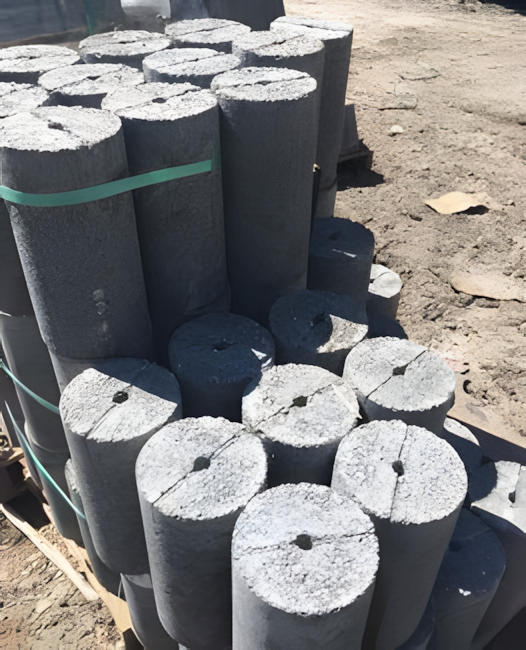
Dalrock Foundation Repair has extensive experience with the unique soil and climate conditions in Dallas, TX and surrounding cities. Their team understands how to interpret the patterns of cracks, elevation changes, and other symptoms specific to North Texas homes. By using proven methods and detailed evaluations, they can recommend targeted solutions rather than one-size-fits-all fixes. Whether your home needs pier installation, slab stabilization, or other corrective measures, acting quickly helps keep the scope of work – and the disruption to your life – as manageable as possible.

Scheduling an inspection does not commit you to immediate repair, but it does give you clear information about your home’s condition. If the foundation is stable, you gain peace of mind. If there is a problem, you can plan and budget for repairs with a realistic understanding of urgency. Ignoring the signs, on the other hand, allows small problems to become large ones. In a region like Dallas, where foundation issues are common, being proactive is one of the smartest moves a homeowner can make.

Frequently Asked Questions

How do I know if a crack is serious enough to call a foundation repair company? Hairline cracks that are thin, stable, and do not change over time are often cosmetic. Cracks become concerning when they are wider than about 1/8 inch, show a stair-step pattern in brick, are wider at one end than the other, or continue to grow. If you can slide a coin into the crack, or if you notice new cracks forming in several areas at once, it is wise to schedule a professional evaluation. In Dallas, TX, where soil movement is common, Dalrock Foundation Repair can inspect these cracks, measure foundation elevations, and determine whether the issue is structural.

Can I wait and see if the foundation problem gets worse before repairing it? Waiting is tempting, especially if the signs seem minor, but foundation issues rarely improve on their own. The expansive clay soils in North Texas expand and contract with the seasons, which can cause ongoing movement. The longer you wait, the more likely it is that doors, windows, floors, and finishes will suffer additional damage. Early repairs usually require fewer piers or less invasive measures, while delayed action can lead to more extensive – and more expensive – work. If you suspect a problem, an inspection now can help you avoid larger issues later.

Are all sticking doors and windows caused by foundation problems? Not always. Humidity, paint buildup, and normal settling can cause minor sticking, especially in older homes. However, when sticking doors and windows are accompanied by other signs such as wall cracks, gaps around frames, or sloping floors, foundation movement becomes a much more likely culprit. The key is to look at the overall pattern, not just one symptom. A trained technician from Dalrock Foundation Repair can distinguish between routine wear-and-tear and structural movement by examining multiple areas of your home together.

How does Dalrock Foundation Repair determine what type of repair my home needs? During an inspection, a foundation specialist will typically walk the interior and exterior of your home, document visible signs of movement, and take elevation readings to map how the foundation has shifted. They will also ask about the history of the home, recent changes you have noticed, and any plumbing or drainage issues. Using this information, they can identify which parts of the foundation are settling or heaving and recommend specific solutions, such as installing piers under certain sections or improving drainage. The goal is to address the underlying causes rather than simply covering up symptoms, which is why a detailed evaluation is essential.

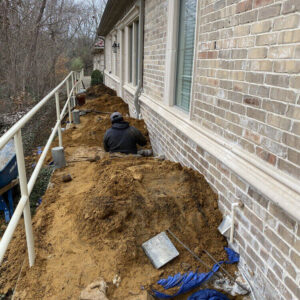
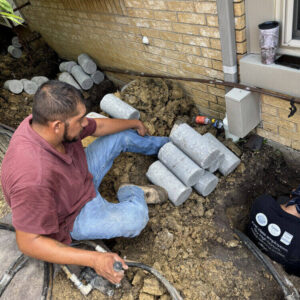
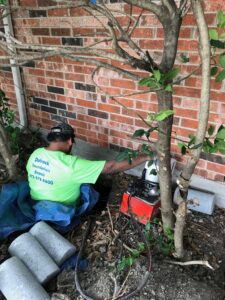
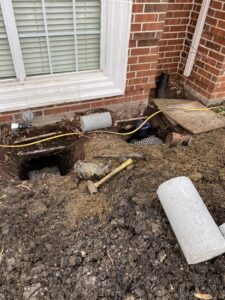
Will repairing my foundation damage my landscaping or yard? Any structural repair will involve some level of disruption, but reputable companies work to minimize the impact. In many cases, foundation piers are installed through small excavations around the perimeter of the home, and landscaping can often be restored afterward. Dalrock Foundation Repair understands that homeowners in Dallas value their yards and curb appeal, so they plan repairs with restoration in mind. After the work is complete, proper backfilling and cleanup help your property recover, while the stabilized foundation protects your home for the long term. If you are considering Foundation Repair, ask in advance how access will be handled and what to expect for your specific property.

Call
Contact
Search Website
Contact
Call
Text
Email