Foundation Repair in Plano, TX

Concrete Pier Foundation Repair: Pros and Cons

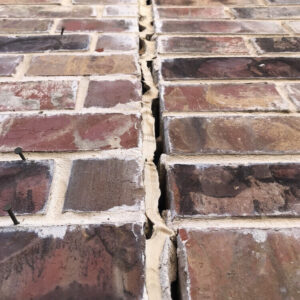
Cracks in drywall, doors sticking, and floors starting to slope are not just cosmetic annoyances; in North Texas, they are often the first warning signs that a foundation is moving. When homeowners in Dallas start researching solutions, concrete pier foundation repair usually appears as one of the leading options. Understanding the pros and cons of concrete piers has become especially important right now because soil movement in our region is intensifying with more extreme swings between drought and heavy rain. Choosing the wrong repair method can mean spending thousands of dollars and still facing foundation issues again a few years down the road.

Concrete piers are often viewed as a traditional, reliable way to support a settling foundation. Yet they are not automatically the best fit for every home or every soil condition. Some properties in Dallas, TX, benefit greatly from concrete piers installed by an experienced contractor like Dalrock Foundation Repair, while others may be better served by alternative systems. The key is not simply knowing that concrete piers exist, but understanding how they work, what they do well, and where their limitations lie.

Because foundation repair is such a major investment, homeowners need more than a quick sales pitch or a generic comparison chart. You deserve a clear, plain-language explanation that weighs the advantages and tradeoffs of concrete piers in the real-world conditions we see in Dallas and the surrounding North Texas communities. The following guide breaks down how concrete pier foundation repair works, where it shines, where it falls short, and how to decide whether it is the right solution for your home.

What Concrete Piers Actually Are

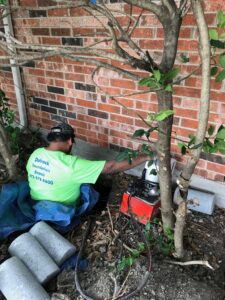
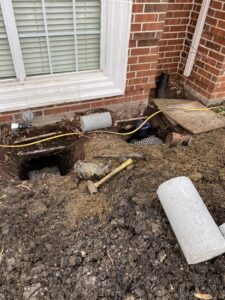
Concrete piers are vertical columns of concrete installed beneath your home’s foundation to transfer the weight of the structure to deeper, more stable soil. In the typical repair scenario, sections of the perimeter foundation are exposed by digging, and then cylindrical piers are created either by pouring concrete into drilled holes or by pressing pre-formed concrete segments into the ground. The goal is to bypass the shallow, highly active clay soils that dominate the Dallas area and rest the foundation on more reliable strata below.

In North Texas, concrete pier systems are most often used for slab-on-grade homes that are experiencing settlement, but they can also be used for some pier-and-beam structures. Dalrock Foundation Repair evaluates the layout of the home, the depth of stable soil, and the severity of the movement before recommending a concrete pier configuration. Spacing, pier diameter, and depth all matter; a poorly designed layout can leave parts of the foundation under-supported, even if the piers themselves are strong.

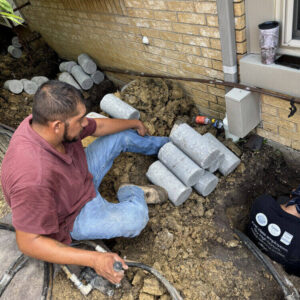
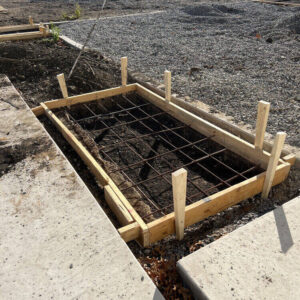
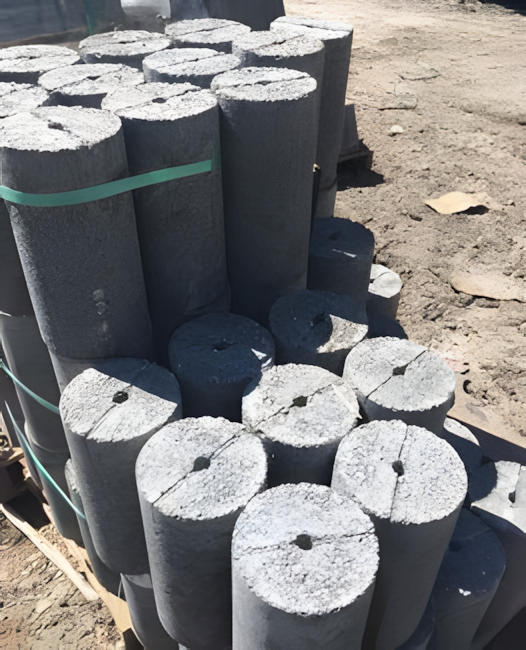
There are two main categories of concrete piers used in repair work: poured-in-place piers and pressed concrete pilings. Poured-in-place piers involve drilling a shaft to a certain depth, adding steel reinforcement, and then filling it with concrete that cures in place. Pressed concrete pilings, on the other hand, use pre-cast concrete cylinders that are hydraulically pushed into the ground under the weight of the structure. Each style has its own performance profile, cost considerations, and installation demands, which is why an onsite evaluation is crucial.

Key Advantages Of Concrete Pier Repair

One of the biggest advantages of concrete pier foundation repair is its reputation for durability when designed and installed correctly. Concrete is inherently strong in compression, which makes it well-suited for supporting vertical loads from a home. When piers are driven or drilled to competent soil and properly spaced, they can provide long-term support that significantly reduces the risk of future settlement in those areas. For many Dallas homeowners, that long-term stability is the primary reason they consider concrete piers.

Concrete piers also offer a sense of permanence because they are a rigid, massive support system. Unlike some lighter-weight solutions, a concrete pier assembly does not rely on thin steel plates or small contact points; instead, it spreads the load across a broader area. This can be particularly appealing for heavier brick homes or structures with multiple stories, where the loads on the foundation are higher and the consequences of movement are more severe. Dalrock Foundation Repair often recommends concrete pier systems on these heavier structures when soil and access conditions allow.

Another significant benefit is cost-effectiveness in many situations. While concrete piers are not always the cheapest option, they frequently provide a strong balance between price and performance. In neighborhoods across Dallas, where similar soil conditions and home designs repeat from block to block, experienced contractors have refined installation practices that keep costs predictable. In some cases, concrete piers can be more affordable than advanced steel systems while still offering excellent lifting capability and long-term support.

Finally, concrete piers can be relatively forgiving to minor soil changes compared with some more rigid, deeper systems. Because they are often installed to intermediate depths, they can sometimes move slightly with the soil without transferring extreme stress back into the structure. While any movement is not ideal, a system that flexes a bit can reduce the risk of new cracks forming in brittle materials like brick and tile. This characteristic can be an advantage in certain parts of the Dallas area where the soil profile is variable.

Important Drawbacks And Limitations

Despite their strengths, concrete piers are not a universal solution. One of the primary drawbacks is depth limitation. In many Dallas neighborhoods, the active clay layer can extend quite deep, and it may be difficult or impractical to reach truly stable soil using concrete piers alone. If piers do not extend deep enough, they can still be affected by moisture-driven expansion and contraction, which means some degree of future movement is possible. This is especially relevant during long droughts followed by heavy rains, a pattern North Texas knows all too well.

Another limitation is installation variability. Concrete pier performance is tied closely to the skill and judgment of the installer. Factors like how far the piers are driven, how they are aligned, the quality of the concrete mix (for poured systems), and the method of connection to the foundation all influence the final result. Two homes could both receive “concrete pier repairs” and have dramatically different outcomes if one contractor cuts corners. That is why choosing an experienced company like Dalrock Foundation Repair, which understands local soils and best practices, is critical.

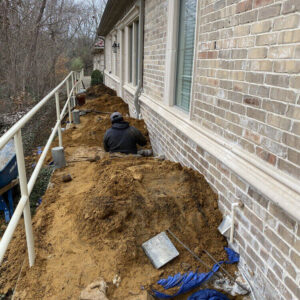
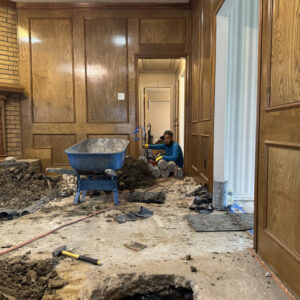
Concrete piers also involve notable disruption during installation. Access trenches must be dug around sections of the foundation, landscaping is disturbed, and heavy equipment may be used. While reputable contractors will restore the site as much as possible, homeowners should be prepared for a construction zone around their home for several days. In tight spaces, under patios, or near swimming pools, access challenges can increase labor time and cost, sometimes making alternative systems more attractive.

Finally, concrete is not immune to long-term environmental effects. Changes in moisture levels, erosion, and even tree root activity near the foundation can influence the soil around the piers over time. While the piers themselves are strong, their effectiveness depends on what they are bearing on. If the supporting soils soften or wash out, additional adjustments or supplemental supports may be needed later. Understanding this helps set realistic expectations: concrete piers significantly improve stability, but they do not render a foundation completely maintenance-free forever.

How Concrete Piers Compare To Other Options

In Dallas, homeowners often hear about steel piers or helical piers as alternatives to concrete piers. Steel piers, driven deeper into the ground, can sometimes reach bedrock or very dense strata that concrete systems cannot economically reach. This can provide excellent long-term stability in certain geologies. However, steel systems may come at a higher price point, and in some soil profiles, the extra depth may not add enough benefit to justify the added cost. An in-depth evaluation is needed to determine whether the depth advantage of steel is actually necessary for a particular home.

Helical piers, which are screwed into the ground like giant steel screws, are another option commonly discussed. They are often favored where access is limited or where lighter structures need support. These systems can be very precise and are sometimes ideal for additions, porch supports, or specific problem areas. Yet for many full-perimeter foundation repairs, especially on heavier homes, concrete piers can still be the more practical and economical choice, especially when installed by a contractor with extensive local experience like Dalrock Foundation Repair.

There are also shallow solutions such as mudjacking or polyurethane foam injection, which are more about lifting slabs rather than addressing deep foundation issues. These methods may be suitable for driveways, sidewalks, or interior flatwork that has settled, but they do not typically address the deeper soil movement that affects the main structural foundation. Compared to these surface-level solutions, concrete piers provide a more structural, load-bearing answer to true foundation settlement.

When comparing systems, it is crucial to avoid one-size-fits-all thinking. The “best” solution is not the same for every home. Factors such as the age of the structure, weight of the building, soil profile, drainage conditions, and budget all play a role. A company that services a wide range of properties across Dallas, like Dalrock Foundation Repair, can draw on many case histories to recommend whether concrete piers, steel systems, or a hybrid approach makes the most sense for a specific situation.

Real-World Considerations In Dallas, TX

The expansive clay soils in and around Dallas are notorious for swelling when wet and shrinking when dry. This shrink-swell behavior is the root cause of much of the foundation movement in our region. Concrete piers are designed to bypass the most active layer of this clay, but the actual depth of that active zone can vary significantly from one property to another. In some neighborhoods, relatively shallow piers perform well; in others, deeper support may be necessary. A thorough evaluation, including soil probing and level surveys, helps determine whether concrete piers can be installed at a depth that makes sense.

Climate patterns add another layer of complexity. Extended droughts cause the clay to contract, pulling away from foundations and creating gaps. When heavy rains return, the soil rehydrates and swells, placing new pressures on the structure. Concrete piers can help stabilize the foundation against the worst effects of this cycle, but they work best when combined with good drainage and moisture management around the home. Dalrock Foundation Repair often recommends grading improvements, gutter adjustments, or root barriers in tandem with pier installations to improve long-term performance.

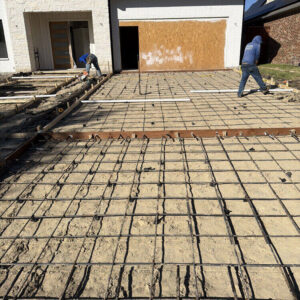
Local building practices also play a role. Many Dallas homes, especially older ones, were constructed before modern understanding of expansive soils was fully reflected in foundation design standards. These homes may have thinner slabs, fewer beams, or inadequate reinforcement, making them more sensitive to soil movement. Concrete pier systems can be tailored to support particularly weak points or to shore up corners and load-bearing walls that are most at risk. A cookie-cutter approach is rarely effective; each home’s design must be considered.

Finally, property value and resale considerations are important. In the Dallas real estate market, foundation repair is common enough that buyers and inspectors know what to look for. A well-documented repair with a reputable company and a clear explanation of the system used can actually help protect resale value. When concrete piers are chosen for the right reasons and installed correctly, they can be a selling point rather than a red flag, especially when backed by a meaningful warranty.

Choosing A Contractor And Setting Expectations

Even the best repair method can fail if executed poorly. When considering concrete pier foundation repair, the choice of contractor may matter more than the choice of system. Homeowners should look for companies with deep experience in the Dallas area, clear inspection processes, and transparent explanations of why they recommend concrete piers over other options. Dalrock Foundation Repair, for example, focuses on detailed elevation readings, careful soil assessment, and customized pier layouts rather than generic “per pier” promises without context.

It is also important to understand what the repair is intended to accomplish. Concrete piers are designed primarily to stabilize and, where feasible, lift the foundation closer to its original position. They are not a cosmetic fix. Cracks may be closed or reduced, but some cosmetic repair is almost always needed afterward, such as patching drywall or re-grouting tile. A good contractor will explain that the structural work comes first, followed by cosmetic touch-ups once the house has had a chance to adjust to its new support.

Warranty terms should be examined carefully. A long warranty is only meaningful if the company stands behind it and if the terms are clear. Ask what is covered, what is excluded, and how adjustments are handled if movement occurs in the future. Concrete piers are durable, but no system can completely eliminate the effects of extreme soil changes. Setting realistic expectations about performance and maintenance helps prevent frustration later.

Finally, homeowners should feel comfortable asking questions and getting direct answers. Foundation repair can be technical, but it should never be mysterious. Reputable contractors will gladly explain how many piers are proposed, where they will be placed, how deep they will go, and how the lifting process will be managed. They should also be willing to discuss alternatives and explain why concrete piers are being recommended in your specific case, rather than relying on a single preferred product for every home.

Frequently Asked Questions

Are concrete piers the best foundation repair method for every Dallas home? No single method is best for every home. Concrete piers work very well in many Dallas-area properties, especially where soil depth, home weight, and access make them practical. In some cases, steel piers or helical piers may be better suited, particularly when very deep support is needed. A professional evaluation from a local contractor like Dalrock Foundation Repair is essential to determine which solution matches your home’s conditions and your budget.

How long do concrete pier foundation repairs typically last? When designed correctly and installed to adequate depth, concrete piers can provide decades of reliable support. Their longevity depends on factors such as soil stability, drainage, and overall home maintenance. While concrete itself is very durable, the supporting soils can change over time due to moisture swings, tree roots, and erosion. With good site drainage and periodic inspections, many homeowners experience long-term stability from concrete pier systems without needing major additional work.

Will concrete piers stop all future foundation movement? Concrete piers significantly reduce the risk of further settlement in the areas they support, but they cannot completely eliminate all movement in every situation. Extreme droughts, flooding, or poor drainage can still affect surrounding soils and parts of the foundation that were not directly underpinned. The goal of a well-designed concrete pier system is to stabilize critical load-bearing areas and minimize movement to levels that do not threaten structural integrity. Ongoing moisture management around the home is still important even after repairs.

How disruptive is the installation process for concrete piers? Installation is noticeable but manageable for most homeowners. Crews will dig access holes or trenches around sections of the foundation, which temporarily disturbs landscaping and may require moving walkways or small structures. Equipment is used to drive or drill the piers and to lift the foundation. The process usually takes several days, depending on the number of piers. A reputable contractor will protect the property as much as possible and restore the work area when the job is complete, but some re-landscaping or minor yard repair may be needed afterward.

How can I get an evaluation to see if concrete piers are right for my home? The best starting point is an on-site inspection from a local foundation specialist who understands Dallas soils and building practices. During the visit, they will look for signs of movement, take elevation readings, and assess drainage and landscaping. From there, they can recommend whether concrete piers, another system, or a combination of methods is appropriate. To learn more or schedule an evaluation, you can contact Dalrock Foundation Repair and ask about their Foundation Repair services tailored to North Texas homes.

Call
Contact
Search Website
Contact
Call
Text
Email