When you hear the phrase “steel pier foundation repair,” do you picture massive machinery, complicated engineering, and a price tag you’re afraid to ask about? For many Dallas homeowners, foundation repair feels mysterious and intimidating, especially when cracks in walls and doors that won’t close are staring you in the face. Understanding how steel pier systems actually work can turn that anxiety into confidence, helping you ask better questions, compare options intelligently, and recognize when a contractor is truly doing things the right way.
Steel piers are not a quick patch or cosmetic fix; they are structural components designed to reach deep, stable strata beneath your home and permanently support a sagging or settling foundation. In a region like Dallas–Fort Worth, where expansive clay soils swell and shrink with moisture changes, the right pier system can mean the difference between a one-time repair and years of recurring problems. Dalrock Foundation Repair has built its reputation on using steel pier techniques that are engineered for our local soil conditions, not just generic “one-size-fits-all” solutions.
To really understand steel pier foundation repair, it helps to walk through the process step by step: why steel is chosen over other materials, how piers are installed and tested, what lifting a home actually looks like, and how a reputable contractor designs the system around your specific house. Once you see the logic and engineering behind it, you can better evaluate bids, spot red flags, and feel more secure in the long-term stability of your property.
Why Foundations Fail In Dallas
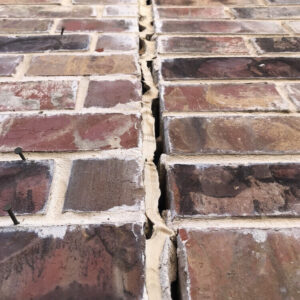
Before diving into steel pier techniques, it’s important to understand why foundations in Dallas, TX struggle in the first place. Our area is dominated by expansive clay soils that dramatically change volume as moisture levels rise and fall. In wet periods, the clay swells and pushes against the foundation; in dry spells, it shrinks and pulls away, leaving voids and uneven support. Over time, this constant movement can cause portions of the foundation to sink, tilt, or heave, leading to cracks in brick, misaligned doors, and sloping floors.
Not all parts of a lot behave the same way. One corner of a home might sit over deeper clay or a softer pocket of soil, while another rests on firmer ground. This creates differential settlement, where one area moves more than another. The structure is rigid, so when one section drops relative to the rest, concrete cracks and framing is stressed. Simply patching surface cracks or mudjacking the slab without addressing the deeper soil issues is like putting a bandage on a broken bone; it won’t stop the underlying movement.
Dallas also has a wide variety of home types: older pier-and-beam houses, post-tension slabs, conventional slabs, and additions that were built at different times with different standards. Each type responds differently to soil movement, and each may require a different repair strategy. Steel pier systems are particularly valuable because they bypass the unstable upper soil layers entirely and transfer the load of the home down to deeper, more stable layers that are far less affected by moisture changes.
Weather extremes compound the problem. Long hot summers with drought conditions cause significant soil shrinkage, followed by heavy rains that rapidly re-saturate the ground. That repeated cycle acts like a jackhammer on foundations. Understanding this context explains why Dalrock Foundation Repair often recommends steel piers: they are designed to anchor your home beyond the reach of these seasonal soil fluctuations, providing a more permanent structural solution.
What Steel Piers Actually Are
Steel piers are high-strength steel assemblies driven into the ground to support and, when possible, lift a settled foundation. They are typically composed of interlocking steel pipe segments or helical (screw-like) shafts, depending on the specific system and soil conditions. The steel used is engineered to resist corrosion and carry substantial loads, often many times greater than what a single point of the foundation will ever impose.
At the surface, each pier connects to the foundation through a steel bracket or cap that transfers the weight of the structure onto the pier. This bracket is carefully designed to fit snugly under the footing or along the edge of the slab, without damaging the concrete. Once installed, the pier-bracket assembly becomes a permanent structural support, similar to adding deep underground columns under the home.
There are two main styles of steel piers commonly used in the Dallas area: push piers (also called resistance piers) and helical piers. Push piers are driven into the ground using the weight of the structure as resistance, while helical piers are screwed into the soil using hydraulic torque. Both systems aim to bypass the upper, unstable soils and reach load-bearing strata that do not significantly move with moisture changes.
The choice between these systems depends on factors such as soil profile, access, the type of foundation, and the condition of the structure. Dalrock Foundation Repair evaluates these variables before recommending a specific steel pier type, rather than simply defaulting to whatever is easiest to install. This design step is critical to long-term performance and is one of the most important aspects for homeowners to understand when comparing bids.
Step-By-Step Steel Pier Installation
Steel pier foundation repair is a carefully staged process, not a single quick operation. It begins with a detailed evaluation of the home, where technicians measure elevation changes across the slab or beams, examine cracks, check door and window operation, and review drainage conditions. This information is used to create a repair plan that specifies how many piers are needed, where they will be placed, and what the target elevations should be during lifting.
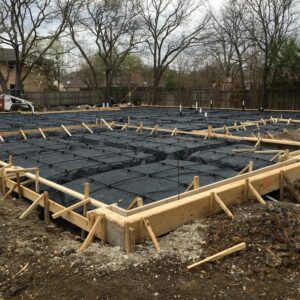
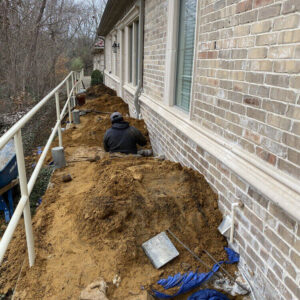
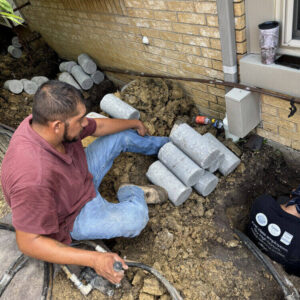
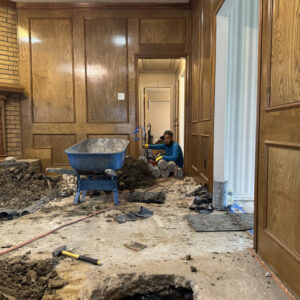
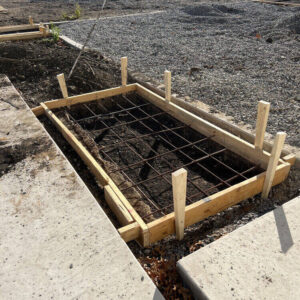
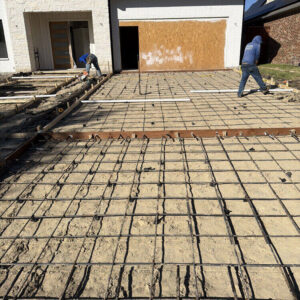
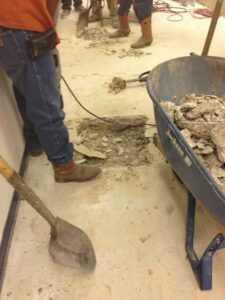
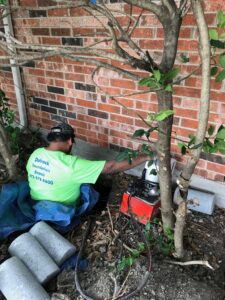
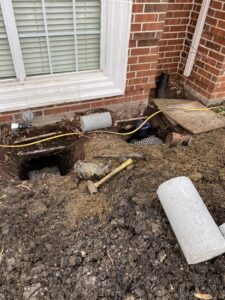
Once the plan is finalized, the crew prepares the work area. This typically involves excavating small holes along the foundation perimeter at each pier location. In Dallas, this may mean working around landscaping, patios, and other hardscapes, which a careful contractor will remove and later restore as neatly as possible. The excavation exposes the footing or slab edge so that brackets can be installed correctly. It’s a labor-intensive step, but crucial for proper access and accurate alignment.
Next comes the driving or installation of the piers themselves. For push piers, steel pipe segments are placed under a bracket and hydraulically driven into the ground, adding sections until they encounter sufficient resistance from deeper, more competent soil or bedrock. For helical piers, the steel shaft with helical plates is rotated into the ground with a hydraulic motor, and torque readings are monitored to ensure the pier is achieving the required load capacity. This is where engineering meets field work: the installer is not guessing, but reading real-time data that indicates the pier’s ability to support the structure.
Once all piers reach their design depths and capacities, they are locked off, and the lifting phase begins. Hydraulic jacks are attached to the pier brackets, and the foundation is carefully raised in small increments. Technicians monitor the structure throughout this process, watching for changes in cracks, door operation, and interior finishes. The goal is to restore the foundation as close to its original design elevation as safely possible without causing additional damage. After lifting, the jacks are removed, the piers are permanently secured, and the excavations are backfilled and compacted.
How Steel Piers Compare To Other Methods
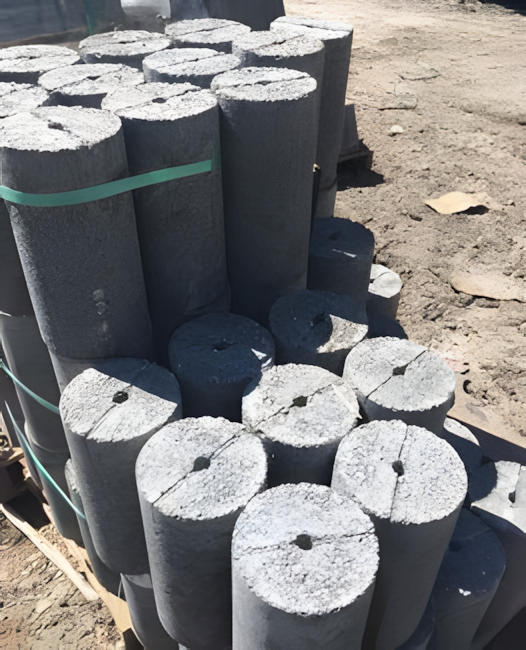
Homeowners in Dallas often hear about several different foundation repair methods: concrete pressed piles, mudjacking, foam injection, and steel piers. Each has its place, but they are not equivalent. Concrete piles, for example, are pressed into the ground using the weight of the structure, similar to push piers, but they rely on stacked concrete cylinders rather than steel. In some soil profiles, they can perform reasonably well, but they are bulkier, more susceptible to friction issues in expansive clays, and can be harder to install to the same depths as steel.
Mudjacking and foam injection focus on filling voids beneath a slab and lifting it by injecting material under pressure. While this can be effective for certain interior slab issues or non-structural concrete like driveways and patios, it does not address deep soil movement and is not usually considered a long-term structural solution for a settling perimeter foundation in expansive clay. Steel piers, by contrast, are designed to transfer loads to deeper, more stable strata, making them more appropriate for serious settlement problems.
Another important distinction is adjustability and verifiability. Steel pier systems often allow for more precise lifting and can be tested during installation to confirm capacity. The torque readings from helical piers or the hydraulic pressure readings from push piers give the installer objective data that the pier is bearing on competent material. Concrete systems and fill-based methods tend to rely more on experience and observation, with less direct measurement of load capacity.
From a long-term perspective, steel piers typically offer greater durability and consistency, especially in areas like Dallas with severe soil movement. This is why many structural engineers and experienced contractors prefer them for homes showing significant differential settlement. Dalrock Foundation Repair emphasizes this engineering-based approach, using steel pier systems that are designed for predictability, not just convenience.
Designing A Steel Pier Plan For Your Home
No two homes in Dallas are identical, and a quality steel pier foundation repair plan reflects that reality. A good contractor does more than count cracks and guess where to place piers. They begin with a structural assessment: identifying which portions of the home are moving, how the loads are distributed, and where support is most critically needed. This may involve elevation surveys, reviewing construction details, and sometimes coordinating with an engineer.
Pier spacing is a major design decision. Placing too few piers can overload each support and lead to uneven performance; placing too many may not add meaningful benefit and can unnecessarily increase costs. The type of foundation (slab-on-grade vs. pier-and-beam), the weight of the structure, and the layout of load-bearing walls all influence where piers should go. Corners, areas beneath heavy features like fireplaces, and points where additions tie into the original structure often require special attention.
The repair plan should also consider access and the impact on the property. For example, if a pier needs to be installed beneath a porch or inside a garage, the contractor must plan how to reach that area with minimal disruption while still following proper installation procedures. A thoughtful design balances structural needs with practical realities, ensuring that the repair is both effective and feasible.
Dalrock Foundation Repair’s approach in Dallas, TX typically includes explaining this plan to the homeowner in clear, understandable terms. You should know how many piers are being installed, where they will be located, what type of steel system is being used, and what the realistic expectations are for lifting and cosmetic improvements. A transparent design process is a strong indicator that you are dealing with a contractor focused on long-term structural integrity rather than quick sales.
Life After Steel Pier Repair
Once steel piers are installed and the foundation has been lifted, homeowners often wonder what to expect next. In many cases, doors and windows that were sticking begin to operate more smoothly, and some cracks may close or become less severe. However, not every cosmetic issue will disappear entirely. Some cracks may remain visible and require patching, and certain finishes may not return to a perfectly “like new” condition because materials like drywall and brick have already been stressed.
Long-term, the primary benefit of steel pier repair is stability. The supported areas of the foundation should no longer experience the same degree of vertical movement from seasonal soil changes. That said, the rest of the home is still subject to surface soil behavior, so maintaining proper drainage, managing vegetation, and monitoring for new signs of movement remain important. Good drainage, in particular, is crucial in Dallas; gutters, downspouts, and grading that moves water away from the foundation help protect your investment.
Warranties are another key aspect of life after repair. Reputable companies stand behind their steel pier installations with robust warranties, often transferable to new owners. Understanding the terms of that warranty—what is covered, for how long, and under what conditions—is essential. Steel piers are designed as a permanent solution, and a solid warranty reflects that confidence in the system’s performance.
Finally, keep records of your repair. Documentation of the pier layout, installation depths, and warranty information can be very helpful during future home sales, insurance discussions, or if any additional structural evaluations are ever needed. When you work with a professional firm experienced in structural foundation repair like Dalrock Foundation Repair, you gain not only immediate stabilization but also a documented history that supports your property’s long-term value.
Frequently Asked Questions
How do I know if I really need steel piers? The need for steel piers is based on evidence of structural movement, not just minor cosmetic issues. Signs such as stair-step cracks in brick, significant interior wall cracks, doors and windows that are badly out of alignment, and measurable floor slope often indicate differential settlement that goes beyond surface-level problems. A professional evaluation in Dallas, TX should include elevation readings and a thorough inspection of both interior and exterior symptoms. If the assessment shows that parts of the foundation have dropped relative to others, steel piers are often recommended because they can transfer loads to deeper, stable soils and provide long-term support.
Are steel piers better than concrete piers for Dallas soils? In many Dallas-area soil conditions, steel piers offer advantages over traditional concrete piers. Steel piers can typically be installed to greater depths, reaching more consistent load-bearing strata below the active clay layer. They also allow installers to monitor installation forces or torque, giving a clearer indication that the pier has achieved the required capacity. Concrete systems can still be effective in certain situations, but in highly expansive clays where depth and verifiable capacity are critical, steel piers are often considered the more reliable, engineering-focused solution.
Will steel pier installation damage my yard or landscaping? Steel pier installation does require excavation at each pier location, which temporarily disturbs soil and any landscaping in those areas. A careful contractor will plan pier locations and access routes to minimize impact, remove plants or hardscape elements as needed, and then restore the areas after backfilling. While you should expect some disruption, especially close to the foundation, a professional crew will clean up the site, compact the soil, and, when possible, re-set landscaping features. Discuss specific concerns with your contractor before work begins so they can incorporate them into the plan.
Can my home be lifted back to perfectly level? In many cases, steel piers allow a foundation to be lifted significantly closer to its original elevation, improving door operation, reducing cracks, and correcting noticeable slopes. However, achieving a perfectly level condition is not always possible or even advisable. Materials like brick, drywall, and tile have already adapted to the distorted shape of the structure, and forcing them back to an ideal plane can cause new cracking or damage. Experienced companies like Dalrock Foundation Repair aim for a balance: restoring structural integrity and functional performance while avoiding lifts so aggressive that they create more harm than good.
How long do steel piers last, and are they really a permanent fix? Steel piers are designed as long-term structural supports, typically using corrosion-resistant steel and installation depths that place them in relatively stable soil environments. When properly engineered and installed, they should last for the life of the structure. While no system can guarantee that other, unsupported portions of the home will never experience movement, the areas directly supported by steel piers are intended to remain stable. A strong warranty from a reputable Dallas contractor is a good indication that the company expects its steel pier installations to perform as a permanent solution to the settlement issues they address.