
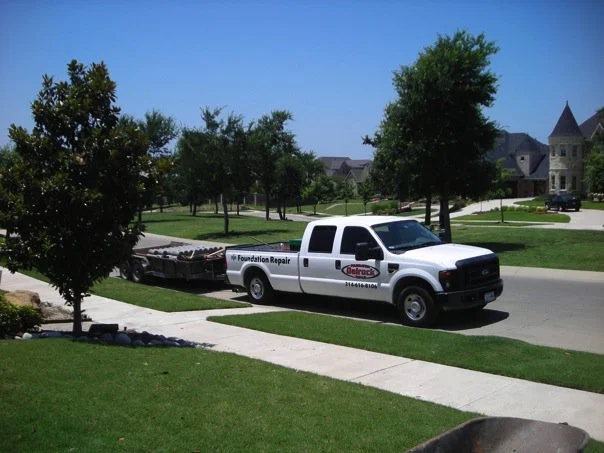
When a North Texas home starts to show cracks in the brick, sticky doors, or sloping floors, the conversation usually turns to one big decision: how to fix the foundation so the problem doesn’t keep coming back. In Dallas, where clay soils swell when wet and shrink when dry, temporary fixes and shallow solutions rarely hold up over time. That is why understanding the benefits of choosing steel pier foundation repair matters right now for homeowners who are tired of watching new cracks appear every time the weather changes.
Foundations in the Dallas area are under constant stress from extreme temperature swings, long dry spells, and sudden heavy rains. These conditions can cause a slab or pier-and-beam foundation to move inches over the years, which is more than enough to damage walls, plumbing, and finishes. Steel piers, when properly engineered and installed by specialists like Dalrock Foundation Repair, offer a way to reach stable strata deep below the active soil, giving your home a much more reliable base. Instead of fighting the soil at the surface, steel piers bypass the problem altogether.
Many homeowners initially look for the least expensive repair method, only to discover that a cheap fix often leads to more repairs down the road. Steel piers are not just another product on a menu of options; they are a long-term structural solution designed for tough soil conditions like those in Dallas, TX. By learning how steel pier systems work and why they outperform many alternatives, you can make a smarter, more confident decision about protecting the largest investment most families ever make: their home.
Why Steel Piers Outperform Other Options
One of the primary advantages of steel piers is their ability to reach deep, load-bearing strata that seasonal moisture changes cannot easily affect. Traditional concrete pressed piles or concrete cylinders are often driven only as far as the friction of the soil allows, which can be within the active clay layer that keeps expanding and contracting. Steel piers, on the other hand, are driven or hydraulically pushed much deeper, often to bedrock or very dense soil layers, creating a more permanent point of support for your foundation.
Because steel is both strong and relatively slender, steel piers can penetrate deeper than many concrete systems before reaching refusal. This depth translates directly into stability. In areas like Dallas, where clay soils can extend many feet below the surface, having a repair method that can bypass the entire problem zone is critical. A shallow system may look fine in the first year or two, but as the soil continues its movement cycles, the foundation can start to settle again, undoing previous repairs.
Another key performance benefit is consistency. Steel piers are manufactured products with predictable strength and behavior, unlike poured-in-place concrete, which can vary based on mix, weather, and workmanship. When a company like Dalrock Foundation Repair installs steel piers, they can calculate loads, verify capacities, and test each pier as it is installed. This level of control means that the system supporting your home is not a guess; it is engineered performance that can be measured and verified during the installation process.
Over time, this performance difference becomes very clear. Homes supported by a properly designed steel pier system are far less likely to experience recurring settlement in the repaired areas. While no system can promise that soil will never move again, steel piers give your home a fighting chance against the extreme conditions that define North Texas foundations.
Long-Term Stability And Peace Of Mind
Most homeowners do not want to think about their foundation every year. They want to repair it once, do it right, and then move on with life. Steel pier foundation repair is designed with that mindset in mind. Because each pier is installed to a depth where soil moisture swings are minimal, the long-term stability of the supported areas is significantly improved. This stability does more than hold the slab in place; it protects the structure above from further distortion.
When your foundation stops moving, cosmetic repairs like patching drywall cracks, retiling floors, or replacing trim become long-lasting instead of temporary. In Dallas, it is common to see homes where cracks have been painted over multiple times, only to reappear after the next dry summer. By choosing steel piers, homeowners give those cosmetic improvements a solid structural foundation, reducing the frustration of repeating repairs year after year.
There is also a financial peace of mind that comes from using a robust, engineered system. Many steel pier installations come with strong warranties precisely because the contractor has confidence in the product and the method. Dalrock Foundation Repair, familiar with the challenging soils in Dallas, TX and surrounding areas, uses this approach to stand behind their work in a meaningful way. A trustworthy warranty backed by a proven system can be a major asset when you decide to sell your home, giving future buyers confidence that the foundation issues have been properly addressed.
Emotionally, knowing that your home is supported on deep, steel-reinforced piers instead of relying on the top few feet of shifting clay can be a major relief. Foundation problems are stressful. They raise questions about safety, resale value, and ongoing repair costs. Opting for steel piers is not just a technical choice; it is a decision to invest in stability, predictability, and long-term confidence in your home’s structure.
Performance In Dallas Clay Soils
North Texas is notorious for its expansive clay soils, and Dallas is right in the middle of that problem zone. These clays act like a sponge: they swell when saturated and shrink during extended dry periods. The result is a constant up-and-down motion that can easily crack a rigid concrete slab or distort pier-and-beam systems. Any foundation repair method that does not address the depth and severity of this movement is likely to have limited success.
Steel piers are specifically well-suited to this environment because they are designed to transfer the weight of the home through the unstable clay and into more stable material below. Instead of trying to “float” with the upper soil, steel piers anchor the structure to something that does not move with every rainfall or drought. This deep anchoring is critical in Dallas, where the active soil zone can be several feet thick and extremely reactive.
Another reason steel piers perform so well here is their resistance to corrosion and deterioration when properly coated and installed. High-quality steel pier systems are engineered to last for decades underground. When combined with proper drainage improvements and grading around the home, they create a foundation system that can stand up to the harshest local conditions. Dalrock Foundation Repair understands the specific patterns of movement in Dallas neighborhoods and can design a pier layout and depth strategy tailored to those patterns.
For homeowners, this means fewer surprises when the seasons change. Instead of watching doors go out of alignment every summer and winter, the structure remains much more stable. While minor adjustments may still be needed over many years, the dramatic seasonal swings that cause major cracking and settlement can often be significantly reduced when the home is supported by a steel pier system designed for local soil conditions.
Structural Advantages And Load Capacity
From an engineering standpoint, steel piers provide impressive load-carrying capacity relative to their size. Steel has a high strength-to-weight ratio, allowing installers to drive slender sections deep into the ground while still supporting large portions of the structure above. This efficiency means fewer piers may be needed compared to some concrete systems to achieve the same level of support, depending on the design and soil conditions.
The installation process itself also contributes to structural reliability. Each pier is driven or hydraulically advanced until it reaches a refusal point, which indicates that the pier is bearing on a sufficiently strong layer. During installation, the pressure and depth can be monitored, giving real-time feedback about the pier’s capacity. This is a significant advantage over methods where capacity is mostly estimated rather than directly confirmed during the work.
Once in place, steel piers work in conjunction with brackets that connect them to the foundation beam or slab. These brackets are carefully engineered to transfer loads without introducing new stress concentrations or weak points. When installed by experienced technicians like those at Dalrock Foundation Repair, the result is a unified system in which the pier and the foundation act together to resist movement. This integrated approach is critical for long-term performance.
Over time, the high load capacity and structural integrity of steel piers help protect not only the foundation but also the attached systems of the home. Plumbing lines, for example, are less likely to be stressed and broken when the slab is held more level. Framing, roofing, and finishes all benefit from a stable base. In this way, steel piers contribute to the overall durability and lifespan of the entire house, not just the concrete underneath it.
Cost-Effectiveness Over The Life Of Your Home
At first glance, steel pier foundation repair can appear more expensive than some alternative methods. However, when evaluated over the lifespan of the home, steel piers often prove to be the more economical choice. The key is to look beyond the initial price tag and consider the costs of future repairs, cosmetic fixes, and potential loss of property value if problems recur.
Homes that undergo shallow or less robust repairs may need to be re-leveled or re-supported as the soil continues to move. Each new round of repairs comes with costs: contractor fees, disruption to your home life, and the expense of redoing interior finishes that get damaged again. By investing in steel piers from the beginning, many homeowners in Dallas, TX avoid this cycle of repeated work and expense, essentially paying once for a solution designed to last.
There is also the question of resale. Buyers in Dallas are increasingly savvy about foundation issues. A home with a documented steel pier system installed by a reputable company like Dalrock Foundation Repair can often be more attractive than a home with a history of piecemeal or temporary fixes. The perceived reliability of a steel pier system can help protect your negotiating position when it is time to sell, potentially saving thousands of dollars in price reductions or repair concessions.
Additionally, the broader benefits of a stable foundation—such as reduced damage to finishes, fewer plumbing problems, and less frequent maintenance—translate into ongoing savings. While these costs are harder to quantify in advance, homeowners who live in their properties for many years often find that the long-term financial impact of choosing steel piers is decidedly positive.
Professional Installation And Local Expertise
Even the best steel pier system will only perform as well as it is installed. That is why choosing an experienced, locally knowledgeable contractor is just as important as choosing the right repair method. Dalrock Foundation Repair brings an understanding of Dallas-area soils, building practices, and neighborhood patterns that is essential for designing the right pier layout and depth for each specific home.
During a professional evaluation, the team will examine symptoms such as interior and exterior cracks, door and window alignment, floor slopes, and drainage conditions around the home. This information, combined with knowledge of local soil profiles, helps determine where piers are needed and how deep they must go. A customized plan is far more effective than a one-size-fits-all approach, particularly in a region as geologically variable as North Texas.
Professional installation also means attention to the details that homeowners might not see but will certainly feel later. Proper bracket placement, accurate leveling, careful excavation, and responsible site cleanup all influence the final outcome. A high-quality installation minimizes disruption to landscaping and hardscapes where possible, while still prioritizing structural performance. Dalrock’s crews are trained to balance these concerns so that the repair is both effective and respectful of your property.
Finally, working with a qualified contractor ensures that you have someone to turn to in the future if questions arise. A solid warranty is only as good as the company behind it. Local, established firms that stand behind their steel pier installations give homeowners confidence that support will be available long after the crew leaves the jobsite.
Frequently Asked Questions
How do steel piers differ from concrete piers? Steel piers are typically driven much deeper than many concrete systems, often reaching bedrock or very dense soil layers. Because they are made of high-strength steel, they can penetrate through tough soils with a relatively small diameter, allowing them to bypass the expansive clay zone that causes most of the movement in Dallas. Concrete piers or pressed piles, by contrast, may rely more on friction in the upper soils and may not reach the same depth, making them more susceptible to ongoing seasonal movement.
Will steel pier installation damage my yard or landscaping? Any foundation repair that requires access along the perimeter of your home will involve some level of excavation and disruption. However, experienced contractors like Dalrock Foundation Repair plan pier locations and excavation methods to minimize impact as much as possible. Topsoil and landscaping elements are often set aside and replaced after the work is complete. While some restoration may be needed, most homeowners find that the long-term stability gained from steel piers far outweighs the temporary disturbance to their yards.
How long does a typical steel pier foundation repair take? The timeline depends on the size of the home, the number of piers required, and site conditions such as access and weather. Many residential projects in Dallas can be completed in a few days to a week. The process includes excavation, pier driving or pressing, bracket installation, lifting and leveling the structure, and backfilling. A professional team will communicate clearly about the schedule so you know what to expect and can plan around any temporary disruptions to your normal routine.
Are steel piers worth the higher upfront cost? For many homeowners, the answer is yes, especially in challenging soil environments like Dallas, TX. While the initial investment can be higher than some alternatives, the long-term benefits—reduced likelihood of recurring settlement, stronger warranties, fewer cosmetic repairs, and increased buyer confidence—often make steel piers the more cost-effective choice over time. When you factor in the protection of your home’s structural integrity and resale value, the added upfront cost is frequently justified.
How do I choose the right contractor for steel pier installation? Look for a company with deep experience in your local area, strong references, and clear, written proposals. They should be able to explain why steel piers are appropriate for your specific home and soil conditions, not just promote a one-size-fits-all solution. Verify that they are insured, ask about training and certifications for their crews, and review warranty terms carefully. Reputable local companies like Dalrock Foundation Repair, listed among trusted foundation repair contractors, combine technical knowledge with familiarity of Dallas soils to deliver long-lasting results.