
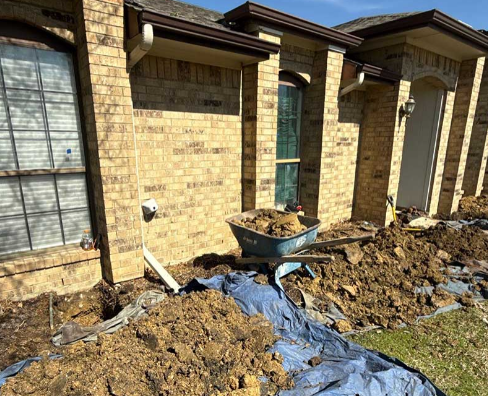
If you are noticing a cracked interior wall, doors that stick, or a bowing section of foundation in Dallas, TX, concrete pier underpinning is one common path contractors use to stabilize movement. This guide explains when concrete piers are considered, what to check before repairs begin, and how drainage and settling repair plans tie into cracked wall fixes.
Last week, a homeowner in Dallas noticed a new hairline crack on the corner of a living room wall. Over a couple of months it widened slightly, and they also started seeing the door in that hallway drag against the frame.
They were left with a tough decision: patch the drywall and hope it stops, or investigate whether the foundation is still settling. Cracked wall repair often sounds cosmetic, but the right fix depends on what is driving the movement below.
This article helps you understand how concrete pier foundation repair can be used for cracked wall repair, what to look for before you commit, and which mistakes to avoid when you are comparing foundation repair options in Dallas, TX.
Quick Answer
Concrete pier foundation repair can help with cracked wall repair when the crack is tied to foundation settling or structural movement. The process typically includes identifying where the foundation needs support, installing concrete piers (often as underpinning), and addressing related issues like drainage correction so water does not keep pushing the soil. For a practical next step, document the crack and door alignment, then ask a foundation repair company to evaluate your specific foundation type and movement pattern before choosing between pier systems.
What to Check First
Before any contractor starts drilling or installing piers, you want clarity on what the foundation is doing. These checks help you separate drywall cracking from structural foundation movement, and they help you ask better questions.
Track the crack
Note where it starts, whether it stays level, and if it changes over time. Cracks that widen or shift with seasons are strong clues that settlement repair may be needed.
Check doors and windows
Sticking doors, misaligned frames, and gaps that appear where they did not used to be are often linked to foundation settling repair, not just wall movement.
Look for drainage clues
If you see water pooling near the foundation, overflowing gutters, or soggy spots in a yard, ask about drainage correction services as part of the repair plan.
Professional observation: Cracked foundation walls are frequently tied to movement at the support points. A repair plan that focuses only on patching cracks can leave the underlying cause untouched, which is why many homeowners in Dallas ask about pier underpinning and drainage correction together.
Main Things Customers Should Understand
Concrete pier foundation repair is not a one-size-fits-all solution. What works depends on your foundation type, the pattern of movement, and the soil and water conditions around the home. Here are the key factors that often determine whether concrete piers are the right approach for cracked wall repair.
1) Foundation movement and load transfer
Concrete piers (as part of a concrete pier foundation repair plan) are designed to transfer building loads to more stable material. When a foundation section settles, the wall above can experience stress, which may show up as cracks, bowing, or uneven window and door openings.
If you want to compare pier options, you can review related approaches on concrete pier foundation repair services and how pier systems are used for stabilization.
2) Underpinning design matters
Even with the same “pier” label, the layout and installation method should match the house. A good plan considers where piers will be placed, how they will be integrated with the existing foundation, and how the repair will address structural foundation repair needs without creating new stress points.
For homeowners comparing systems, it can help to understand how different pier configurations are used. You may also want to review hybrid pier systems to see how some projects combine approaches based on site conditions.
3) Drainage correction is part of many cracked wall repair plans
Water behavior around the foundation can influence ongoing soil movement. If drainage repair is ignored, repairs may stabilize temporarily but movement can resume. This is why many foundation repair contractors evaluate water drainage correction and yard drainage correction before closing up a repair.
If drainage is a concern, explore drainage correction services to understand how downspouts, grading, and water pathways can be addressed alongside structural stabilization.
4) Concrete piers vs. other pier solutions
Not every cracked wall situation points to the same pier type. Some homes may be evaluated for steel pier foundation repair, while others are better matched to concrete pier underpinning. Comparing options helps you understand the tradeoffs in design and installation.
| Repair approach | What it is commonly used for | Questions to ask your contractor |
|---|---|---|
| Concrete pier foundation repair | Stabilizing foundation movement that contributes to cracked foundation repair, including cracked wall repair tied to settling. | Where will piers be installed and how does the plan transfer loads to stabilize the affected wall area? |
| Steel pier foundation repair | Structural foundation repair where a steel pier foundation installation plan matches the home and site conditions. | What pier system configuration is recommended and why for your foundation type? |
| Drainage correction | Foundation drainage correction when water around the perimeter contributes to ongoing movement. | What poor drainage solutions are most likely on your property, and how will water pathways be improved? |
Why this matters in Dallas, TX
Dallas, TX homeowners often deal with properties that have shifting moisture patterns around foundations. When water repeatedly moves in and out of soil near the home, foundation settling repair can become an ongoing issue rather than a one-time problem. That is why cracked foundation repair in Dallas frequently includes both structural stabilization and drainage correction considerations.
Another local detail is how many homes sit on slabs, piers, or mixed systems built with different eras of construction. A repair approach that works for one neighborhood or house type may not match another. That is also why it helps to reference the specific foundation repair services for your situation, such as pier beam repair when your home uses that support structure.
Firsthand-style industry observation: In many cracked wall repair jobs, the “visible” problem is the drywall crack. The real work is identifying where the foundation is moving and whether water is feeding that movement. When those two parts are addressed together, homeowners usually see fewer follow-up cracks and doors that stay aligned longer.
Need help figuring out whether concrete piers fit your cracked wall?
Call Dalrock Foundation Repair for guidance on concrete pier foundation repair and related stabilization options for homes in Dallas, TX.
Call (972) 578-8800Common Mistakes to Avoid
When you are dealing with foundation repair, it is easy to make choices based on what you can see. These mistakes can cost time and lead to repeated repairs.
Patching cracks without diagnosing
Drywall crack repair alone does not stop structural foundation repair issues. If the foundation is still moving, new cracks can appear near the same stress points.
Ignoring drainage problems around the foundation
If yard drainage correction or water drainage correction is needed, skipping it can allow soil conditions to keep changing and undermine the stabilization effort.
Choosing a pier type without matching the foundation
Concrete piers may be the right solution for some homes and not others. A proper evaluation helps prevent mismatched designs that do not address the movement pattern.
Customer Checklist
- Take clear photos of the cracked wall, including corners and areas near doors and windows.
- Write down when the crack appeared and whether it has widened or shifted.
- Check for sticking doors, uneven door gaps, or windows that do not sit square.
- Look for water pooling, soggy ground, or signs of poor drainage solutions near the foundation perimeter.
- Ask whether your situation points to concrete pier foundation repair and what underpinning design is proposed.
- Ask how drainage correction services (if needed) will be coordinated with structural stabilization.
- Request an explanation of what changes after repair (for example, how the repair plan addresses the movement causing the cracked foundation repair).
Representative Scenario: What a Concrete Pier Plan Often Looks Like
A Dallas-area homeowner notices a diagonal crack near a living room corner and a slight separation where the wall meets the adjacent ceiling line. A door on that same wall begins to drag as humidity changes through the year. After inspection, the contractor focuses on the support points under the affected area and confirms that the crack aligns with structural movement rather than a purely cosmetic drywall issue.
The repair plan prioritizes stabilization with concrete piers, and the contractor also evaluates water drainage correction needs around the home. The goal is to reduce ongoing movement while addressing the conditions that can contribute to settling repair. The homeowner leaves with a clear understanding of what the repair is designed to correct, rather than only being shown the surface crack.
Frequently Asked Questions
How do I know if my cracked wall is related to foundation settling?
Cracks that widen over time, cracks near corners, and cracks that pair with sticking doors or uneven window frames can indicate structural foundation movement. While drywall can crack for many reasons, consistent changes that track with door alignment and seasonal conditions are strong clues. A foundation repair specialist can also compare the crack location to the home’s support points to determine whether the issue is part of foundation settling repair.
When would concrete pier underpinning be recommended for cracked foundation repair?
Concrete pier underpinning is typically considered when a foundation section needs additional support to stabilize movement contributing to cracked foundation repair. The decision is based on your home’s foundation type and the observed movement pattern. In practice, the contractor will evaluate where the structure is transferring stress and whether stabilizing those locations with concrete piers can reduce ongoing settlement.
Do I need drainage correction for cracked wall repair?
Not every cracked wall project requires drainage work, but many do. If water drainage correction is needed, it can help prevent soil conditions from changing repeatedly. Contractors may recommend drainage correction services when they see yard drainage issues, pooling near the foundation, or other signs that poor drainage solutions could be contributing to ongoing foundation settling. Addressing drainage alongside structural stabilization is often part of a more durable repair plan.
How does a foundation repair estimate usually consider concrete pier foundation repair?
A foundation repair estimate should be tied to what the contractor needs to stabilize, not just the presence of a crack. Expect the conversation to cover where movement is occurring, what foundation stabilization approach fits (such as concrete piers), and whether drainage correction is included. If you are comparing options, you can also review foundation repair cost information to understand what categories commonly influence the estimate.
Can I compare concrete pier foundation repair vs steel pier systems?
Yes, but the best comparison starts with your specific foundation type and movement pattern. Concrete pier foundation repair focuses on stabilizing with concrete piers, while steel pier systems can be selected when they match the site and structural needs. If you want to learn more about how these systems are used, explore steel pier foundation repair and then discuss with your contractor which approach aligns with your home.
Talk with Dalrock Foundation Repair about your foundation and cracked wall
For cracked wall repair tied to foundation movement in Dallas, TX, Dalrock Foundation Repair can help you understand whether concrete pier foundation repair, pier stabilization, and drainage correction services should be part of your plan.
Visit Dalrock Foundation Repair