
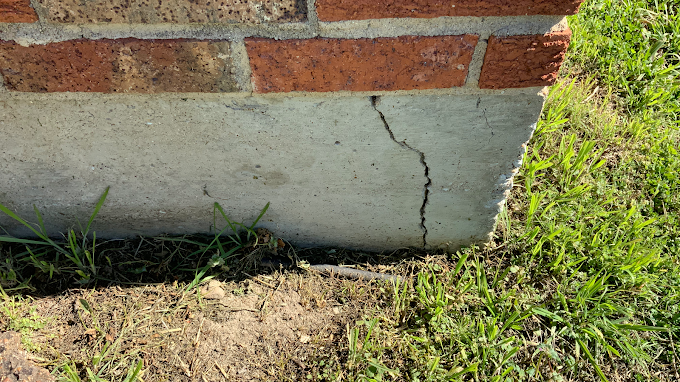
The first time most homeowners in Dallas notice a real drainage problem, it usually isn’t during a gentle spring shower. It’s after one of those hard Texas downpours, when water starts pooling along the side of the house, creeping toward the brick, and refusing to disappear. A few months later, doors begin to stick, cracks appear in the drywall, or a corner of the floor feels slightly uneven. It can feel like these issues came out of nowhere, but in reality, they often started with water going exactly where it shouldn’t: right against your foundation.
Drainage and foundation health are tied together more closely than most people realize. In North Texas, where the soil expands and contracts dramatically with changes in moisture, the way water moves around your property can literally determine whether your foundation stays stable or starts to fail. Poor drainage doesn’t just mean soggy flowerbeds or a muddy side yard. Over time, it can change the soil structure beneath your home, create pressure against foundation walls, and set off a chain reaction of movement and cracking that leads to expensive repairs.
For a company like Dalrock Foundation Repair, serving homeowners across Dallas and the surrounding communities, the pattern is familiar: clogged gutters, missing downspout extensions, negative grading, or poorly designed landscaping concentrate water right at the slab or pier-and-beam perimeter. That excess moisture, combined with our clay-heavy soils, becomes a powerful force. Understanding the relationship between drainage and foundation health is one of the smartest things a Dallas homeowner can do to protect their biggest investment.
How Water Behaves Around Your Home
Water follows gravity and the path of least resistance. That sounds simple, but on a residential property, that path is shaped by rooflines, gutters, downspouts, sidewalks, landscaping beds, and the actual slope of the yard. When any of these features direct water toward the house instead of away from it, your foundation becomes the lowest point in a system it was never meant to handle. Each storm then becomes an opportunity for water to accumulate, saturate the soil, and linger where it can do damage.
In Dallas, many homes sit on expansive clay soils that act almost like a sponge. When they absorb water, they swell; when they dry out, they contract and shrink. If water is allowed to collect along one side of a foundation while the other sides remain relatively dry, the soil will expand unevenly. That uneven expansion can lift or drop portions of the foundation, causing it to tilt, bow, or crack. These changes might be just fractions of an inch at first, but even small movements can translate into visible damage inside the home.
Another factor is how long water stays in contact with the foundation. Short-term exposure after a storm is usually not the main problem; it is repeated, chronic saturation that causes trouble. If the soil never fully dries out because drainage is poor, the foundation sits in a constantly changing environment. The longer this continues, the more the soil structure can weaken, and the more likely you are to see long-term settlement or heaving. Dalrock Foundation Repair often finds that homes with chronic foundation issues also have a history of standing water near the slab or crawlspace.
Dallas Clay Soils And Their Risks
Dallas is known for its black, sticky clay soils that crack in the summer and turn to heavy mud in periods of rain. These expansive clays are highly reactive to moisture, which is why drainage is especially critical in North Texas compared to regions with more stable, sandy soils. When clay takes on water, it can exert tremendous upward pressure on a foundation. When it loses water, it can pull away from the slab, leaving voids and reducing the support under key areas of the house.
This constant swelling and shrinking creates what foundation specialists call “differential movement” – where one part of the foundation moves differently than another. If the soil on the front side of a Dallas home stays wetter because downspouts discharge there, while the back side dries out in the hot sun, the foundation is effectively being pushed and pulled unevenly. Over time, that can cause diagonal cracks in brick, separation at window frames, and floors that slope or feel “bouncy.” Poor drainage is often the hidden cause driving that imbalance.
Complicating matters, many neighborhoods in Dallas were not originally graded with today’s standards in mind. Older homes may have settled over time, changing the way yards slope. Landscaping projects, additions, or new patios can also unintentionally trap water against the foundation. Dalrock Foundation Repair frequently sees situations where a beautiful new flower bed or stone border has inadvertently created a dam, holding water right where the clay soil is most vulnerable. Without proper drainage planning, even well-intentioned improvements can increase foundation risk.
Surface Drainage Vs. Subsurface Drainage
When we talk about drainage, it helps to separate it into two major categories: surface drainage and subsurface drainage. Surface drainage is what most homeowners notice first. It includes how rainwater flows across the ground, whether it forms puddles, and how quickly it disappears after a storm. Gutters, downspouts, grading, swales, and surface drains all play a role in guiding that water away from your foundation and toward a safe discharge point like a street or alley.
Subsurface drainage deals with water that moves through the soil itself. Even if you do not see standing water on the surface, the soil around your foundation can be saturated below ground level. In some cases, high water tables, underground springs, or poorly draining clay layers can trap moisture against basement or crawlspace walls. French drains, perforated pipes, and gravel backfill are some of the tools used to manage this hidden flow of water. In Dallas, where basements are less common but crawlspaces and slabs are widespread, subsurface drainage is still important, especially on sloped lots or properties with known seepage issues.
Both types of drainage influence foundation performance. If surface water is allowed to pool near the house, it often becomes subsurface water as it slowly seeps downward. Conversely, if subsurface water has no exit route, it can build up and eventually show as damp spots, mold, or hydrostatic pressure against foundation walls. Dalrock Foundation Repair approaches foundation evaluations with both surface and subsurface drainage in mind, because addressing only what you can see is rarely enough to protect the structure over the long term.
How Poor Drainage Damages Foundations
The damage from poor drainage is usually gradual, but it follows a predictable pattern. First, water accumulates repeatedly near the foundation, either because the yard slopes toward the house, gutters are missing or clogged, or downspouts discharge too close to the slab. That repeated saturation softens and expands the clay soils. As the soil swells, it can lift portions of the foundation or exert lateral pressure against stem walls and piers.
When dry weather returns, the same soil shrinks as moisture evaporates, often more quickly at the surface than deeper down. This can create gaps between the soil and the foundation, reducing support and allowing parts of the slab or beams to settle. As different areas of the foundation rise and fall at different rates, the rigid structure of the house responds by cracking and shifting. You may notice stair-step cracks in brick, gaps at the tops of windows, or separation where walls meet ceilings. These are all signs that the foundation has moved in response to changing soil conditions caused by poor drainage.
Over the years, the cycle of wetting and drying can repeat dozens or hundreds of times. Each cycle adds a bit more stress, and the movement becomes more pronounced. Eventually, doors may no longer latch properly, tile may crack across the floor, or exterior trim may pull away from the house. At this stage, foundation repair is often necessary to stabilize and re-level the structure. Dalrock Foundation Repair frequently finds that once the foundation itself is corrected, the next crucial step is improving drainage so the same process does not continue and undermine the repair work.
Practical Drainage Improvements For Dallas Homes
Fortunately, many drainage problems can be corrected with relatively straightforward improvements. One of the simplest and most effective steps is ensuring that gutters and downspouts are properly sized, clean, and directed away from the foundation. In a heavy Dallas rain, a roof can shed thousands of gallons of water in a short time. Without gutters, that water falls directly next to the slab. With gutters but short downspouts, it may still collect right at the base of the wall. Extending downspouts several feet away, using splash blocks, or connecting them to underground drain lines can dramatically reduce moisture at the foundation.
Grading is another key factor. The soil around your home should slope gently away from the foundation on all sides, typically at least 6 inches of drop over the first 10 feet. Over time, soil can settle or be moved during landscaping projects, flattening or reversing that slope. Re-establishing proper grading may involve adding soil, reshaping beds, or creating shallow swales to guide water away. In some cases, especially on tight urban lots in Dallas, surface drains or channel drains tied into a solid drain line are used to carry water to the street or an approved discharge area.
On properties where subsurface water is a concern, French drains or other buried drainage systems may be necessary. These systems use perforated pipe surrounded by gravel to collect water in the soil and move it away from the foundation. They can be particularly useful on downhill property lines, near retaining walls, or in low spots that remain soggy. Dalrock Foundation Repair often works in conjunction with drainage specialists to design solutions that not only correct existing foundation issues but also reduce the chance of future movement by managing water intelligently.
Why Drainage Matters Even After Repair
Many homeowners assume that once a foundation has been repaired, drainage is no longer a major concern. In reality, the opposite is true. Foundation repair stabilizes and supports the structure, but the surrounding soil and its behavior remain the same. If poor drainage is not addressed, the soil will continue to move with moisture changes, and that movement can place new stresses on the repaired foundation or other parts of the home that were not previously affected.
For example, if piers are installed under one section of a slab to correct settlement, but water continues to pool along another side of the house, the unrepaired section may begin to move more dramatically over time. This can lead to new cracks and problems even as the previously repaired area remains stable. Good drainage acts as a preventative measure, helping the entire foundation system experience more uniform moisture conditions and reducing the risk of future differential movement.
Dalrock Foundation Repair emphasizes drainage as part of a long-term strategy for protecting homes in Dallas, TX. During inspections, technicians often point out gutter issues, grading problems, or obvious signs of poor water management. While the immediate concern may be leveling the home or stabilizing failing beams, the bigger picture always includes how to keep the soil as consistent as possible in the years ahead. Investing in drainage improvements is one of the most cost-effective ways to protect both your repaired foundation and the overall value of your property.
Frequently Asked Questions
How can I tell if drainage is affecting my foundation? Common signs include water standing near your foundation for more than 24–48 hours after a rain, soil erosion or washed-out areas along the slab, and damp or musty smells near crawlspaces. Inside the home, cracks in walls, sticking doors, and sloping floors can indicate foundation movement that may be linked to drainage. In Dallas, if you see repeated ponding in the same spots or notice that one side of your yard stays soggy while the rest dries quickly, it is wise to have both drainage and foundation evaluated together.
Are gutters really necessary for slab foundations in Dallas? Yes. Even though slab foundations sit directly on the ground, they are very sensitive to changes in soil moisture. Gutters collect and control the large volumes of water that come off the roof during storms, preventing it from soaking the soil right next to the slab. Without gutters, or with poorly maintained gutters, water can concentrate along the perimeter of the home and contribute to the expansion and contraction of our local clay soils. Properly installed gutters and downspouts are one of the simplest ways to reduce foundation stress.
Will foundation repair alone fix my drainage problems? Foundation repair addresses structural issues caused by soil movement but does not automatically correct the drainage conditions that led to those issues. If water is still allowed to pool or flow toward the house, the soil will continue to behave unpredictably. Dalrock Foundation Repair focuses on stabilizing and supporting your home; however, part of a complete solution often includes separate drainage improvements such as grading, gutter upgrades, or the installation of surface or French drains. Both aspects work together to protect your home long-term.
What drainage solutions are most effective for Dallas homes? The best solution depends on your specific property, but common approaches include properly sized and maintained gutters, extended downspouts, re-grading soil to slope away from the foundation, installing surface drains in low spots, and adding French drains along problem areas. In some cases, a combination of these methods is needed. A professional evaluation can identify where water is coming from, how it moves across and through your yard, and what changes will have the greatest impact on protecting your foundation.
When should I call a professional about drainage and foundation concerns? You should contact a professional if you notice recurring standing water near your home, significant erosion, or visible signs of foundation movement such as wide cracks, separated trim, or doors that suddenly begin to stick. In Dallas, it is also wise to seek an evaluation after major weather events, like extended drought followed by heavy rains, as these can accelerate soil movement. A company experienced in both foundation issues and drainage awareness, such as Dalrock Foundation Repair, can help determine whether you need structural work, drainage improvements, or a combination of both. For more information about professional evaluation and repair options, you can learn more here: Foundation Repair.