Most homeowners assume foundation problems begin with concrete or soil, when in reality, they usually begin with water. People look for cracks in walls, sticking doors, or sloping floors and think the issue is purely structural. But in Dallas, TX, the real story is often hidden in how water moves across a property. The most overlooked factor in foundation health is drainage: where water goes when it rains, how long it sits, and what it does to the soil supporting your home.
Another common misunderstanding is that once a foundation has been repaired with piers or other structural methods, the job is done. In truth, without proper drainage correction, even the best foundation repair can be undermined over time. The clay soils common in North Texas expand when wet and contract when dry. If water is allowed to pool near the foundation or rush toward it during storms, the soil will constantly shift, putting renewed stress on the structure. This is why experienced companies like Dalrock Foundation Repair treat drainage correction as a core component of long-term foundation stability, not an optional add-on.
Understanding the role of drainage correction is not about becoming an engineer; it is about recognizing that water management is a form of insurance for your foundation. Whether you are already seeing signs of foundation movement or simply want to protect your investment, the way your property drains will either support or sabotage every other repair. In the Dallas area, where intense storms, long dry spells, and clay-heavy soils collide, drainage correction is often the difference between a foundation that stays stable and one that keeps shifting year after year.
Why Water Control Comes First
Before any long-lasting foundation repair can be designed, the behavior of water around the property has to be understood. In Dallas, sudden downpours can dump large amounts of rain in a short time, and if that water is funneled toward the house instead of away from it, the soil along the foundation can become saturated. Saturated clay soil swells, exerting upward and lateral pressure on the foundation. When it finally dries out, it shrinks and pulls away, leaving gaps. This constant cycle is one of the leading causes of foundation movement in North Texas.
Drainage correction focuses on breaking this destructive cycle by managing how water flows over and through the soil near the foundation. Instead of allowing water to collect against the slab or in low-lying areas, properly designed drainage systems move water away in a controlled, predictable way. This can involve changes in grading, the installation of surface drains or French drains, or improvements to gutters and downspouts. The goal is simple but powerful: keep moisture levels around the foundation as consistent and balanced as possible.
Dalrock Foundation Repair understands that structural solutions alone cannot overcome poor water management. Without addressing drainage, even high-quality piers can be forced to work harder than they should as the soil pushes and pulls on the foundation. By putting water control first, Dalrock helps homeowners in Dallas and surrounding areas avoid a frustrating pattern of recurring problems, callbacks, and patchwork fixes. Drainage correction becomes the foundation beneath the foundation, so to speak, supporting every other repair that follows.
How Poor Drainage Damages Foundations
To appreciate the role of drainage correction, it helps to understand exactly what poor drainage does to a foundation over time. When water consistently pools next to a home, it seeps into the soil and alters its structure. In expansive clay, common in Dallas, this leads to significant swelling. The soil can exert uneven pressure on different parts of the foundation, causing some areas to heave while others remain relatively stable. This uneven movement results in cracks, misaligned doors, and sloping floors.
The opposite condition is just as damaging. If certain sides of the house stay drier than others because of wind exposure, sun exposure, or improper drainage, those areas of soil can dry out and shrink faster. This creates voids beneath portions of the foundation. As the slab or beam-and-pier structure loses support, it starts to settle into these voids. The combination of swelling on one side and shrinking on another can twist the structure, leading to more severe and complex foundation issues.
Poor drainage also increases the likelihood of erosion. Water that flows quickly across bare soil can carry away fine particles, undermining walkways, patios, and even the edge of the foundation. Over time, this erosion can expose portions of the footing or slab edge, leaving them vulnerable to further movement and damage. By correcting drainage, Dalrock Foundation Repair works to eliminate the conditions that cause erosion and soil loss, helping ensure that the ground beneath your home remains stable and well-supported.
Types of Drainage Correction Solutions
Drainage correction is not a single product or one-size-fits-all system; it is a tailored approach that considers the specific layout and conditions of each property. One of the most basic and effective methods is regrading the soil around the home. The ground should slope gently away from the foundation so that rainwater naturally flows outward instead of inward. Even a modest change in slope can significantly reduce the amount of water that collects along the foundation during heavy storms.
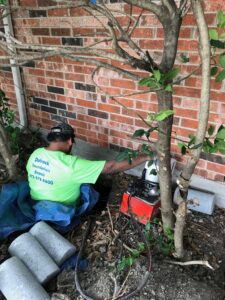
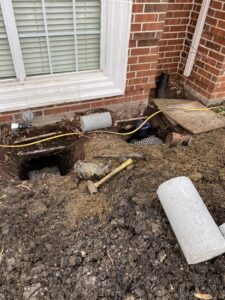
Another common solution is the installation of surface drains, such as area drains or channel drains. These systems capture water at the surface before it has a chance to soak deeply into the soil. For example, low spots in a yard where water tends to pool can be outfitted with area drains connected to underground piping that carries water away to a safer discharge point. In driveways, patios, or walkways that slope toward the house, channel drains can intercept runoff and redirect it away from the foundation.
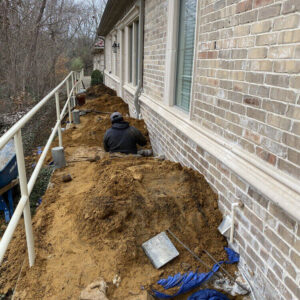
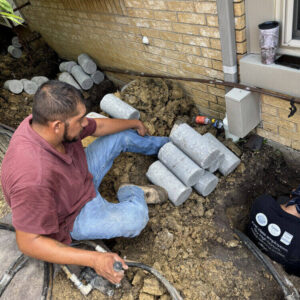
For properties where water tends to infiltrate deeper into the ground or where subsurface water is a concern, French drains can be a powerful tool. A French drain is a perforated pipe installed in a gravel-filled trench, usually along problem areas where water accumulates. The pipe collects groundwater and channels it away from the foundation. By lowering the water table around the house and preventing long-term saturation, French drains help stabilize the moisture content of the soil that supports the foundation.
Gutter systems and downspouts also play a crucial role in drainage correction. In many Dallas homes, gutters may be undersized, clogged, or missing in key areas, causing roof runoff to pour directly next to the foundation. Properly sized gutters combined with downspout extensions or underground discharge lines can move thousands of gallons of water per storm away from the home. Dalrock Foundation Repair often recommends integrating gutter improvements with ground-level drainage corrections for a comprehensive water management strategy.
Drainage and Dallas Clay Soils
The relationship between drainage and foundation performance is especially critical in Dallas because of the region’s expansive clay soils. These clays can change volume dramatically depending on their moisture content. When wet, they expand; when dry, they contract. This expansion and contraction cycle is not gentle or uniform. It can create powerful forces that push, lift, and drop different sections of a foundation over time.
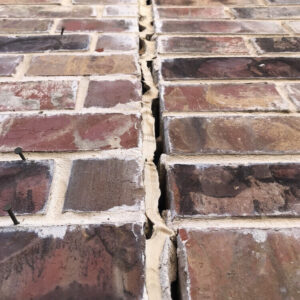
In a climate with alternating heavy rains and extended dry spells, like North Texas, the soil around a home is constantly in flux. If some parts of the foundation perimeter receive more water than others, the soil response will be uneven. One side of the house might be sitting on swollen, moisture-rich clay while the other side rests on shrunken, dried-out soil. This uneven support is what leads to many of the classic symptoms Dallas homeowners notice: diagonal cracks, stair-step cracks in brick, and gaps at windows or doors.
Drainage correction aims to reduce these extremes by promoting more consistent moisture conditions around the entire foundation. By preventing water from pooling in specific spots and by directing roof runoff well away from the slab, the soil is less likely to go through dramatic, localized changes. Dalrock Foundation Repair understands the behavior of Dallas clay and designs drainage solutions with that behavior in mind, focusing on long-term stability rather than temporary relief.
Another challenge with local clay soils is their tendency to hold water once they are saturated. Without proper drainage, water can linger in the soil for prolonged periods after a storm, keeping it swollen and unstable. Corrective measures such as French drains or improved surface runoff pathways help water exit the area more quickly, shortening the time the soil spends in its most expansive state. Over months and years, this controlled moisture environment can significantly reduce the amount of movement the foundation experiences.
Integrating Drainage with Foundation Repair
When a homeowner contacts Dalrock Foundation Repair about cracks or foundation movement, the solution is rarely just about installing piers. A thorough evaluation looks at the entire property: rooflines, gutters, slopes, landscaping, and existing drainage features. This holistic view is necessary because stabilizing a foundation is not only about lifting or leveling it; it is about preventing the conditions that caused the problem from continuing.
In many cases, drainage correction is performed before, during, or immediately after structural repairs. For example, if the front corner of a home has settled due to poor drainage, piers may be installed to lift and support that corner. At the same time, grading changes, new drains, or gutter extensions are added to ensure that water no longer concentrates in that area. Without this integrated approach, the same corner could be subjected to the same moisture swings, potentially leading to new movement over time.
Another benefit of integrating drainage correction with foundation repair is improved predictability. When water is managed properly, the soil’s behavior becomes more stable and easier to account for in repair design. Piers and other structural elements are less likely to be subjected to extreme changes in soil pressure, which can help them perform better and longer. This is one reason experienced contractors in Dallas emphasize drainage correction as a standard part of a comprehensive repair plan.
Homeowners also gain peace of mind from knowing that the solution addresses both symptoms and causes. Cracks can be patched and doors can be adjusted, but if water continues to attack the foundation in the same way, those cosmetic fixes will not last. By combining structural work with drainage improvements, Dalrock Foundation Repair helps ensure that the investment made in repairing a foundation is protected for the long term.
Practical Signs You Need Drainage Correction
Recognizing when drainage correction is needed can help homeowners act before damage becomes severe. One of the simplest signs is visible standing water after a rainstorm. If puddles linger near the foundation or along walkways for hours or days, the property likely has low spots or insufficient pathways for water to escape. Over time, those puddles can translate into saturated soil and foundation stress.
Another indicator is soil erosion or exposed roots near the home. If water has carved channels in the yard, washed away mulch, or left bare lines of soil where grass struggles to grow, the flow is too concentrated. This fast-moving runoff can gradually remove support from the edges of the foundation or undermine concrete flatwork such as driveways and patios. Correcting drainage at this stage can prevent more serious structural issues from developing.
Interior signs can also point back to drainage problems. Repeated foundation repairs that do not seem to hold, recurring cracks in the same areas, or doors and windows that stick more after heavy rains are all clues that water management has not been fully addressed. In the Dallas area, where conditions can change quickly with the weather, these patterns are often linked to fluctuating soil moisture caused by inadequate drainage around the home.
Even if foundation damage is not yet obvious, properties with heavy tree coverage, complex rooflines, or sloped lots can benefit from a drainage evaluation. Trees can influence soil moisture, roof valleys can concentrate runoff, and slopes can send water racing toward the house. Dalrock Foundation Repair can identify these risk factors and recommend preventative drainage corrections that help avoid the need for more extensive foundation repairs in the future.
Frequently Asked Questions
Why is drainage correction so important for foundations in Dallas, TX? Dallas sits on expansive clay soils that react strongly to changes in moisture. When these soils get wet, they swell; when they dry out, they shrink. Poor drainage causes some sections of soil around your foundation to stay wetter or drier than others, leading to uneven movement and structural stress. Drainage correction keeps water from pooling near the home and promotes more uniform moisture levels, which helps your foundation remain stable over time.
Can I just install piers without fixing my drainage? Technically, piers can be installed without addressing drainage, but it is not a wise long-term approach. If water continues to collect near your foundation, the soil will keep expanding and contracting, putting ongoing pressure on both the slab and the piers themselves. This can lead to new cracks, additional movement, and the need for further repairs. Integrating drainage correction with structural work gives your foundation a stable environment and helps protect your investment.
What types of drainage solutions does Dalrock Foundation Repair typically recommend? The specific solutions depend on your property’s layout, but common options include regrading the soil so it slopes away from the house, installing surface drains such as area or channel drains, adding French drains to manage subsurface water, and improving gutter and downspout systems. Sometimes a combination of these methods is used to ensure water is captured, controlled, and directed safely away from the foundation. Dalrock customizes drainage plans to match the unique conditions of each Dallas-area home.
How can I tell if my drainage is contributing to foundation problems? Look for signs such as standing water near the foundation after rain, erosion lines or bare patches in the yard, soggy soil along one side of the house, or downspouts that dump water right at the base of the walls. Inside, pay attention to cracks that appear or worsen after storms, or doors and windows that stick more when it has been raining. These patterns often indicate that water is not being managed properly around your home and that drainage correction could help protect your foundation.
Will drainage correction fix existing foundation damage? Drainage correction alone will not lift or realign a foundation that has already settled or heaved, but it is essential for stabilizing conditions so structural repairs can be effective. Think of it as addressing the cause while piers and other structural methods address the symptoms. For example, if you are dealing with foundation settling repair, improving drainage will help ensure that once the foundation is stabilized, it is less likely to move again due to water-related soil changes.