
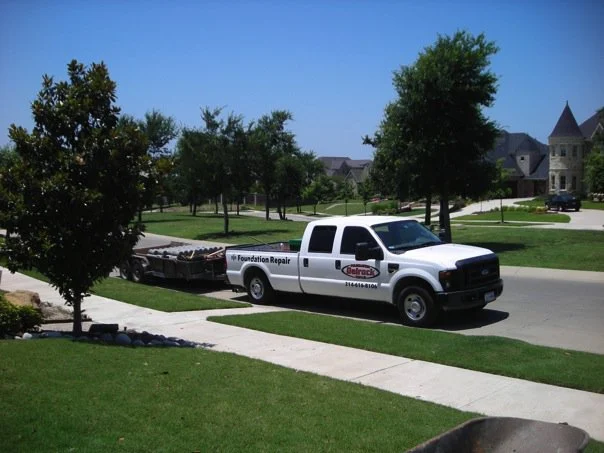
How much of your home’s stability is really resting on those concrete piers you never see and rarely think about? For many houses in Dallas, TX, the answer is: just about everything. When a concrete pier foundation begins to shift, crack, or sink, the symptoms can show up everywhere else in the structure—doors that won’t latch, floors that slope, and cracks that snake across walls and ceilings. Understanding how concrete pier foundation repair works is not just a technical curiosity; it is a practical roadmap to protecting your biggest investment.
Concrete pier foundation repair is a specialized process that focuses on stabilizing and, when possible, lifting a home back toward its original elevation using strategically placed concrete support columns. Unlike quick cosmetic fixes that only hide the damage, proper repair goes down to the soil level, correcting the cause of movement and redistributing the weight of the structure to more stable strata. In the Dallas area, where expansive clay soils swell when wet and shrink when dry, this is especially critical. A well-designed pier system and a careful repair strategy can dramatically extend the life of a home and preserve its value.
Dalrock Foundation Repair has spent years working with these specific North Texas soil conditions, and that local experience matters. Concrete pier foundation repair is not a one-size-fits-all job; it requires judgment about pier spacing, depth, load distribution, and long-term soil behavior. By walking through the fundamentals—how concrete piers work, how to recognize trouble, what the repair process actually looks like, and how to care for your foundation afterward—you can approach foundation repair decisions with confidence instead of anxiety.
Understanding Concrete Pier Foundations
Concrete pier foundations rely on vertical columns of concrete, sometimes reinforced with steel, that transfer the weight of your home down to more stable soil layers. In many Dallas-area homes, these piers are either poured in place or installed as precast units beneath the beam-and-slab or pier-and-beam structure. The goal is to bypass the constantly shifting upper layer of clay and rest the home on soil that moves less dramatically with moisture changes. When designed and installed correctly, concrete piers create a grid of support points that work together to keep the structure level.
However, no foundation system exists in isolation from its environment. Changes in moisture content, poor drainage, tree roots, and even nearby construction can alter the soil’s ability to support those piers. Over time, some piers may settle more than others, causing the foundation to tilt or sag in specific areas. This differential movement is what leads to the visible damage inside and outside the home. In a region like Dallas, where long dry spells are followed by heavy rains, the repeated swelling and shrinking of clay can be especially harsh on concrete pier systems.
Another important point is that not all concrete piers are created equal. The diameter, depth, reinforcement, and spacing all affect how much load each pier can safely carry. Older homes may have piers that are too shallow or too small for the current conditions, or they may have experienced soil erosion around the pier bases. When Dalrock Foundation Repair evaluates a property, they are not just looking at the cracks and gaps; they are also considering whether the existing pier design is still appropriate for the home and the soil it sits on.
Signs Your Concrete Piers Need Help
Most homeowners first notice foundation problems through subtle changes in how the house feels and functions. Doors that once closed smoothly may start to rub or stick. Windows might become difficult to open or won’t lock properly. You may see gaps forming between baseboards and the floor, or between the top of walls and the ceiling. These issues often begin in one part of the home, such as a corner or along an exterior wall, and gradually spread as the foundation movement continues.
Visual clues on the walls and exterior can be even more telling. Stair-step cracks in brick, diagonal cracks above doors and windows, and separation at corners are classic indicators of differential settlement. Inside, you might see cracks radiating from door frames or appearing where walls meet ceilings. In some cases, flooring materials like tile or wood may start to buckle or separate. While small, hairline cracks can be normal as a house ages, widening or recurring cracks are a sign that something more significant is going on beneath the surface.
The ground and landscape around your home can also offer warnings. Noticeable slopes in patios or porches, gaps between the soil and the foundation, or standing water near the base of the structure after rain can all contribute to foundation stress. In Dallas, where seasonal moisture swings are dramatic, improper drainage can accelerate problems for concrete pier foundations. Dalrock Foundation Repair often links recurring foundation issues to water management failures, which is why they may discuss grading and drainage correction services as part of a comprehensive repair plan.
How Concrete Pier Repair Works
The repair process begins with a detailed evaluation and elevation survey of the home. Technicians will take readings at multiple points throughout the structure to map out where the foundation has dropped or heaved. This data-driven approach allows Dalrock Foundation Repair to design a pier placement plan that targets the areas of greatest movement while maintaining overall structural balance. They will also inspect visible piers, crawlspaces (if applicable), and the condition of beams and joists to ensure there are no compounding structural issues.
Once a repair plan is in place, the physical work starts with excavation. Technicians dig access holes along the foundation line at the designated pier locations. The size and depth of these holes depend on the type of pier system being used and the soil conditions found during excavation. For many concrete pier repairs in Dallas, the goal is to reach a depth where the soil is less affected by seasonal moisture changes, providing a more reliable bearing surface for the new or reinforced piers.
After access is created, the piers are installed, repaired, or supplemented. This might involve pouring new concrete piers in place, adding piers where support is lacking, or using the existing concrete system as part of a hybrid solution. Hydraulic jacks are then placed on top of the pier caps or brackets to gently lift the foundation. The lifting process is slow and controlled, with constant monitoring of elevation readings and the building’s response. The objective is not always to achieve a perfect return to original elevation, but rather to stabilize the structure and correct as much settlement as safely possible without causing new damage.
When the desired stabilization and lift have been achieved, the jacks are removed and the loads are transferred permanently to the piers. The excavated holes are carefully backfilled and compacted to reduce future soil movement. Finally, the crew performs a walk-through to confirm that doors, windows, and other affected areas are functioning better and that visible signs of distress have improved. Dalrock Foundation Repair typically discusses ongoing maintenance measures at this stage so the homeowner understands how to protect their investment going forward.
Why Local Experience Matters In Dallas
Foundation repair is highly regional, and Dallas, TX presents a specific set of challenges that demand local expertise. The expansive clay soils in North Texas are notorious for their volume changes with moisture fluctuations. A repair approach that works well in sandy or rocky regions may fail quickly on Dallas clay. Dalrock Foundation Repair has extensive experience with how these soils behave over time, allowing them to select pier depths, spacing, and construction methods that are better suited to the environment.
Climate patterns in Dallas also influence how foundation issues develop. Prolonged summer droughts can cause the soil to contract, pulling away from the foundation and reducing support. Then, when heavy rains return, the clay swells rapidly, exerting new pressure on the structure. This constant cycle can fatigue both the soil and the concrete piers themselves. A contractor without local knowledge might underestimate these stresses, leading to shallow or inadequately reinforced piers that do not provide lasting stability.
Local building practices and home designs are another factor. Many Dallas homes share similar construction details—such as slab-on-grade foundations supported by concrete piers, or pier-and-beam structures with particular beam layouts—that influence how and where settlement occurs. Dalrock Foundation Repair has seen these patterns across countless projects, which helps them anticipate problem areas and design more effective solutions. That familiarity also helps with clear communication, as they can explain likely issues in terms that relate directly to the kinds of homes Dallas homeowners live in.
Protecting Your Foundation After Repair
Concrete pier foundation repair is a major step toward stabilizing your home, but it is not the final chapter. How you treat your property afterward plays a significant role in how well the repair performs over the long term. One of the most important factors is moisture management around the foundation. Keeping soil moisture as consistent as possible reduces expansion and contraction cycles that stress both soil and piers. This may involve adjusting sprinkler systems, installing gutters and downspouts, and ensuring water is directed away from the foundation instead of pooling next to it.
Landscaping choices can also have a meaningful impact. Large trees planted too close to the house can draw moisture from the soil unevenly, increasing the risk of differential settlement. Conversely, bare areas with no ground cover can dry out rapidly in the Texas sun. Dalrock Foundation Repair often recommends a balanced approach: maintain vegetation that helps moderate soil moisture, but avoid deep-rooted plants or trees immediately adjacent to the foundation. Mulch and properly graded flower beds can help retain a more stable moisture level around the home.
Regular inspections are another simple but powerful tool. Walking the perimeter of your home a few times a year, watching for new cracks, gaps, or drainage issues, can help you catch minor problems before they escalate. Inside, pay attention to changes in how doors and windows operate, and monitor any existing cracks for widening or spreading. If you notice new or worsening signs, contacting a professional early allows for adjustments or minor interventions instead of waiting until a major shift occurs.
Finally, keep documentation of your repair work. Dalrock Foundation Repair provides information about what was done, where piers were installed, and what elevations were recorded. This record can be valuable if you plan to sell your home, as buyers in the Dallas area are often familiar with foundation concerns and appreciate proof that issues were addressed professionally. It also gives future contractors a clear starting point if additional work is ever needed.
Choosing The Right Repair Partner
Selecting a contractor for concrete pier foundation repair is not a decision to rush. You are trusting a company with the structural health of your home and a significant financial investment. Look for a firm that specializes in foundation repair rather than treating it as a sideline. Dalrock Foundation Repair, for example, focuses on foundations and related services, which means their processes, tools, and training are all oriented around diagnosing and fixing these exact problems.
Transparency is another key indicator of a trustworthy partner. A reputable company will explain their findings in clear language, walk you through the proposed pier layout, discuss limitations and realistic expectations, and provide a written plan. Be cautious of anyone who offers a one-size-fits-all solution without a thorough inspection or who promises results that sound too perfect. Foundation repair often involves balancing what is structurally ideal with what is practically achievable for a given home and budget.
Experience with Dallas, TX soil and housing stock should be non-negotiable. Ask how long the company has worked in the area, what types of homes they typically service, and whether they have tackled issues similar to yours. References and reviews can provide additional insight into how a company communicates, adheres to schedules, and handles questions or concerns. Ultimately, you want a partner who not only understands concrete pier systems but also respects the stress homeowners feel when foundation issues arise.
Frequently Asked Questions
How do I know if my concrete pier foundation actually needs repair? The most reliable way to know is to combine what you see with a professional evaluation. If you notice sticking doors, sloping floors, widening cracks in walls or brick, or gaps between walls and ceilings, those are strong indicators of movement. A foundation specialist like Dalrock Foundation Repair will perform elevation readings, inspect accessible piers and structural components, and determine whether the movement is within normal tolerances or requires repair. Without that assessment, it is difficult to distinguish between minor cosmetic settling and a genuine structural issue.
Is concrete pier repair better than steel piers for Dallas homes? Both concrete and steel pier systems have their place, and the “better” option depends on your soil conditions, home design, and budget. Concrete piers are a proven, cost-effective solution that work very well in many Dallas neighborhoods when properly designed and installed to the correct depth. Steel systems can sometimes reach deeper, more stable strata, which may be beneficial in certain situations. Dalrock Foundation Repair evaluates each property individually and can explain why a particular system or combination is recommended for your home rather than relying on a single default approach.
Will foundation repair fix all the cracks and cosmetic damage in my home? Foundation repair focuses on stabilizing and, when possible, lifting the structure; it does not automatically restore every cosmetic issue. Many cracks will close or become less noticeable after the foundation is adjusted, and doors and windows often function better. However, some cracks may remain and need patching, repainting, or other finish repairs. In some cases, lifting the home can even reveal pre-existing weaknesses in finishes. Dalrock Foundation Repair typically recommends waiting a short period after structural work before completing cosmetic repairs, to ensure the foundation has fully settled into its new, stable position.
How long does concrete pier foundation repair usually take? The duration depends on the size of the home, the number of piers being installed, soil conditions, and access around the property. Many residential projects in Dallas can be completed in a few days, while more extensive repairs or complicated sites may take longer. During your evaluation, Dalrock Foundation Repair will provide an estimated timeline based on the specific scope of work. They also plan the sequence of excavation, pier installation, lifting, and backfilling to minimize disruption to your daily life as much as realistically possible.
Can I prevent future foundation problems once the repair is done? You cannot control the weather or the natural properties of clay soil, but you can significantly reduce the risk of future movement by managing moisture and drainage around your home. Keeping gutters clean, ensuring downspouts discharge away from the foundation, maintaining consistent watering of landscaping (without over-saturating the soil), and addressing low spots where water collects all help protect your repaired foundation. Regular inspections and prompt attention to new warning signs also play a major role. Dalrock Foundation Repair often provides homeowners with maintenance guidelines tailored to Dallas conditions so the repaired foundation stays as stable as possible for years to come.