
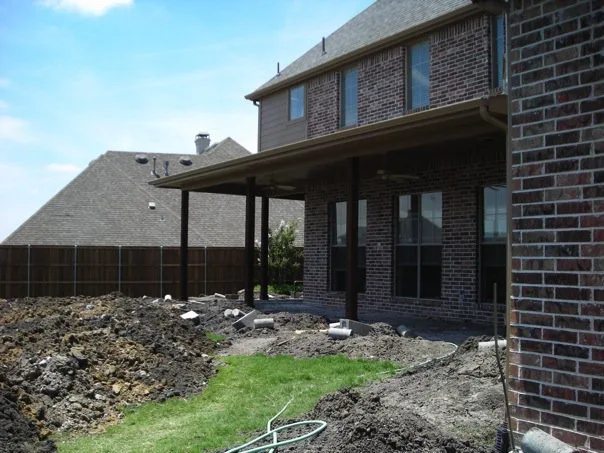
The first sign is usually small: a hairline crack near a window, a door that suddenly sticks, a tiny gap where the baseboard used to meet the floor. In North Texas, homeowners often shrug these off as “just settling.” But beneath the surface, the soil is moving, expanding, shrinking, or washing away, and your foundation is quietly following along. Before long, those small warning signs can grow into significant structural problems that demand more than a simple cosmetic fix.
What many homeowners in the Dallas area don’t realize is that the right foundation repair method depends heavily on what’s happening in the ground below. Clay that swells and shrinks, sandy soil that shifts, or fill material that was never properly compacted will all affect your home in different ways. Because of this, foundation repair is not a one-size-fits-all task; it’s a customized response to the soil type supporting your home. Dalrock Foundation Repair approaches every project in Dallas, TX with that principle in mind, choosing repair techniques based on the exact soil conditions, not just the symptoms inside the house.
Understanding how soil behaves, and which repair systems match that behavior, is the key to long-lasting results. Whether you are dealing with the notorious expansive clays of North Texas, looser sandy soils, or a mixed profile common in developed neighborhoods, the techniques used to stabilize and lift your foundation must be tailored to those conditions. The more you understand about the relationship between soil and foundation repair, the better prepared you are to make smart decisions about protecting your home.
Why Soil Type Matters
Soil is not just “dirt” beneath your house; it is an active, dynamic material that changes with moisture, temperature, and load. In Dallas and surrounding communities, the dominant player is expansive clay, a soil type that grows in volume when it absorbs water and shrinks dramatically when it dries out. This cycle of expansion and contraction applies repeated stress to concrete foundations, pushing them upward in wet seasons and letting them settle or sink in dry spells. Over years, that movement can cause differential settlement where some parts of the home move more than others, leading to cracks and misalignment.
Other soil types behave differently. Sandy or silty soils drain more freely and don’t expand as much as clay, but they can erode or shift if not properly compacted or if they are exposed to running water. Fill soils, which are common in developed neighborhoods where builders re-graded lots, may include a mix of materials with inconsistent density. These fills can compress under the weight of a home, leading to gradual settlement that is often more uniform but still damaging if left unaddressed.
Because of these variations, the best foundation repair strategy must be rooted in a careful understanding of the soil profile on your property. A technique that performs beautifully in stiff, expansive clay may not be ideal for loose, sandy soil. Dalrock Foundation Repair evaluates soil conditions around Dallas, TX properties by examining visible symptoms, reviewing site history, and, when necessary, considering geotechnical information to determine which repair method will provide the most stable, cost-effective, and long-lasting solution.
Expansive Clay Soils In Dallas
The black, sticky clay found across much of the Dallas-Fort Worth area is both a defining feature and a constant headache for homeowners. These expansive clays are rich in minerals that attract water molecules, causing the soil to swell when wet and contract when dry. During wet seasons or after plumbing leaks, the soil can exert upward pressure on slabs and piers, while in drought conditions it can shrink away from the foundation, leaving voids and reducing support. This constant movement makes clay soil one of the most challenging environments for a foundation.
Houses built on expansive clay typically show distress in the form of stair-step cracks in brick, gaps at the tops of walls, and interior sheetrock cracks radiating from window and door corners. Floors may feel uneven, and doors may swing open or closed on their own. These symptoms are not just cosmetic; they signal that the foundation is moving as the clay beneath it expands and contracts. Addressing only the visible cracks without stabilizing the structure will lead to ongoing problems.
For this soil type, repair techniques must aim to bypass the active layer of clay and transfer the structural load to deeper, more stable strata. This is where systems like deep concrete piers or steel piers come into play. By extending support elements well below the zone of seasonal moisture variation, Dalrock Foundation Repair can significantly reduce the impact of swelling and shrinking clay on the home, creating a more reliable base that resists the dramatic movements typical of North Texas soils.
Concrete Piers For Stiff Clays
Concrete piers are a widely used and proven solution for many homes in Dallas that sit on moderately to highly expansive clay. These piers are typically installed by drilling or pushing concrete segments beneath the foundation beams or slab until they reach a depth where the soil is more stable and less affected by seasonal moisture changes. Once in place, the piers act like underground columns, transferring the weight of the structure from the moving surface clay into deeper layers with more consistent bearing capacity.
In stiff clay conditions, concrete piers have several advantages. The clay’s resistance provides the friction and end-bearing capacity needed for the piers to support significant loads. The installation process can often be performed with relatively compact equipment, making it suitable for tight urban lots and established landscaping. After the piers are installed, hydraulic jacks are used to carefully lift and level the foundation as much as practical, and the system is then locked into place using shims or brackets to maintain the new elevation.
However, not every clay site is the same. The depth of the active zone, the presence of softer layers, and groundwater conditions can all influence how concrete piers perform. That is why a one-size-fits-all pier depth is not ideal. Dalrock Foundation Repair evaluates resistance during installation to determine when adequate load-bearing capacity has been reached. If the soil profile indicates that deeper support is required, or if bedrock is relatively shallow, other pier types may be recommended. For many Dallas homes, though, properly designed and installed concrete pier systems remain a cost-effective, durable answer to the challenges posed by expansive clay.
Steel Piers For Deep Or Variable Soils
Some properties in and around Dallas sit on soil profiles where the stable bearing layer is much deeper or where the clay is interbedded with softer or more compressible materials. In these situations, steel piers can offer a more predictable and robust solution than standard concrete piers. Steel piers are typically installed by hydraulically driving interlocking steel sections through the soil until they reach bedrock or a very dense, load-bearing stratum. This allows for greater depths to be reached with more control over the load capacity.
Steel piers are particularly valuable where soil conditions vary significantly across the footprint of the home. Because each pier is driven to a load refusal point, the system can adapt to changing depths of competent soil, ensuring that each pier provides reliable support regardless of local variations. This is especially important for larger or heavier structures, multi-story homes, or properties where previous fill or grading work has left an inconsistent subsurface.
The installation of steel piers is more specialized and often more expensive than basic concrete piers, but the resulting stability can be superior in complex soil environments. Homeowners dealing with chronic movement, severe settlement, or repeated past repairs may find that upgrading to steel piers provides the long-term peace of mind they have been missing. Dalrock Foundation Repair assesses not only current damage, but also the soil’s long-term behavior to determine when steel piers are the most appropriate option for Dallas-area homes.
Slab-On-Grade, Crawlspaces, And Mixed Soils
Not every home in Dallas rests on the same type of foundation or the same uniform soil. Many neighborhoods feature a mix of slab-on-grade foundations and pier-and-beam (crawlspace) structures, sometimes even on the same street. Additionally, builders may have imported fill or re-contoured lots, leaving pockets of different soil types under different parts of a single house. These mixed conditions call for a flexible approach to foundation repair that considers both the structure type and the subsurface variability.
Slab-on-grade homes built directly on clay often require perimeter and sometimes interior piers to control differential settlement. In areas where the soil transitions to sandier or more granular material, the focus may shift to addressing erosion, voids, or poor drainage that remove support from under the slab. Crawlspace homes, by contrast, often suffer from sagging floors and moisture issues. Repairing these structures may involve adding or adjusting piers, shoring beams, and improving ventilation or drainage to keep the soil and wood components dry and stable.
In mixed soil profiles, it is not uncommon for one corner of a house to behave differently from another. A rear addition might be built over compacted fill while the original structure rests on native clay, or a garage slab may be partially over sandy backfill. Dalrock Foundation Repair tailors the repair strategy to each section of the home, sometimes combining different pier types or supplemental measures such as drainage improvements, root barriers, or soil stabilization treatments. The goal is not just to level the structure once, but to create a more predictable environment so that future movement is minimized.
Drainage, Moisture Control, And Prevention
While piers and structural supports are the most visible part of foundation repair, controlling water and moisture is just as critical, especially in the clay-rich soils of Dallas, TX. Poor drainage allows water to pool around the foundation, soaking expansive clay and causing it to swell. Conversely, prolonged drought can cause that same clay to dry out and shrink, pulling away from the footing. Both conditions contribute to movement, so stabilizing moisture levels around the home is essential for protecting any repair investment.
Effective moisture management typically starts with grading and gutters. The soil should slope away from the foundation so that rainwater flows outward rather than toward the house. Gutters and downspouts should collect roof runoff and discharge it several feet away from the foundation or into properly designed drainage systems. In some cases, French drains, surface drains, or sump systems may be recommended to handle persistent water issues or properties with poor natural drainage.
For expansive clay soils, maintaining relatively consistent moisture levels around the perimeter can help reduce seasonal movements. This may involve proper landscaping practices, avoiding over-watering near the foundation, and ensuring that large trees are not drawing excessive moisture from the soil right next to the home. Dalrock Foundation Repair often pairs structural repairs with drainage recommendations, recognizing that even the most sophisticated pier system can be undermined over time if water is not managed correctly.
Frequently Asked Questions
How do I know which soil type my home is built on? In the Dallas area, many homes are on expansive clay, but the exact soil type can vary even within a single neighborhood. Visible clues include the texture and color of exposed soil, how it behaves when wet, and the history of movement in your home. For a more accurate assessment, a foundation specialist can evaluate site conditions, review any available builder or geotechnical reports, and in some cases perform limited-depth probing. Dalrock Foundation Repair uses this information to match your foundation repair plan to the specific soils supporting your home.
Are concrete piers or steel piers better for Dallas homes? Neither system is universally “better”; the right choice depends on soil conditions, house design, and budget. Concrete piers work very well in many areas with stiff clays and moderate depths to stable strata, offering a durable and cost-effective solution. Steel piers are often preferred where soil layers are variable, the stable layer is deeper, or the structure is particularly heavy or has a history of severe movement. An experienced contractor will recommend the system that best fits your site rather than pushing a single product.
Can foundation problems be fixed without installing piers? In some mild cases, especially where movement is driven mainly by drainage issues, improving grading, gutters, and moisture control may slow or halt additional movement. However, once a foundation has experienced significant settlement or differential movement, piers or other structural supports are usually necessary to restore and stabilize it. Cosmetic repairs alone, such as patching cracks, will not address the underlying soil-related cause and are likely to fail again if the structure isn’t stabilized.
How long do foundation repairs last in expansive clay soils? When the repair method is correctly matched to the soil type and accompanied by proper drainage and moisture management, foundation repairs can provide long-term stability for decades. That said, expansive clay will always be active, and some minor seasonal movement is normal. The role of systems like concrete and steel piers is to significantly reduce that movement so that it no longer causes structural damage. Dalrock Foundation Repair focuses on both structural support and environmental factors to help ensure that repairs hold up under North Texas soil conditions.
What should I expect during a concrete pier installation? During a concrete pier foundation installation, technicians will excavate small access holes along the foundation, install pier segments by pushing or drilling them to the required depth, and then use hydraulic jacks to gently lift and level the structure as conditions allow. Once the desired elevation is reached, the piers are locked into place, and the excavations are backfilled. The process can be noisy and involves some disruption to landscaping, but a qualified crew works carefully to minimize impact and restore the site when the work is complete.