
What if the real innovation in foundation repair wasn’t just a new product, but a smarter way of using steel piers to stabilize and lift a home? In a region like Dallas, TX, where expansive clay soils can cause dramatic shifting, homeowners are increasingly looking for solutions that are not only strong, but precise, predictable, and minimally disruptive. Steel pier foundation repair has long been a trusted option, but recent advances in engineering, materials, and installation methods have transformed it into a far more refined and adaptable system.
Instead of thinking of steel piers as simple metal columns driven into the ground, modern approaches treat them as part of an integrated structural system. Engineers combine soil data, load calculations, and real-time monitoring to design pier layouts tailored to each property. Contractors like Dalrock Foundation Repair are leveraging these innovations to deliver more accurate lifts, reduce the risk of future movement, and better protect investments in Dallas-area homes and commercial buildings. The result is a repair process that is less guesswork and more science, while still grounded in the practical realities of working around existing structures.
These innovative approaches are especially important in North Texas, where the same soil that supports your home when it’s wet can shrink and pull away when it’s dry. Traditional repair methods often treated symptoms without fully addressing how the soil, structure, and steel piers interact over time. Today’s steel pier systems are designed not only to correct current settlement, but to perform predictably through seasons of drought, heavy rain, and temperature swings. Understanding how these new techniques work can help homeowners make more confident decisions when they see signs of foundation distress.
Why Steel Piers Have Evolved
Steel piers have been used for decades because they offer a clear advantage over shallow concrete repairs: they transfer the weight of a structure down to more stable strata. However, older installations often relied on limited site data and basic hydraulic equipment. The result was improvement, but not always the level of precision and long-term performance homeowners expected. In Dallas, where soil conditions can vary dramatically from one neighborhood to the next, those limitations sometimes showed up as uneven lifts or the need for added piers later on.
Modern foundation specialists have rethought how steel piers are designed and installed. Instead of relying solely on rules of thumb, they are using more advanced soil evaluations and structural load assessments. This shift from a one-size-fits-all approach to a customized design is one of the most significant innovations. Dalrock Foundation Repair, serving the Dallas area, can factor in the type of structure, the thickness and condition of the footing, and the known behavior of local soils to determine not just how many piers are needed, but exactly where they should be placed and how deep they should go.
Another driver of evolution is the demand for less invasive repairs. Homeowners want stability and safety, but they also care about landscaping, driveways, and interior finishes. Steel pier systems and installation methods have been refined to minimize excavation, reduce disturbance, and provide more controlled lifting. The innovation, in many cases, lies in the process rather than in a completely new material. Better equipment, smarter sequencing, and more accurate monitoring all contribute to better outcomes.
Advanced Steel Pier Design Concepts
Traditional steel piers were often installed to a target depth or to a generalized refusal point. Today, advanced design concepts focus on achieving measurable load-bearing capacity at depth. That means piers are driven until they reach strata capable of supporting the structure, and the installation process captures real-time data about resistance and capacity. This approach ensures that each pier is not only deep enough, but strong enough to handle the loads it will carry over the long term.
One innovative concept is the use of segmented, high-strength steel piles engineered to work together as a single structural column. These segments are driven hydraulically, with each section locked securely to the next. The steel itself is often coated or selected for corrosion resistance, which is vital in areas where moisture and soil chemistry can vary. For Dallas homeowners, that translates into a system that is designed to last as long as the structure itself, even through decades of soil movement cycles.
Engineers are also paying more attention to how the pier interfaces with the footing or grade beam. Advanced brackets and connection hardware distribute loads more evenly and reduce stress concentrations that could crack or damage the foundation during lifting. By designing these connections carefully, contractors can achieve smoother, more uniform lifts, reducing the risk of cosmetic damage inside the home and making it easier to bring doors, windows, and finishes back into alignment.
Smarter Installation And Real-Time Monitoring
Innovation in steel pier foundation repair is not just theoretical; it shows up in how crews work on site. Modern hydraulic systems give installers precise control over driving pressure and lift forces. Instead of relying solely on visual cues or broad approximations, technicians can monitor tonnage, penetration rate, and other key metrics in real time. This data-driven approach helps ensure that each pier reaches the correct capacity and that the lift is applied gradually and uniformly.
Real-time monitoring is especially valuable in Dallas, where soil layers can change over short distances. One pier might reach competent bearing at a relatively shallow depth, while another just a few feet away must go significantly deeper. By tracking resistance and performance as each pier is driven, Dalrock Foundation Repair can adjust on the fly, adding sections or repositioning as needed to achieve consistent support. This flexibility is a major step forward from earlier methods that assumed more uniform conditions.
During the lifting phase, controlled hydraulics allow for incremental adjustments at each pier location. Technicians can raise the structure in small, measured increments, watching for signs of stress on the foundation and interior finishes. When combined with laser levels and other precise measuring tools, this process helps achieve the optimal balance between structural correction and cosmetic preservation. The result is a more predictable and stable final elevation, which is crucial for long-term performance.
Minimally Invasive Techniques Around Existing Structures
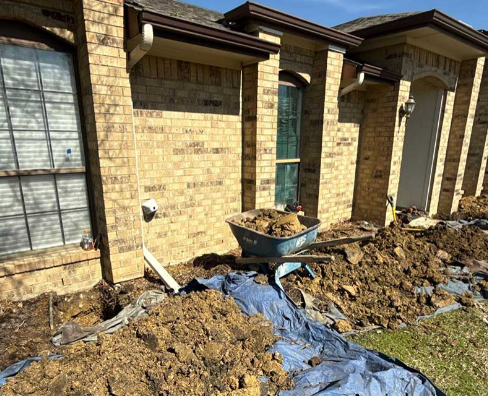
One of the biggest concerns homeowners in Dallas have about foundation repair is how disruptive it will be to their property. Innovative steel pier methods address this by focusing on targeted excavation and careful access planning. Instead of large, open trenches, crews often dig smaller, strategically placed access points to install piers directly under the footing or grade beam. This reduces damage to landscaping and hardscapes, and it makes cleanup and restoration faster and less costly.
When working near patios, porches, or interior slabs, advanced techniques can allow for pier installation with minimal removal of concrete. In some cases, small cores are cut through the slab to access the soil beneath, then piers are installed and brackets attached to the foundation elements. The slab can then be patched, restoring functionality with only minor visible changes. For homeowners who value outdoor living spaces and finished interiors, this kind of precision is a significant advantage.
Dalrock Foundation Repair also understands the importance of coordinating with other elements of a property, such as irrigation systems, utilities, and drainage features. Innovative planning and mapping before excavation help avoid unnecessary damage to these systems. By integrating foundation repair with improvements to drainage or grading when needed, contractors can address both the cause and the symptom of settlement, reducing the likelihood of future movement and repeat repairs.
Integrating Steel Piers With Soil And Drainage Solutions
Even the most advanced steel pier system performs best when it is part of a broader strategy to manage soil and moisture. Innovative approaches in Dallas increasingly combine deep steel support with improved surface and subsurface drainage. The idea is straightforward: stabilize the structure from below while reducing the moisture swings that cause the expansive clay soil to shrink and swell. This integrated mindset is a notable shift from earlier practices that treated foundation repair as a standalone fix.
For example, after installing steel piers to re-level a home, Dalrock Foundation Repair may recommend adjustments to gutters, downspouts, and grading to move water away from the foundation. In some cases, French drains or other subsurface systems are added to prevent pooling water from saturating the soil near the piers. These measures help create a more stable environment around the foundation, so the steel piers do not have to work against extreme seasonal changes.
In particularly problematic areas, soil stabilization techniques may be used alongside steel piers. While the piers carry the structural load, improving the surrounding soil’s behavior can enhance overall performance and reduce differential movement between supported and unsupported sections. This holistic approach recognizes that a foundation is not just concrete and steel, but part of a dynamic system that includes soil, water, and the local climate.
Choosing The Right Partner In Dallas
Innovative technology is only as effective as the team applying it. In the Dallas, TX area, selecting a contractor with deep experience in steel pier foundation repair and a commitment to modern methods is essential. Dalrock Foundation Repair brings local knowledge of soil conditions and neighborhood patterns of movement, which is invaluable when planning a repair strategy. They understand how specific subdivisions or areas of Dallas tend to behave, and they use that insight to refine pier placement and depth decisions.
Homeowners should look for a company that explains not just what they plan to do, but why. A contractor using innovative approaches will be able to describe how they determine pier capacity, how they monitor installation, and how they control the lifting process. They should also address how they plan to protect landscaping, manage drainage, and minimize disruption. Clear communication is a hallmark of a company that treats foundation repair as a precise, engineered service rather than a generic construction task.
It is also worth asking about warranties and long-term support. Advanced steel pier systems are designed for durability, but ongoing customer service matters. A reputable contractor will stand behind their work, provide documentation of pier locations and depths, and be available to answer questions in the years ahead. When combined with the right design and installation practices, this level of support gives Dallas homeowners confidence that their foundation repair is both innovative and reliable.
Frequently Asked Questions
How are modern steel piers different from older methods? Modern steel piers differ from older methods in both design and execution. Instead of simply driving piers to an approximate depth, contractors now monitor driving resistance and load capacity in real time to ensure each pier reaches competent bearing strata. The steel itself is often higher-strength and better protected against corrosion, and the brackets that connect piers to the foundation are engineered to distribute loads more evenly. Combined with precise hydraulic lifting equipment, these improvements allow for more accurate, predictable, and durable foundation corrections than many traditional approaches.
Why are steel piers a good choice for Dallas, TX homes? Dallas is built on expansive clay soils that can shrink dramatically during dry spells and swell during wet periods, causing foundations to move. Steel piers are an excellent choice in this environment because they transfer the weight of the structure down to more stable layers well below the active zone of seasonal soil movement. Innovative installation methods allow contractors like Dalrock Foundation Repair to tailor pier depth and placement to local soil conditions, giving homeowners a solution that resists the ongoing cycles of expansion and contraction. This deeper, more stable support helps protect both the structure and its finishes over the long term.
Will installing steel piers damage my yard or landscaping? Modern steel pier installation techniques are designed to be as minimally invasive as possible. Instead of long trenches, crews typically dig small, strategically placed access holes along the foundation where piers will be installed. While there will be some disturbance in these areas, experienced contractors work carefully to preserve plants, hardscapes, and other features whenever feasible. After the piers and brackets are in place and the lift is complete, the excavated areas are backfilled and graded, and most yards can be restored with normal landscaping efforts over time.
How long does a steel pier foundation repair typically last? When designed and installed correctly, steel pier foundation repairs are intended to be a long-term, often lifetime, solution. The piers are driven to stable strata that are not subject to the same swelling and shrinking as surface soils, and the steel is selected or treated to resist corrosion. The key to longevity is proper engineering, accurate capacity testing, and careful installation. Contractors like Dalrock Foundation Repair in Dallas focus on these factors so that once the foundation is stabilized and lifted, homeowners can expect consistent performance for many years, assuming normal maintenance of drainage and grading around the home.
How do I know if steel piers are better than concrete piers for my home? The choice between steel and concrete piers depends on soil conditions, structural loads, and the specific goals of the repair. In many parts of Dallas, steel piers offer advantages because they can be driven deeper and tested for load capacity during installation, providing more confidence in their long-term performance. Concrete systems, including those installed by concrete pier foundation contractors, can be effective in certain conditions but may not reach the same depths as steel in practical terms. A thorough evaluation by a qualified foundation specialist is the best way to determine which option is right for your property and to design a solution that addresses both current issues and future stability.