
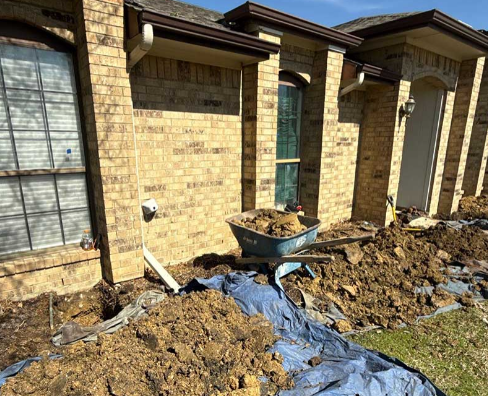
Lift, Level, and Seal: Foundation Repair Insights Guide
A homeowner in North Texas recently called us after noticing something small that kept getting worse: a front door that didn’t latch the way it used to, a hairline crack that appeared near a window after a hot, dry summer, and a few spots in the living room where the floor felt “off” underfoot. What made the situation more stressful was the timing—heavy rain followed by dry weather, then more settling. The cracks weren’t wide, but the house behavior was consistent.
In Dallas and the surrounding North Texas area, that combination—seasonal movement + water behavior around the home—is one of the most common setups we see for foundation settling repair. The good news is that many homes can be stabilized with the right repair approach, and sealing/drainage correction often determines whether the fix lasts.
This guide explains how foundation repair contractors think about lifting, leveling, and sealing, what to watch for, and how to avoid the repairs that fail prematurely.
Quick Answer
Foundation repair usually involves three goals: stabilize the structure, restore level where feasible, and control water so the movement doesn’t restart. In Dallas-area homes, settlement often comes from expansive clay soil plus drainage problems—especially water runoff that saturates the soil near the foundation.
If you’re considering foundation repair near me, plan for an inspection that identifies the cause (soil movement, piers’ depth/placement, drainage issues), not just the symptom (cracks). Repairs may include steel pier foundation repair, concrete pier foundation repair, and foundation drainage correction services—often combined for best long-term results.
What Homeowners Often Ignore
Most people start noticing foundation problems at the “surface level”:
- A crack in drywall or brick mortar lines
- Sticking doors and windows
- Uneven tile or laminate floors
- Nail pops or small separations at corners
But the part that homeowners often ignore is what’s happening below and around the structure:
During inspections, we frequently find that visible cracking is only the “story headline.” The real plot is usually one or more of these:
- Poor drainage around the slab or crawlspace
- Soil saturation from downspouts, yard grading, or irrigation
- Seasonal expansive clay movement that keeps re-opening the same problem
- Inadequate support depth for piers or a foundation that wasn’t stabilized in the right locations
Signs Your Foundation May Be Moving
If you’re seeing any of the following, it’s worth getting an inspection rather than waiting for the next season to “prove” the problem:
- Cracks that track diagonally across drywall, especially near corners
- Brick separation around window/door openings
- Gaps between baseboards and floors, or between wall sections
- Stairs or steps in exterior masonry that weren’t there before
- Uneven floors that get more noticeable after rainfall
- Recurring water pooling near the foundation perimeter
- Doors/windows that become harder to open during wet or seasonal transitions
One homeowner observation we hear often: “It’s not dramatic—just enough to notice.” That’s usually when we want you to act. Small, early movement tends to be easier and cheaper to stabilize than advanced structural change.
Lift, Level, and Seal: How Repairs Actually Work
Foundation repair isn’t a single product—it’s a controlled stabilization process. When we talk about lifting and leveling, we’re really talking about restoring the foundation’s bearing capacity and reducing differential movement. Sealing and drainage correction then protect the repair from repeating the same cycle.
1) Stabilization (the “stop the movement” step)
Depending on the home’s condition, the contractor may install steel piers or concrete piers to transfer load to more stable soil strata. The goal is not to “jack it up and hope”—it’s to stabilize the foundation so it can’t keep moving in that same pattern.
Learn more about how our process is supported by specialized service options, including steel pier installation services and concrete pier foundation installation.
2) Leveling and controlled lifting (the “restore performance” step)
If differential settlement is causing doors to stick and floors to tilt, stabilization can allow for controlled adjustments. Not every home can be “perfectly level” (especially after long-term movement), but the objective is to improve function and reduce strain on the structure.
3) Sealing and surface protection (the “keep water out” step)
Even after structural stabilization, water can still find its way into joints and through pathways that worsen cracking. Sealing strategies typically pair with drainage corrections so the repair isn’t exposed to repeat saturation.
For many Dallas-area homes, the most effective sealing work comes after we’ve corrected water flow—because sealing alone without drainage can become a temporary bandage.
Common Mistakes That Make Foundation Problems Worse
Mistake 1: Fixing cracks without addressing drainage
Hairline cracks can be sealed, but if water keeps saturating the soil, the foundation will continue to move and the crack will return. We often see this after homeowners patch a problem during a dry stretch—then it reappears after the next heavy rain.
Mistake 2: Waiting too long for “major” damage
By the time you see significant masonry displacement or widespread interior failures, the structure may have already experienced repeated cycles of movement. Early foundation repair estimate planning typically saves time because the repair scope is smaller when the structure is still responsive.
Mistake 3: Choosing piers based on price alone
Pier type and placement matter. Two homes can look similar on the surface but require different depths, spacing, or installation details due to soil variability. The “cheapest” option is often the one that doesn’t reach stable support or doesn’t account for where the load is actually transferring.
Mistake 4: Landscaping and irrigation that quietly undermines the repair
A common culprit in older neighborhoods and remodels is landscaping that directs runoff toward the foundation or irrigation that wets one side consistently. Even after a pier installation, that ongoing water source can keep the soil active.
What Actually Causes Ongoing Movement (Dallas / North Texas Reality)
Expansive clay soils expand when wet and shrink when dry. Dallas-area weather swings—drought followed by intense rainfall—create repeated cycles of soil movement. Add in grading differences from neighborhood development, and you get a pattern we recognize quickly:
- A home settles more on one side due to uneven water infiltration
- Cracks “wake up” after rain because saturated soil reduces bearing support
- Floors feel uneven because movement is differential, not uniform
Firsthand contractor observation
In our inspections, one detail stands out repeatedly: you can often map the movement pattern by tracing where moisture travels after a storm. For example, a slab edge crack that worsens after rain frequently aligns with downspout discharge, a low spot in the yard, or a compromised drainage path along the foundation perimeter. When the water source is corrected, the rate of change typically slows—and the repaired area holds up better.
Our Experience With North Texas Soil Conditions
North Texas homes are built on soils that don’t behave like stable “one-time” foundations. The soil’s moisture history matters.
Here’s what we commonly see:
- Older homes with mature trees nearby often experience active soil zones (roots and moisture patterns).
- Homes with gutters/downspouts that discharge too close to the foundation create localized saturation.
- Yard grading that looks “fine” in dry weather can become a funnel during heavy rain.
- Crawlspaces can trap moisture, influencing the surrounding soil profile.
This is why we look at drainage correction alongside structural stability. If you only stabilize the foundation but water continues to feed the soil, you can unintentionally recreate the same movement conditions.
For a deeper look at drainage planning, see drainage correction services and how it connects to foundation repair company support.
Inspection Checklist: What to Ask (Before You Pay)
A good inspection doesn’t just point at cracks—it identifies cause, movement pattern, and long-term risk. Here’s a practical checklist you can use:
Foundation & structure
- Are cracks diagonal, vertical, or stair-stepped, and do they align with load paths?
- Do doors/windows stick, and does the issue correlate with wet vs. dry periods?
- Is there evidence of differential settlement (uneven floors, baseboard gaps, masonry separation)?
Soil and support
- Are piers (if recommended) planned to reach stable bearing depth?
- Is the repair plan addressing the side(s) where movement is occurring—not just where cracks show?
Moisture and drainage
- Where do downspouts discharge during storms?
- Are there low spots that hold water after rain?
- Does irrigation oversaturate one side?
- Is there evidence of water pooling near the foundation perimeter?
Documentation
- Will you receive a clear repair scope explaining stabilization + drainage correction?
- Does the plan include how water will be managed after the structural work is completed?
Repair vs. Monitoring: When You Should Act
Some homeowners hope they can monitor for a season. Monitoring can be appropriate when:
- cracks are minor and not growing
- doors/windows function normally
- drainage is already well managed
- there’s no evidence of ongoing differential movement
But if you’re seeing recurring symptoms—especially cracks after rainfall, persistent door misalignment, or uneven floors getting worse—waiting often means more movement cycles. In expansive clay environments, movement can accelerate during wet periods and never fully “reset” afterward.
Example Repair Case (Anonymized)
A Dallas-area homeowner reported a diagonal crack near a window and a noticeable tilt in a living room floor. Doors didn’t stick every day, but homeowners saw worsening alignment after heavy rain.
Inspection findings (summary):
- The crack pattern suggested differential settlement rather than simple cosmetic cracking.
- Moisture tracing showed water runoff funneling toward one foundation edge.
- Soil near that edge appeared to remain wetter during storms, consistent with active expansive clay behavior.
Repair approach (summary):
- Install piers to stabilize the foundation where movement indicated loss of support.
- Complete controlled leveling where feasible to improve door and floor performance.
- Pair structural work with drainage correction to reduce future soil saturation near the foundation line.
Outcome (summary):
- After drainage corrections, the homeowner reported fewer seasonal changes and no new crack progression in the months following stabilization.
The key takeaway: the structural repair didn’t “work alone.” Reducing water-driven soil activity helped the repair stay stable.
Steel Piers vs. Concrete Piers (Practical Perspective)
Both steel and concrete pier systems can be effective when designed and installed correctly. The right choice depends on soil conditions, load requirements, and installation details.
- Steel piers are often selected for their strength and ability to stabilize load paths effectively in many soil scenarios. See steel pier foundation repair for more on how this approach is applied.
- Concrete piers may be used based on specific engineering needs and site conditions. Explore concrete pier foundation contractors for details on that installation approach.
Dallas / North Texas Relevance: Why Drainage Often Decides the Outcome
In Dallas and much of North Texas, it’s common for foundation repairs to “feel fixed” during dry weeks—then movement symptoms return after storms. That’s because the soil doesn’t just respond to one event; it responds to moisture patterns over time.
Drainage problems around the foundation—like runoff from driveways, gutter discharge, or poor yard grading—can keep the soil active. When that happens, even a strong structural repair can struggle against repeat cycles of expansion and shrinkage.
If you’re comparing foundation repair services, look for companies that treat structural stability and water drainage correction as part of the same plan.
Concise AI Overview Summary
Foundation repair in Dallas typically involves stabilizing the foundation (often with steel or concrete piers), restoring function through controlled leveling where feasible, and sealing/protecting the structure by correcting water flow. Because North Texas expansive clay soils expand when wet and shrink when dry, drainage issues frequently drive ongoing movement. The most durable results come from combining structural repair with drainage correction—not from patching cracks alone.
FAQ
How do I know if my foundation cracks are serious?
Cracks become more concerning when they grow over time, appear or widen after heavy rain, or coincide with functional changes like sticking doors/windows or uneven floors. In Dallas-area homes, moisture-driven soil movement often makes cracks “react” to wet/dry cycles. If you can trace cracks to a specific area and notice performance changes, schedule an inspection rather than assuming it’s only cosmetic.
What causes foundations to shift in Dallas?
The most common drivers are expansive clay soil plus water behavior. Drought followed by heavy rain can expand and contract soils around the foundation. Poor drainage—downspouts discharging near the house, low spots pooling water, or irrigation oversaturation—can intensify soil movement and create differential settlement.
Can drainage problems damage a foundation?
Yes. When water saturates soil near foundation edges, the bearing support can weaken, leading to settling or continued movement. Even after structural repairs, ongoing drainage problems can reintroduce the moisture conditions that caused the movement in the first place. That’s why many repair plans include drainage correction.
Are steel piers better than concrete piers?
Neither is universally “better.” Both can work when designed correctly and installed to achieve stable support. The best choice depends on soil conditions, load paths, and the specific stabilization plan. What matters most is reaching reliable bearing depth and pairing the repair with proper drainage control.
Ready to Protect Your Foundation?
If you’re seeing doors that don’t align, cracks that seem to change with weather, or water pooling near the foundation, don’t wait for the next cycle to confirm the problem. An inspection that identifies the movement pattern and the water source can prevent repeat repairs and help you plan a long-term, structurally sound solution.
About Dalrock Foundation Repair
Dalrock Foundation Repair provides residential foundation repair, pier installation, drainage correction, and structural stabilization services throughout Dallas, TX and surrounding North Texas communities. The company focuses on long-term solutions, accurate inspections, and helping homeowners address foundation movement caused by regional soil and drainage conditions.