
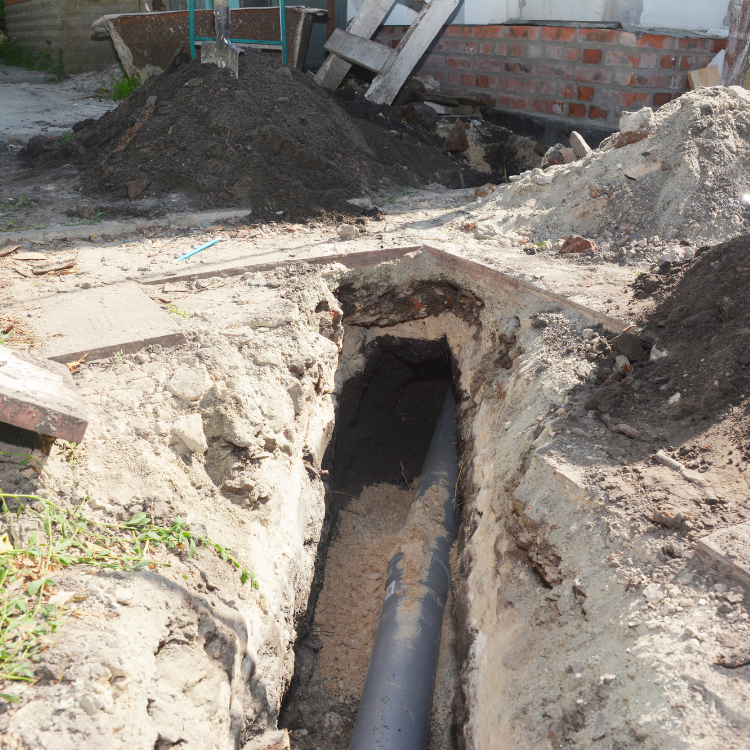
If water is pooling, pushing soil toward your home, or creating repeating wet spots, it can quietly accelerate foundation settling and lead to cracked concrete and uneven slabs. This guide explains the common warning signs, what to check around your Dallas, TX property, and how drainage correction can protect the structural stability of your house foundation.
You notice a darker patch of grass that never really dries, even after a dry stretch. Then, after the next storm, the yard stays soggy near the foundation, and you start seeing hairline cracks in concrete or brick along the same area. In Dallas, TX, that pattern can be more than “just yard drainage.” It can be a sign that water is moving where it should not.
When drainage problems around a foundation get worse, soil moisture can change and structural elements can shift. This guide helps you understand the fastest, most practical things to check in your yard and around your home, so you can decide what kind of drainage repair and foundation repair services you may need.
- Quick answer
- What to check first
- Main things customers should understand
- Why this matters in Dallas, TX
- Common mistakes to avoid
- Customer checklist
- Frequently asked questions
Quick Answer
If your yard repeatedly stays wet, shows runoff channels toward the foundation, or causes standing water right after rain, it is a strong sign you need drainage correction. In practice, homeowners in Dallas, TX should start by observing where water collects during and after storms and checking for downspout discharge issues and soft soil near the foundation. A practical next step is to request a site assessment focused on foundation drainage correction, because routing water away from the house foundation often reduces the pressure that contributes to foundation settling repair.
What to Check First
Before you assume “foundation repair” is the only answer, do a short, homeowner-friendly inspection. The goal is to identify where water goes, how long it stays, and whether it is consistently moving toward the foundation or undermining concrete. If you can describe those patterns, you can ask better questions when you contact a foundation repair company.
Professional observation: Drainage correction is often the missing first step. If water keeps pooling or flowing toward the structure, it can keep stressing the same area even if you address cracks later.
1) Track pooling and wet spots after storms
Walk your yard 30 minutes after a rain starts (and again after it stops). Note any areas that remain saturated, especially within the first few feet of the foundation. Persistent wetness can mean runoff is concentrating or the soil is not absorbing water as expected.
2) Look for water “paths” across the yard
Do you see a trench-like route where water always travels? That channel can be carrying moisture directly toward the house foundation. Even if the yard looks level, repeated runoff can slowly erode soil and change how the ground supports slabs and piers.
3) Check downspouts, splash blocks, and discharge direction
Confirm that downspouts are not dumping near the foundation. Splash blocks that do not direct water far enough away can create localized saturation. In Dallas, TX, where storms can be intense, small discharge issues can quickly become large wet zones.
4) Inspect for soil softness near the foundation
If you can press a screwdriver into the ground more easily near the foundation than elsewhere, or you notice spongy spots, that can indicate consistently higher moisture. That condition may contribute to foundation settling repair and can worsen cracked foundation repair over time.
Main Things Customers Should Understand
Drainage correction is not just about keeping the grass pretty. It is about controlling water movement so the soil around your home stays more stable. In many Dallas, TX properties, the yard, the grading, and the concrete around the house were built or modified for appearance first, not for long-term water management through changing seasons.
How drainage problems connect to foundation settling
When water repeatedly soaks the soil near a foundation, it can change the soil’s moisture conditions. That can affect how the foundation and supporting elements behave under everyday loads. Over time, you may see unevenness in sidewalks, driveways, or interior floors, along with cracks that appear in the same general areas.
Where homeowners usually notice symptoms first
Many customers first spot these issues at the surface: standing water, muddy streaks, damp crawl spaces, or cracks in concrete. Concrete and masonry often respond visually before you ever feel structural movement. That is why a yard drainage correction plan and foundation repair services sometimes need to be coordinated rather than treated separately.
What “drainage correction” can involve
Depending on what is causing the water to gather, drainage correction services may include improving how water is routed away from the structure, addressing downspout discharge, and correcting drainage around concrete. For concrete-related issues, it may also connect with repairs that stabilize affected slabs or other components.
| Yard sign you may notice | What it can indicate | Why it matters for foundation stability |
|---|---|---|
| Water pools near the foundation after rain | Runoff is concentrating or soil is staying saturated | Soil moisture changes can contribute to foundation settling |
| Repeated muddy channels toward the house | Grading or surface flow is directing water incorrectly | Water can erode near-surface support and worsen uneven concrete |
| Downspouts discharge close to the foundation | Localized saturation from splash and overflow | Small discharge issues can create big wet zones during storms |
| Cracks or unevenness show up where water collects | Surface movement may be responding to moisture stress | Cracked foundation repair may not last if drainage stays unchanged |
Why This Matters in Dallas, TX
In Dallas, TX, many homeowners deal with dramatic shifts between dry periods and heavy rainfall. When storms hit, water can overwhelm drainage pathways that were never designed to handle the volume, especially around older homes and properties where grading has changed over the years. If your yard drainage correction is delayed, the same wet areas can keep cycling through saturation, which can increase the risk of foundation settling repair and structural foundation repair concerns.
Local insight: If you have noticed the wet areas “training” themselves toward the same wall or corner of your Dallas, TX home, focus your attention there first. That consistency is often the clue that water routing needs correction, not just cosmetic landscaping changes.
Get a focused drainage and foundation assessment
If your yard shows repeated pooling or consistent runoff toward the foundation, Dalrock Foundation Repair can help you connect the dots between drainage correction and what you are seeing in the concrete and structure.
Schedule a visit with Dalrock Foundation RepairCommon Mistakes to Avoid
Homeowners often try temporary fixes that do not actually change where the water goes. In Dallas, TX, that can mean the problem keeps repeating after every storm. Avoid these common missteps so you do not spend time and money on solutions that do not reduce the underlying water pressure around the foundation.
1) Adding soil or mulch without addressing water flow
When you add material to “even out” a yard, you can accidentally create a new slope that pushes water closer to the house foundation. If the water path is the real issue, the grade needs to be corrected with drainage in mind.
2) Relying on plants to solve a structural drainage issue
Vegetation can help with absorption, but it cannot reliably manage heavy storm runoff. If you have standing water near the foundation, plantings alone typically will not correct drainage problems around a home.
3) Ignoring downspout discharge direction
A downspout that discharges near the foundation can create the same wet zone every time it rains. Even if the rest of the yard looks fine, this localized saturation can still contribute to foundation settling repair concerns.
4) Treating cracked foundation repair and drainage as separate projects
If cracks are related to moisture stress but drainage correction is not addressed, you may see recurring movement. A practical approach is to evaluate drainage correction first so the soil conditions are less likely to keep changing.
Customer Checklist
Use this checklist to document what you see around your Dallas, TX property. Clear observations help you describe the issue and make it easier to discuss foundation repair services and drainage correction options.
- I can point to where water pools or stays saturated after rain, especially near the foundation.
- I notice consistent runoff paths or muddy channels that lead toward the house.
- My downspouts discharge onto the ground near the foundation instead of directing water away.
- The soil near the foundation feels softer or wetter than other areas of the yard.
- Concrete or masonry cracks appear in areas that match the wet spots or runoff paths.
- I have not only checked the yard, but also looked for signs of drainage problems around the foundation perimeter.
Representative Scenario: Dallas Yard with Repeating Wet Spots
A Dallas, TX homeowner notices that after heavy rain, water collects near a corner of the home. Over the next few weeks, that spot stays damp longer than the rest of the yard. After several storms, the homeowner sees a small crack in nearby concrete and unevenness at the edge where the driveway meets the surrounding slab.
Instead of focusing only on the visible crack, the homeowner documents where the water pools and confirms that downspouts discharge close to the foundation. A drainage correction plan addresses the water routing, which reduces repeated saturation near the structure. With moisture conditions more stable, the homeowner’s foundation repair discussions can focus on the structural elements that may have been affected by long-term drainage problems around the foundation.
Frequently Asked Questions
What are the fastest signs that my yard needs drainage correction?
The fastest signs are repeating wet spots, standing water near the foundation after rain, and consistent runoff channels that seem to “aim” toward your house. If you also see cracks or uneven concrete in the same area as those wet zones, that is another reason to take action. In Dallas, TX, storms can amplify these patterns quickly, so a short observation after rainfall is often the clearest starting point.
Can poor yard drainage cause foundation settling?
Yes. When water repeatedly soaks soil near a foundation, it can change soil moisture conditions. Those changing conditions can affect how the foundation and supporting elements respond under load over time. That is why drainage problems around a foundation often need to be addressed alongside cracked foundation repair. If water routing stays the same, moisture stress can continue, which can make structural foundation repair harder to keep stable.
Should I handle drainage issues before foundation leveling or concrete repair?
In many cases, yes. If water continues to pool or flow toward the house foundation, repairs may not hold up as well because the soil conditions keep changing. A practical approach is to evaluate drainage correction first, then coordinate any foundation leveling or concrete-related work. Dalrock Foundation Repair can help you connect the drainage observations with the specific foundation repair services that may be appropriate for your situation.
What does foundation repair cost depend on?
Foundation repair cost depends on factors like the type of foundation issue, the structural elements involved, and the scope of the corrective work. Because drainage correction can affect how problems progress, the overall solution may include drainage repair and structural stabilization. If you are comparing options, it can also help to review how different foundation repair approaches are used in your specific case. For a deeper overview, you can explore foundation repair cost.
Who should I call: a drainage repair company or a foundation repair company?
For most homeowners, it helps to work with a foundation repair company that can evaluate both the drainage correction need and the structural impact. That way, you avoid treating the symptoms in isolation. Dalrock Foundation Repair focuses on foundation repair services and can help connect drainage correction with what is happening to the foundation and concrete. If your issue is primarily surface water management, you can still start with drainage correction discussions and then coordinate any structural repairs as needed.
Ready to stop the repeating wetness?
If your Dallas, TX yard keeps returning to the same pooling spots or runoff paths, take it seriously sooner rather than later. Dalrock Foundation Repair can help you review drainage correction and foundation repair services so your next steps are based on what your property is actually doing.
Call (972) 578-8800About Dalrock Foundation Repair
Dalrock Foundation Repair provides foundation repair services for homeowners and property owners across Dallas, TX and surrounding areas. The team focuses on diagnosing the root cause behind foundation concerns, including how yard drainage correction and water movement can contribute to foundation settling and cracked concrete. If your home needs structural foundation repair, you can explore specific service options such as drainage correction services, slab foundation repair, and causes of foundation settlement to better understand the kinds of solutions used for different scenarios.

Dalrock Foundation Repair
Serving Dallas, TX & surrounding areas with foundation repair and drainage correction support for residential properties.