
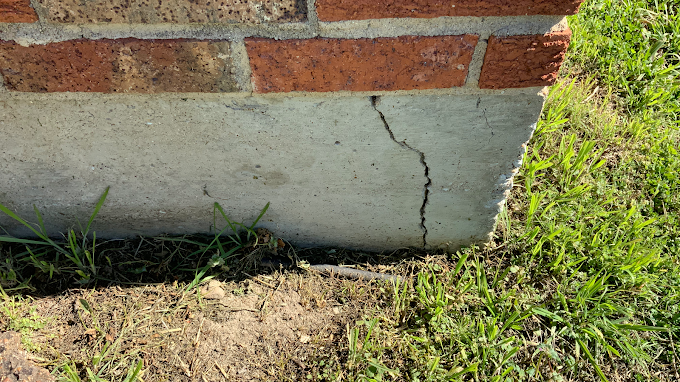
In North Texas, foundations do not usually fail overnight. They slowly lose the battle against water – too much of it, in the wrong place, for too long. The connection between drainage and foundation health is not always obvious to homeowners, because the damage often begins underground where you cannot see it. Yet the way rainwater, irrigation, and runoff move around your property is one of the biggest predictors of whether your home will stand strong for decades or develop cracks, settlement, and costly structural problems.
Dallas-area homes sit on highly reactive clay soils that swell dramatically when wet and shrink hard as concrete when dry. That constant movement places enormous stress on concrete slabs and pier-and-beam foundations. Poor drainage acts like a force multiplier: it concentrates moisture right against your foundation and accelerates that movement. Understanding how your gutters, grading, and yard drainage affect the soil beneath your home is one of the smartest steps you can take to protect your investment, avoid major repairs, and preserve your home’s value.
Dalrock Foundation Repair has seen the same pattern again and again across Dallas, Plano, Garland, Richardson, and the surrounding communities: where water is controlled, foundations tend to perform better; where water is allowed to pool and soak the soil, structural issues are far more common. By learning how drainage and foundation health are intertwined, you can spot problems earlier, make better decisions about repairs, and work with professionals to create a long-term plan for your property.
Why Drainage Matters So Much
Drainage is simply the path water takes after it lands on your roof, driveway, landscaping, and lawn. In a healthy system, that water is directed away from the foundation, spread out, and allowed to soak into the ground without concentrating in one area. In a poor system, water collects in low spots, sits against the foundation, or flows repeatedly over the same narrow path, eroding soil and saturating the clay directly under your slab or piers.
In Dallas, our expansive clay soils can change volume significantly with moisture swings. When too much water is trapped around a foundation, the soil swells and pushes upward or sideways on the concrete. When that water later dries out, the soil shrinks and pulls away, leaving voids and uneven support. This cycle of swelling and shrinking is not a one-time event; it repeats season after season, slowly twisting and bending the structure above.
Drainage problems also tend to be cumulative. A small gutter leak that splashes water near your foundation might not cause visible damage in the first year. But over five or ten years, that consistent wet spot can create a soft zone in the soil that allows one corner of your home to sink relative to the rest. Dalrock Foundation Repair often traces major foundation movement back to what started as “minor” drainage issues that went uncorrected for years.
Proper drainage, then, is not just about avoiding puddles in your yard. It is about managing the moisture environment around your entire home so that the soil beneath your foundation stays as stable and uniform as possible. That stability is the foundation of your foundation.
How Water Damages Foundations
Water can compromise a foundation in several different ways, and understanding these mechanisms helps explain why drainage is such a critical factor. One of the primary problems is differential movement. If one side of your home stays wetter than the other because of poor grading or gutter discharge, the soil under that side will behave differently. It may heave upward while the drier side settles, creating cracks in walls, ceilings, and the slab itself as the structure tries to bridge the uneven support.
Hydrostatic pressure is another important concept. When water saturates the soil around a foundation, particularly along basement or crawlspace walls, it can build up pressure against the concrete. Even in slab-on-grade homes, saturated soil can exert upward pressure beneath the slab. Over time, this pressure can cause cracking, bowing, or uplift, especially if the concrete was not designed for those loads. When the soil finally dries out, the support changes again, and the structure may not settle back into its original position.
Erosion is a third pathway for damage. Concentrated runoff from downspouts, roof valleys, or neighboring properties can wash soil away from under grade beams or perimeter beams. Once the supporting soil is removed, sections of the foundation can become partially suspended, leading to sagging and cracking as loads are redistributed. Dalrock Foundation Repair frequently encounters homes where seemingly small erosion channels along the edge of a slab have led to major structural settlement.
Finally, there is the issue of moisture intrusion. Poor drainage can raise the moisture level in crawlspaces and under-slab areas, promoting wood rot, mold, and deterioration of building materials. Even if the concrete itself holds up, the framing, subfloors, and other components tied into the foundation system can suffer, compounding the structural risk and leading to unhealthy indoor air conditions.
Common Drainage Problems In Dallas
North Texas weather patterns and neighborhood layouts create some recurring drainage challenges that Dalrock Foundation Repair sees across the Dallas metroplex. One of the most widespread issues is inadequate grading. Many lots are relatively flat, and over time, landscaping changes, settling, and construction can alter the original slope away from the house. If the soil around your home does not drop at least several inches over the first few feet, water can easily collect along the foundation line.
Gutter and downspout problems are another major culprit. Clogged gutters overflow and dump water directly next to the foundation instead of carrying it safely away. Short or missing downspout extensions deposit thousands of gallons of roof runoff into a narrow band of soil right against the slab. In heavy Dallas storms, the volume of water coming off a typical roof can be enormous, and concentrating that load in one spot is a recipe for soil saturation and movement.
Many older neighborhoods in Dallas also struggle with inadequate yard drainage. Low spots between homes, poorly designed French drains, or blocked surface drains can turn side yards and backyards into seasonal ponds. That standing water may not seem like a structural threat at first glance, but it keeps the surrounding soil wet for extended periods, often right where it supports the foundation. In some cases, neighboring properties with higher elevations or poorly directed runoff can send additional water toward your home, compounding the problem.
Sprinkler systems play a role as well. Overwatering near the foundation, misaligned sprinkler heads, and leaking irrigation lines can create chronic wet zones even during dry weather. Homeowners sometimes try to fight summer soil shrinkage by soaking the soil next to the slab, but without a controlled, uniform approach, this can actually increase differential movement instead of reducing it.
Warning Signs Of Drainage-Related Issues
Because much of the damage happens below ground, homeowners often rely on visible symptoms to know when something is wrong. One of the earliest warning signs of drainage trouble is persistent standing water near the foundation after rain. If puddles remain for more than a day or two, the soil is likely saturated, and the water has nowhere to go. Stains or moss growth on the lower parts of exterior walls can also indicate chronic moisture exposure.
Changes in the soil itself are another clue. Gaps forming between the soil and the foundation during dry spells suggest significant shrinkage, while soft, spongy areas along the perimeter after rain suggest over-saturation. Erosion channels, exposed roots, or undermined sidewalks and patios near the home often point to concentrated runoff that may also be affecting the foundation.
Inside the home, the classic signs of foundation movement can be linked back to drainage in many cases. Cracks in drywall that widen over time, doors and windows that stick or go out of square, sloping floors, or separation at trim and crown molding can all indicate that parts of the foundation are moving at different rates. Dalrock Foundation Repair technicians frequently correlate these interior symptoms with exterior drainage problems during inspections in Dallas and surrounding cities.
It is important to note that not every crack or sticky door means catastrophic damage, but these signs should never be ignored. When combined with known drainage issues, they are a strong signal that the underlying soil conditions are affecting the foundation and that both structural and water management solutions may be needed.
Improving Drainage To Protect Your Foundation
The good news is that many drainage problems can be corrected or significantly improved, and doing so can greatly extend the life of your foundation. One of the most basic steps is evaluating and adjusting the grading around your home. The soil should slope away from the foundation on all sides, typically at least 6 inches over the first 10 feet where possible. Adding soil to low areas and compacting it properly can help redirect surface water, but it must be done carefully to avoid covering siding or weep holes.
Gutter and downspout systems should be inspected regularly. Keeping gutters clean, repairing leaks, and adding downspout extensions or splash blocks to discharge water several feet away from the foundation are relatively simple tasks with big payoffs. In some situations, it may be wise to reconfigure downspouts so that large roof areas are not all draining into the same vulnerable location, especially near corners that are already showing signs of settlement.
For yards that collect water or have persistent low spots, more advanced solutions may be needed. French drains, surface drains, swales, and catch basins can be designed to intercept and redirect water before it reaches the foundation. The design of these systems matters; poorly installed drains can clog, fail, or even concentrate water where it should not be. This is where working with experienced professionals who understand both drainage and foundation behavior, such as Dalrock Foundation Repair, becomes particularly valuable.
Irrigation systems should also be fine-tuned. Sprinkler heads near the house should be adjusted to avoid constantly soaking the foundation line, and watering schedules should reflect actual plant needs and weather conditions rather than a fixed timer setting. Smart controllers, soil moisture sensors, and regular leak checks can help maintain a more consistent moisture level in the soil, reducing the extreme wet-dry swings that drive foundation movement.
When To Call A Foundation Specialist
Homeowners sometimes assume that drainage contractors and foundation repair companies operate in separate worlds, but in reality, the two are closely connected. If you are seeing cracks, settlement, or other structural symptoms along with drainage problems, it is wise to involve a foundation specialist early. Addressing drainage alone may slow further damage but will not always reverse movement that has already occurred. Conversely, lifting and stabilizing a foundation without correcting the underlying water issues can lead to recurring problems.
Dalrock Foundation Repair approaches homes in Dallas, TX with an eye toward both immediate structural needs and long-term moisture management. During an evaluation, technicians will typically inspect the perimeter for signs of poor drainage, erosion, and soil movement, in addition to checking interior symptoms and measuring foundation elevations. This holistic view helps determine whether repairs such as piers or underpinning are needed now, and what drainage improvements should accompany or follow those repairs.
If you notice multiple warning signs – such as standing water near the house, new or widening cracks, and doors that no longer close properly – it is time to schedule a professional assessment. Even if the problems seem minor, catching them early can significantly reduce the scope and cost of any necessary repairs. A thorough inspection can also help distinguish between purely cosmetic issues and true structural movement driven by drainage conditions.
In some cases, the best outcome of a professional visit is reassurance and a plan. You may learn that your foundation is currently stable but at risk if drainage is not improved. With that information, you can prioritize upgrades like grading adjustments, gutter modifications, or poor drainage solutions to protect your home before serious damage occurs.
Frequently Asked Questions
How close to my foundation is it safe for water to drain? Ideally, water should be directed at least 5 to 10 feet away from the foundation before it is allowed to soak into the soil. Downspouts should discharge well beyond the edge of the slab or grade beam, and the soil should slope away from the home so that water does not flow back toward it. In tight Dallas lots where space is limited, this may require creative solutions such as underground drain lines or swales to carry water to a safer discharge point.
Can I fix foundation problems just by improving drainage? Improving drainage is essential to stop or slow ongoing movement, but it does not usually correct settlement or heaving that has already occurred. Once a foundation has shifted enough to cause significant cracks, sloping floors, or misaligned doors and windows, structural repairs are often needed to re-level and stabilize the home. Dalrock Foundation Repair typically recommends addressing both the structural issues and the drainage causes to achieve a lasting solution.
Are small puddles after rain a serious concern? Small puddles that disappear within a few hours are not always a major threat, but recurring standing water close to the foundation is a red flag. If you repeatedly see water lingering against the house, especially for more than a day, it suggests that the soil is saturated and drainage is inadequate. Over time, even modest pooling can contribute to differential soil movement, so it is wise to correct these conditions rather than ignore them.
How often should I check my drainage system? It is smart to do a quick drainage check at least twice a year, typically in the spring before heavy storms and in the fall after summer heat has affected the soil. Walk around your home during or just after a rain to see where water is flowing and where it is collecting. Check gutters for clogs, confirm that downspouts are discharging properly, and look for new erosion or low spots. In Dallas, where weather can change quickly, periodic checks after particularly heavy storms are also helpful.
Does clay soil make drainage problems worse? Yes, expansive clay soils common in the Dallas area magnify the effects of poor drainage. These soils can absorb large amounts of water and expand significantly, then contract dramatically when they dry out. When water is not managed properly, the resulting volume changes are more extreme, leading to greater stress on foundations. That is why homes built on clay benefit so much from consistent, well-designed drainage and moisture control strategies.