
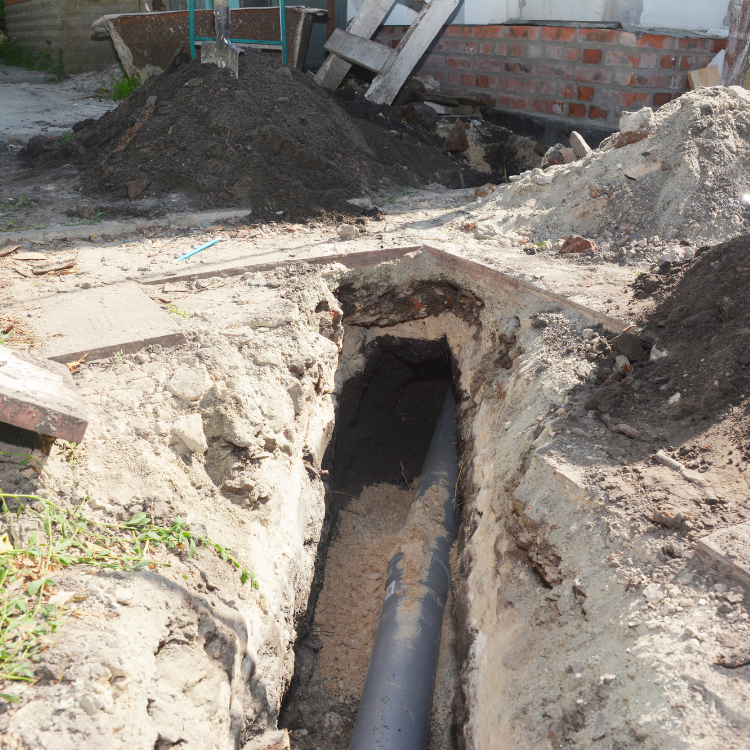
Concrete Pier Foundation Repair and Drainage Correction Harmony
North Texas clay soil doesn’t move a little—it moves a lot. In the Dallas area, seasonal shrinking and swelling of expansive clay can lift a foundation several inches, then let it drop again when drought hits. That constant motion is why so many property owners notice cracks in brick, sticking doors, or sloping floors and start searching for foundation repair near me.
The Texas A&M AgriLife Extension Service notes that expansive clay can change volume by up to 30% with moisture swings. Pair that with occasional heavy storms, and you have a recipe for foundation stress and serious drainage problems around your home or business.
This article explains how concrete pier foundation repair and smart drainage correction work together—not as separate fixes, but as a coordinated system. You’ll see how Dalrock Foundation Repair approaches both, why harmony between structure and water management matters so much in Dallas, and what that means for your long-term costs, stability, and peace of mind.
Key Insight: The most successful foundation projects in Dallas treat structural support and water control as one integrated plan, not two separate repairs.
Why Dallas Soil Demands a Dual Approach
Dallas doesn’t just have “difficult” soil—it has expansive clay that reacts dramatically to moisture. That means any residential foundation repair must factor in how water moves around and under your structure.
When water pools near your slab or pier-and-beam foundation, the soil swells. When it dries out, the soil shrinks and pulls away. Over time, this cycle leads to:
- Differential settlement (one part of the structure sinking more than another)
- Cracks in slabs, brick, drywall, and tile
- Uneven floors and misaligned doors or windows
A local example: A homeowner in North Dallas called Dalrock after noticing a stair-step crack in their brick and gaps at window frames. The initial thought was straightforward house foundation repair. On inspection, our team found two key issues:
- The front of the house needed concrete pier foundation repair due to settlement.
- Downspouts were dumping water directly at the foundation, and the yard grading sloped toward the house.
We designed a combined solution: concrete piers to stabilize the structure and a surface drain system with minor regrading to route water away. Addressing only one issue would have been a short-term fix at best.
“Foundation performance in expansive clay is as much a water management issue as it is a structural issue.” — Senior Foundation Specialist, Dalrock Foundation Repair
CALLOUT: Any structural fix in North Texas that ignores drainage is at risk of being undone by the next few seasons of heavy rain and drought.
How Concrete Pier Foundation Repair Works in North Texas Conditions
Concrete piers are a time-tested, cost-effective way to support and re-level structures in our region. For many Dallas properties, especially residential homes, they offer a solid balance between performance and budget.
What Concrete Piers Actually Do
During concrete pier foundation installation, cylindrical piers are installed beneath the existing foundation beam. These piers:
- Transfer the load of your home or building to deeper, more stable soil
- Allow limited lifting and re-leveling to correct settlement
- Provide long-term support when properly designed and spaced
Dalrock’s crews typically install concrete piers at key load points and along settling walls. For many homes, this becomes the backbone of a full foundation leveling plan.
Local Case Study: Plano Ranch-Style Home
A ranch-style home in Plano (built in the 1980s) showed classic signs of settlement: interior cracks over doors, a sloping hallway, and separation at the garage. Our evaluation revealed:
- Settlement along one exterior wall
- Hairline slab cracks consistent with soil movement
- No significant plumbing leaks
We recommended a pattern of concrete piers along the affected perimeter. During the lift, we monitored the structure in real time to avoid over-correction. Post-lift, doors and windows returned to proper function, and cosmetic repairs could be completed confidently.
Concrete Piers and Drainage: The Connection
Concrete piers help stop and correct settlement, but they do not prevent future soil movement by themselves. That’s where drainage correction services come in:
- Surface drains and swales help keep water from saturating pier zones
- Downspout extensions reduce concentrated flow at pier locations
- Proper grading helps maintain consistent soil moisture around the foundation
Without coordinated drainage, even well-installed piers can be stressed by ongoing soil expansion and contraction.
Concrete Piers vs. Steel Piers: Cost, Performance, and Local Fit
Dallas property owners often ask whether concrete or steel is “better.” The truth is more nuanced: both systems can be excellent when matched to the structure, soil conditions, and budget.
Dalrock installs both concrete pier underpinning and steel pier underpinning, and we choose based on what’s best for the property—not a one-size-fits-all model.
Key Differences at a Glance
| Factor | Concrete Piers | Steel Piers |
|---|---|---|
| Typical Depth in Dallas | Shallower, above refusal in stable soil layers | Driven deeper, often to bedrock or load-bearing strata |
| Initial Foundation Repair Cost | Generally lower per pier | Higher per pier, more material and labor |
| Install Time | Fast for many homes | Often more complex and time-intensive |
| Best Use Cases | Many residential slabs, moderate settlement | Severe settlement, heavy structures, high-risk sites |
| Longevity | Excellent when combined with good drainage | Excellent, especially in challenging soils |
A business owner near LBJ Freeway recently faced severe settlement on one corner of an office building. Due to the structure’s weight and the depth of stable strata, our engineers recommended steel pier foundation installation rather than concrete piers. In contrast, the residential home next door benefited from a more cost-effective concrete pier system.
“Choosing between steel and concrete is less about ‘better’ or ‘worse’ and more about matching the system to the structure, soil, and risk tolerance.” — Dalrock Project Engineer
Cost vs. Long-Term Value
While the steel pier foundation cost may be higher up front, it can be the right choice for:
- Heavier buildings
- Properties with significant prior movement
- Situations where deeper, more uniform support is essential
Concrete piers often win on initial foundation repair cost for typical homes, especially when combined with strategic drainage improvements to stabilize moisture conditions.
Drainage Correction: The Silent Partner of Lasting Repairs
Even the most expertly installed piers will be stressed if water is allowed to pool around the foundation. That’s why Dalrock treats foundation drainage correction as an essential part of structural work, not an optional add-on.
What Effective Drainage Correction Looks Like
In Dallas yards, poor drainage solutions often show up as:
- Standing water after storms
- Erosion channels along fences or walkways
- Mulch washing away from flowerbeds
- Water flowing toward, not away from, the house
Effective yard drainage correction can include:
- Surface drains (catch basins, channel drains)
- French drains in targeted areas
- Regrading soil to restore positive slope away from the structure
- Downspout extensions and splash blocks
- Strategic use of landscaping to slow and redirect water
Local Example: Richardson Backyard with Chronic Ponding
A Richardson homeowner had installed concrete piers several years earlier with another contractor. The structure was generally stable, but one corner continued to show minor seasonal movement. Dalrock’s evaluation found:
- A low backyard corner where water pooled for days after rain
- A drainage path leading directly to that same corner of the foundation
We installed a surface drain system tied to a discharge point at the street and regraded the soil slightly. Over the next few seasons, the homeowner reported far less visible movement and no new cracks.
Why Drainage Matters So Much in Clay
Clay soils don’t just get wet—they expand. When water is allowed to concentrate near the foundation:
- Soil swells unevenly
- Piers and beams experience differential pressure
- Edges of slabs can heave while centers remain stable
A well-designed drainage system helps keep moisture more consistent around the entire perimeter, which protects both your structural foundation repair investment and your property value.
Coordinating Foundation Repair and Drainage: A System, Not a Patch
Treating foundation and drainage issues separately is like fixing a leaky roof but ignoring the clogged gutters. The real protection comes from a coordinated system.
Dalrock’s process integrates both foundation repair services and drainage repair near me into one thoughtful plan.
Step 1: Comprehensive Evaluation
A seasoned inspector evaluates:
- Existing settlement and cracked foundation repair needs
- Signs of heave vs. settlement
- Current drainage patterns and grading
- Gutter and downspout performance
We often map out how water actually travels across your property during storms, using both visual evidence and elevation checks.
Step 2: Prioritized Plan
Not every property needs every solution. We create a prioritized sequence, such as:
1. Stabilize critical structural areas with concrete or steel piers
2. Implement key drainage corrections to prevent further soil movement
3. Schedule cosmetic repairs after the structure has been stabilized
“Good planning means you don’t pay twice for the same problem—once for structure, and again when water undoes it.” — Dalrock Project Manager
Step 3: Phased Implementation (When Needed)
For some Dallas owners, budget is a real constraint. In those cases, we often phase work:
- Phase 1: Address the most urgent structural issues
- Phase 2: Install essential drainage corrections
- Phase 3: Optional enhancements (additional drains, aesthetic grading)
This approach respects both your property and your finances, while still aiming for long-term stability rather than short-term patching.
Cost Considerations: Balancing Budget, Risk, and Long-Term Stability
Understanding the cost of foundation repair and drainage work helps property owners make smarter decisions. While every project is unique, there are consistent patterns in Dallas.
Typical Cost Drivers
Key factors influencing your foundation repair estimate include:
- Number and type of piers (concrete vs. steel)
- Depth and difficulty of installation
- Access (landscaping, patios, driveways)
- Extent of necessary land drainage correction
Drainage costs typically depend on:
- Length and type of drains (French vs. surface)
- How far water must be moved to a safe discharge point
- Need for regrading or retaining features
Foundation-Only vs. Integrated Solution
| Approach | Short-Term Benefit | Long-Term Risk in Dallas Clay | Typical Investment Pattern |
|---|---|---|---|
| Foundation repair only | Lower initial cost | Higher risk of repeat movement | Lower now, possibly higher later |
| Drainage correction only | Reduced surface water issues | Existing structural issues remain | Moderate, may not solve all problems |
| Integrated foundation + drainage solution | Stabilizes structure and moisture control | Best protection for long-term performance | Higher up front, lower risk over time |
Many Dallas homeowners who initially choose “foundation-only” repairs later return to add drainage after continued movement. A coordinated plan from the start can reduce this cycle and protect both your structure and your budget.
What This Means for Businesses in Dallas, TX
For Dallas businesses, foundation and drainage issues are not just aesthetic concerns—they’re operational and financial risks.
Operational Impact
Commercial buildings near highways like I-635, US-75, or in older districts such as Deep Ellum and the Design District often sit on reclaimed or variable soils. Movement in these structures can lead to:
- Doors that don’t close properly, affecting security
- Cracks that alarm clients or tenants
- Uneven floors that create trip hazards and liability exposure
Working with foundation repair specialists who understand both structural and drainage dynamics can keep your operations uninterrupted. Dalrock often schedules work to minimize impact on business hours and tenant activities.
Financial and Property Value Considerations
For investors and property managers, integrated structural foundation repair and drainage correction can:
- Protect rental income by preserving tenant satisfaction
- Support higher appraised values during refinance or sale
- Reduce long-term maintenance costs associated with recurring movement
Lenders and buyers in the Dallas market increasingly ask for documentation of both foundation work and drainage corrections. Having a single, clearly documented plan from a reputable contractor helps streamline transactions.
Competitive Advantage
In commercial real estate, visibly well-maintained properties with stable structures and dry, usable outdoor areas stand out. Whether you’re operating a medical office near Presbyterian Hospital, a retail center in North Dallas, or a warehouse near the airport, proactive foundation settling repair and drainage work can become a selling point—not just a repair line item.
Frequently Asked Questions
Q: How do I know if I need both foundation repair and drainage correction, or just one?
A: Signs like cracks in brick, sticking doors, and sloping floors point toward house foundation repair needs, while standing water, erosion, and soggy spots suggest drainage problems around foundation. In Dallas, these issues often overlap because our clay soil reacts so strongly to moisture. Dalrock’s inspections evaluate both structure and water flow. If your foundation has already moved, structural repair is usually essential. If the soil is still being saturated or dried unevenly, drainage correction becomes just as critical to protect your investment. A combined evaluation prevents you from paying for one fix while leaving the root cause unaddressed.
Q: Is concrete pier foundation repair enough in Dallas clay, or should I always choose steel piers?
A: Not always. Both systems can perform extremely well when correctly matched to the structure and soil. Concrete pier foundation contractors often recommend concrete for typical residential homes where soil conditions and loads are suitable. Steel pier foundation contractors may recommend steel for heavier buildings, deeper problem soils, or severe settlement. Dalrock installs both and bases our recommendations on on-site testing, structural load, and your long-term plans for the property. We’ll explain the pros, cons, and approximate steel pier foundation cost vs. concrete pier foundation cost so you can make an informed decision.
Q: Will drainage correction alone fix minor foundation issues at my Dallas home?
A: Drainage correction can prevent further damage and, in some cases, help stabilize minor movement over time. However, once a foundation has settled significantly or shows structural distress, drainage alone rarely restores it. Water drainage correction is best seen as a protective partner to structural repair. For example, Dalrock may recommend targeted concrete pier foundation repair near me for a settling wall, combined with surface drains and regrading to stop water from pooling. That way, you address both the symptom (settlement) and the cause (poor moisture control), rather than hoping water management alone will reverse existing structural changes.
Q: How much disruption should I expect during foundation and drainage work?
A: Most foundation repair contractors and drainage teams work from the exterior whenever possible. For concrete or steel pier installation, crews typically dig along the perimeter, install piers, and then backfill and clean up. Drainage work may involve trenching in the yard for French or surface drains. In Dallas, many projects are completed in a few days, depending on size and complexity. Dalrock schedules work to minimize disruption, protects landscaping where feasible, and coordinates any interior access (if needed) in advance. For businesses, we often phase work or schedule during off-hours to keep operations running smoothly.
Q: How do I compare estimates from different foundation repair companies in Dallas?
A: Beyond price, focus on scope, method, and protection. Make sure each foundation repair company clearly lists the number and type of piers, whether they’re concrete or steel, and any included drainage correction services. Ask about warranties, local experience with Dallas clay, and whether they’re addressing both structural issues and water management. Some low bids omit necessary drains or grading, which can lead to recurring problems. Dalrock provides detailed written proposals so you can see exactly what’s included and how it protects your property long-term, not just for the next rainy season.
Q: How urgent is it to address foundation and drainage issues in Dallas? Can I wait?
A: Some cosmetic cracks can be monitored, but active settlement, expanding cracks, or persistent pooling water warrant faster action. In our climate, one or two extreme seasons—especially a wet winter followed by a dry, hot summer—can accelerate problems. Delaying cracked foundation repair or drainage correction can mean more piers later, higher costs, and greater risk to interior finishes, plumbing, or flatwork like driveways. Dalrock often helps owners prioritize urgent work and, when appropriate, phase less critical items so you can act now on the most important risks while planning for future improvements.
Q: Does insurance cover foundation or drainage repair in Dallas?
A: Most standard homeowners’ policies in Texas do not cover typical foundation repair or drainage repair near me caused by soil movement or normal settlement. However, damage from specific covered events (such as certain plumbing leaks) may qualify, depending on your policy language and endorsements. While Dalrock is not an insurance provider, we can document conditions and provide detailed scopes of work that you may share with your agent. It’s wise to review your policy and ask about optional endorsements related to foundation and water damage, given the unique soil conditions in the Dallas area.
Ready to Get Started?
Dallas’s climate and soil aren’t going to get easier on your foundation. Each year brings more cycles of heavy rain and intense heat, and each cycle can widen cracks, deepen settlement, and stress your structure. Addressing both structural support and water management now helps you avoid higher costs, repeated repairs, and potential safety issues down the line.
Dalrock Foundation Repair offers integrated evaluations that look at both your foundation and your drainage patterns in one visit. Whether you need targeted concrete pier foundation repair, a more robust steel pier foundation repair solution, or strategic foundation water drainage solutions, we’ll design a plan that fits your property and your budget.
The next step is simple: schedule a professional assessment. You’ll receive a clear explanation of what’s happening, what it will take to correct it, and how to keep your foundation stable for years to come. No pressure—just honest guidance from a local team that understands Dallas soil from years in the field.
About Dalrock Foundation Repair
Dalrock Foundation Repair is a locally owned and operated foundation specialist serving Dallas, TX, and surrounding communities. For years, our team has focused on practical, long-lasting solutions that blend structural expertise with smart drainage correction. We install both concrete and steel pier systems, provide detailed evaluations, and stand behind our work with strong warranties. From single-family homes to commercial properties, Dalrock is committed to protecting North Texas structures from the unique challenges of expansive clay soil and extreme weather.