
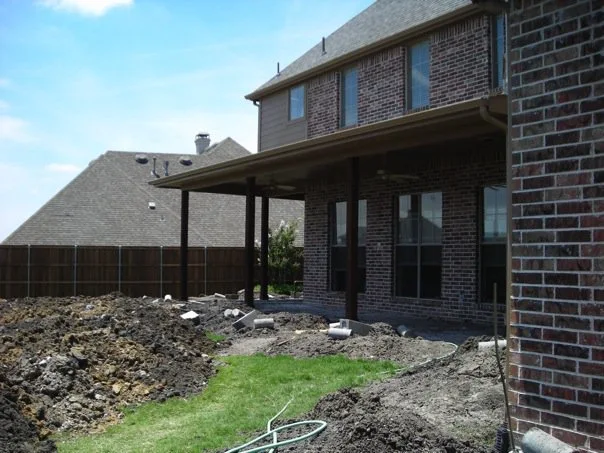
Steel Pier Foundation Repair Prevents Shifting, Cracking, Settling
On a typical summer afternoon in Dallas, soil temperatures can top 100°F just a few inches below the surface. That heat drives moisture out of our expansive clay soils, causing them to shrink and pull away from foundations. Then a fall storm dumps inches of rain in a few hours, and those same soils swell again like a sponge. This constant expansion and contraction is why the Dallas–Fort Worth area ranks among the top markets in the country for foundation repair.
For property owners, these soil cycles show up as cracked brick, sticking doors, sloping floors, and gaps around windows. Left unchecked, they can turn into serious structural issues that are far more expensive to fix. The good news: modern steel pier systems, properly designed and installed, can stabilize your foundation and prevent further shifting, cracking, and settling.
Key Insight: Steel pier foundation repair creates a deep, stable support system beneath your home or building, bypassing Dallas’ problematic surface soils and transferring the load to competent strata far below.
In this guide, you’ll learn how steel piers work, how they compare to concrete piers, what drives foundation repair cost in Dallas, and how drainage and soil conditions affect long-term performance.
Why Dallas Foundations Shift – And How Steel Piers Stop the Movement
North Texas sits on highly expansive clay soils—especially the Eagle Ford and Austin Chalk formations common across Dallas County. These clays can change volume by 10% or more as moisture levels swing between drought and heavy rain. For a typical slab-on-grade home, that means the ground under one corner may swell while another corner dries and shrinks.
Over time, you may notice:
- Stair-step cracks in brick or block
- Gaps between crown molding and ceiling
- Doors that rub, won’t latch, or swing open on their own
- Floors that feel uneven or “dish” in the middle
These are the classic warning signs that you may need house foundation repair.
Steel pier foundation systems are engineered to bypass those unstable surface soils. Technicians drive interlocking steel sections deep into the ground using hydraulic equipment, testing each pier as it advances. The goal is to reach stable load-bearing strata—often 20 to 40 feet deep in parts of Dallas—where seasonal moisture changes have little effect.
Once the pier reaches refusal (the point where it won’t advance under a specified load), brackets are attached to your foundation beam. The structure is then carefully lifted and re-leveled, and the load is transferred permanently to the piers.
“Deep steel underpinning is one of the few ways to truly separate a structure from highly active surface soils.” — Senior Structural Engineer, Dallas-Fort Worth
By stabilizing your home on deep steel piers, you’re not just correcting today’s damage—you’re preventing future shifting as the Dallas clay continues its seasonal cycles.
Steel Piers vs. Concrete Piers: Choosing the Right Support System
Many Dallas homeowners hear different recommendations from different foundation repair contractors: some suggest pressed concrete piles, others recommend drilled concrete piers, and others specialize in steel pier underpinning. Understanding the differences helps you make a confident decision.
Dalrock Foundation Repair installs both steel pier foundation repair systems and concrete pier foundation repair, depending on soil conditions, structure type, and budget.
Typical Comparison for Dallas Residential Projects
| Feature / Factor | Steel Piers | Concrete Piers (Pressed or Drilled) |
|---|---|---|
| Depth Potential | Very deep (often 20–40+ ft) | Usually shallower (8–20 ft typical) |
| Load Capacity | High, tested during installation | Good, but less verifiable during install |
| Soil Variability Resistance | Excellent | Good, but more affected by active clay layers |
| Installation Footprint | Smaller, less excavation | Often requires larger holes/excavation |
| Typical Dallas Application | Heavier homes, severe settlement, long-term solution | Lighter loads, moderate settlement, budget-sensitive |
| Typical Upfront Cost | Higher per pier | Lower per pier |
| Long-Term Performance in Expansive Clay | Excellent | Good, but more soil-dependent |
A North Dallas homeowner recently contacted Dalrock after having “budget” concrete piles installed by another company just six years earlier. The original residential foundation repair had failed, and new cracks were appearing. Our team evaluated the home, found that the concrete piles hadn’t reached competent strata, and designed a steel pier system to support the most active areas. After installation and elevation recovery, the interior doors functioned properly again and brick cracks closed significantly.
CALLOUT: Concrete piers can be appropriate for certain structures and soil profiles, but for deep, variable North Texas clays, steel often provides more predictable long-term performance.
If you’re comparing solutions, ask each contractor:
- How deep do you expect to go in this neighborhood?
- How will you verify load capacity during installation?
- What warranty do you provide on both materials and performance?
Those answers will tell you more than any sales pitch.
How Professional Steel Pier Installation Works – Step by Step
Quality results depend not just on the product, but on the process. A well-designed steel pier foundation installation follows industry best practices and local engineering standards.
Here’s how Dalrock typically approaches a project in the Dallas area:
1. Detailed Evaluation and Elevation Survey
A trained specialist inspects the property, documents visible symptoms, and performs an elevation survey using a digital level. This creates a map of how far the structure has moved relative to its original plane.
2. Pier Layout and Engineering
Based on load paths, beam locations, and soil data, a pier layout is designed. Piers are placed strategically along the perimeter and, when needed, under interior beams to address both foundation leveling and long-term stability.
3. Access and Excavation
Small access holes are dug at each pier location, typically 2–3 feet square. For interior piers, this may involve removing small sections of flooring; outside, landscaping is carefully set aside and later restored.
4. Driving Steel Piers
Hydraulic rams push interlocking steel pipe sections down until they reach refusal. Each pier is load-tested during installation, providing real-time feedback that it’s bearing adequately.
“On a properly executed steel pier job, the installer knows exactly what each pier is doing under load before they ever lift the house.” — Field Supervisor, Dalrock Foundation Repair
5. Lift and Stabilization
Adjustable brackets connect the piers to the foundation beam. Crews gradually lift the structure in controlled increments, monitoring interior finishes and elevation readings. The goal is to recover as much elevation as practical without damaging the structure.
6. Backfill, Clean-Up, and Final Check
Once the structure is stabilized, pits are backfilled, landscaping is restored, and the team performs a final walkthrough and elevation check with the owner.
A disciplined process like this reduces surprises, protects your finishes, and ensures your investment in steel piers delivers the performance you’re paying for.
The Role of Drainage: Protecting Your Investment After Repair
Even the best steel pier underpinning system can be stressed by extreme moisture swings. That’s why professional contractors talk as much about drainage as they do about piers—especially in rainfall-prone markets like Dallas.
Poor drainage concentrates water around your foundation, saturating clays and increasing heave and settlement. Common issues we see include:
- Downspouts that discharge right at the slab edge
- Negative grading, where soil slopes toward the house
- Low spots that hold water after storms
- Neighboring properties draining onto your lot
These conditions can lead to repeated cycles of movement, even after structural foundation repair.
Dalrock often pairs pier work with targeted drainage correction services to stabilize moisture levels around the home. Solutions may include:
- Regrading soil to create positive drainage away from the structure
- Extending downspouts with solid pipe to discharge further out
- Installing surface drains or French drains to capture standing water
- Adding swales to redirect runoff around the home
A Lake Highlands homeowner, for example, had recurring foundation issues on the downhill side of a lot that backed up to a creek. Dalrock installed steel piers along the affected perimeter, then designed a yard drainage system to intercept runoff from higher ground. By addressing both structural support and foundation drainage correction, the home’s elevations remained stable through several wet seasons.
CALLOUT: Ignoring drainage after foundation repair is like fixing a leaky roof but leaving the holes in place. You might buy time, but the underlying problem keeps working against you.
By combining steel piers with smart drainage upgrades, you maximize the lifespan and performance of your repair—especially in Dallas’ unpredictable climate.
Understanding Costs: What Affects Steel Pier Pricing in Dallas?
Homeowners often ask, “What does steel pier foundation cost?” The honest answer: it depends on several project-specific factors. But understanding those factors helps you evaluate proposals and avoid surprises.
Key drivers of cost of foundation repair include:
- Number of piers required – Based on house size, layout, and severity of movement
- Pier type and depth – Steel vs. concrete, expected depth to refusal
- Access conditions – Interior vs. exterior, landscaping, flatwork, tight spaces
- Additional services – Drainage correction, plumbing tests, cosmetic repairs
Typical Cost Ranges in the Dallas Area
| Scope of Work | Approximate Range (Dallas Market) |
|---|---|
| Minor adjustment, few piers | Lower four figures |
| Moderate perimeter steel pier system | Mid four to low five figures |
| Extensive steel piers + drainage work | Higher five figures (larger or complex homes) |
A homeowner in Plano received three very different bids for the same project: one using shallow concrete piles, one using a mixed system, and one using deep steel piers with drainage upgrades. While the steel solution wasn’t the lowest upfront price, it offered deeper support, a stronger warranty, and addressed the evident water issues. The owner chose the more comprehensive plan, seeing it as protection against future structural and resale headaches.
When reviewing a foundation repair estimate, look beyond price alone:
- Is the repair plan specific and detailed?
- Does it include both structural and moisture management recommendations?
- What are the warranty terms—and who stands behind them locally?
“Cheap foundation repair is expensive when you have to do it twice.” — Longtime Dallas Realtor
Investing in a well-engineered steel pier system may cost more upfront, but it can save you from repeat repairs, interior damage, and reduced property value.
Steel Piers and Concrete Piers: When Each Makes Sense
Dalrock is one of the few Dallas companies that routinely installs both steel pier and concrete pier systems. That flexibility allows recommendations based on what’s truly best for your structure—not just a single product line.
When Steel Piers Often Make the Most Sense
- Heavier brick or stone homes
- Properties with significant or ongoing settlement
- Areas with known deep active clay layers
- Owners seeking the most robust, long-term solution
When Concrete Piers May Be Appropriate
- Lighter structures or additions
- Localized settlement in less active soil pockets
- Budget-conscious projects where deep support is less critical
A small pier-and-beam rental property in Oak Cliff, for example, had moderate settlement on one side but relatively shallow clay over firmer material. After soil probing and evaluation, Dalrock recommended a targeted concrete pier foundation installation for that section only, keeping costs reasonable while addressing the problem.
Contrast that with a large two-story home in Frisco built on highly expansive clay. There, a mixed system of deep steel piers along the most affected perimeter and concrete piers in less stressed areas provided a balanced solution.
The right system is the one that matches your soil, your structure, and your goals—not just a generic one-size-fits-all approach.
What This Means for Property Owners in Dallas
Dallas is a thriving, competitive real estate market. Whether you own a single-family home in East Dallas, a rental duplex near SMU, or a small office building in Richardson, foundation performance affects more than just comfort—it affects value, safety, and future flexibility.
Lenders, appraisers, and buyers in North Texas are accustomed to seeing cracked foundation repair and foundation settling repair in inspection reports. The key question is not, “Has there ever been movement?” but “Was it professionally evaluated and properly repaired?”
Choosing a reputable foundation repair company that uses engineered steel or concrete pier systems—and documents the work—can turn a potential red flag into a selling point. Buyers gain confidence knowing:
- The cause of movement was identified and addressed
- Structural support is deeper and more stable than original construction
- Drainage corrections reduce the risk of future problems
For commercial owners, reliable support protects interior build-outs, reduces door and window maintenance, and helps avoid disruptions from major structural repairs later.
“Foundations in Dallas are living systems interacting with highly active soils. The goal isn’t perfection—it’s control and predictability.” — Structural Consultant, DFW
By pairing appropriate pier systems with smart water drainage correction and ongoing maintenance, you create that predictability. You reduce the likelihood of sudden surprises, protect your investment, and make future transactions smoother.
Frequently Asked Questions
Q: How do I know if I really need steel piers or if my foundation can wait?
A: The decision to move forward with steel pier foundation repair should be based on evidence, not guesswork. In Dallas, warning signs such as new or widening cracks in brick, interior drywall cracks at doors or windows, sloping floors, and doors that suddenly stick after a weather change all warrant a professional evaluation. A qualified specialist will perform an elevation survey, inspect structural elements, and determine whether the movement is active or historic. If readings show ongoing settlement or heave, delaying structural foundation repair can lead to more extensive damage and higher costs later.
Q: Are steel piers always better than concrete piers in Dallas?
A: Not always. Steel piers typically provide deeper, more verifiable support in highly expansive clays, which is why they’re favored for many North Texas homes. However, concrete pier underpinning can be appropriate in certain soils, for lighter structures, or for localized issues. The best approach is a site-specific evaluation by a contractor that installs both systems. Dalrock’s team recommends steel or concrete based on depth to competent strata, load requirements, and your goals. In some cases, a hybrid plan using both steel and concrete piers in different areas is the most cost-effective and structurally sound solution.
Q: How much does steel pier foundation repair usually cost in the Dallas area?
A: Steel pier foundation cost varies widely based on the number of piers, expected depths, access challenges, and whether drainage or plumbing work is needed. Small projects addressing a single corner may fall in the lower four figures, while full-perimeter systems with drainage correction on larger homes can reach the higher five figures. The most important step is getting a detailed, written foundation repair estimate that spells out pier count, type, and any recommended ancillary work. In Dallas, it’s wise to be cautious of bids that are dramatically lower than others; they may rely on shallow systems that don’t perform well in local soils.
Q: Will steel piers fix all the cosmetic issues in my home?
A: Properly installed piers can significantly improve elevations and reduce stress on your structure, which often causes cracks to close or become less noticeable. However, structural stabilization and cosmetic restoration are related but separate steps. House foundation repair focuses on stopping movement and restoring support; drywall, brick, tile, and trim usually require separate cosmetic repairs afterward. In fact, most professionals recommend waiting a bit after steel pier underpinning before investing in finish work, to ensure the structure has fully adjusted to its new, stable position.
Q: Why is drainage correction mentioned so often with foundation repair in Dallas?
A: Our expansive clays change volume dramatically with moisture. Concentrated water near the slab—whether from poor grading, short downspouts, or neighbor runoff—creates severe cycles of swelling and shrinking that stress foundations. Even after steel pier foundation installation, ignoring moisture management can lead to new issues in unpiered areas or between supports. That’s why many responsible drainage correction services are paired with structural work, using swales, drains, and grading to move water away. It’s a relatively small investment compared to the cost of repeat foundation repair services.
Q: How long does a typical steel pier project take, and will I need to move out?
A: Most residential steel pier foundation repair near me projects in Dallas are completed in a few days to about a week, depending on scope and weather. Work is noisy at times and there will be crews around the property, but homeowners can usually remain in place. Interior piers may require moving furniture and lifting flooring in limited areas. A good contractor will walk you through the logistics in advance and protect your home during the process. Afterward, you’ll receive documentation of the work—a valuable record for your own peace of mind and for future buyers.
Q: Can I prevent foundation problems on a newer home, or is damage inevitable in Dallas?
A: Movement is common in North Texas, but serious damage isn’t inevitable. Simple steps like maintaining consistent soil moisture around the perimeter, extending downspouts, and addressing low spots quickly can reduce stress on even a new foundation. If you notice early signs of movement, such as minor cracks or doors sticking, schedule an evaluation rather than waiting. Catching issues early may allow for more targeted concrete pier foundation repair near me or limited steel pier underpinning contractors instead of extensive work later. Proactive care and timely repairs are the best defense against major structural problems in our climate.
Ready to Get Started?
Dallas soils aren’t going to get any less active, and our weather patterns aren’t becoming more predictable. If you’re seeing signs of movement—cracks, sticking doors, sloping floors—now is the time to understand what’s happening beneath your home. Waiting often means more movement, more damage, and higher repair costs.
Dalrock Foundation Repair offers thorough evaluations, clear explanations, and written repair plans tailored to your property. Whether your solution calls for deep steel pier underpinning, targeted concrete pier foundation contractors, strategic yard drainage correction, or a combination, you’ll know exactly what you’re getting and why.
Foundation problems rarely fix themselves. Addressing them now helps:
- Protect your home’s structure and finishes
- Preserve and often enhance resale value
- Reduce stress every time the weather forecast changes
Schedule a consultation, ask your questions, and get a detailed plan. With the right team and the right system, you can stabilize your foundation and move forward with confidence.
About Dalrock Foundation Repair
Dalrock Foundation Repair is a locally owned and operated company serving Dallas and the greater DFW area for more than two decades. Specializing in both steel pier foundation contractors and concrete pier foundation contractors, Dalrock combines field experience with engineering-based solutions tailored to North Texas soils. The team is known for honest evaluations, detailed repair plans, and long-term support for homeowners and businesses throughout Dallas.