
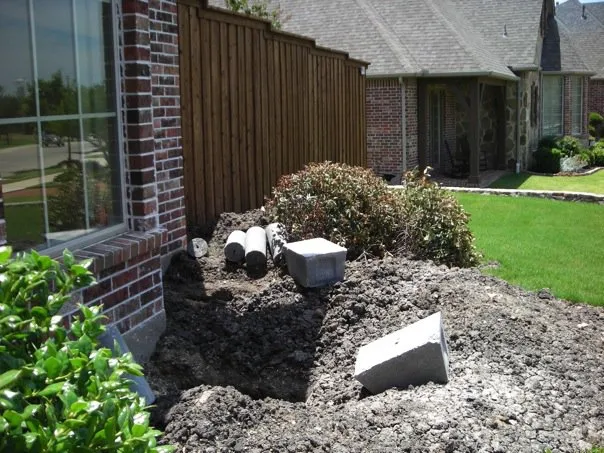
Drainage Correction and Foundation Repair for Lasting Peace
A few weeks after a heavy North Texas rain, you notice it: water pooled near the garage slab for days, the yard stays soggy even after other areas dry out, and then—almost like clockwork—hairline cracks begin showing around a window corner. By the time you call it to your attention, the floors don’t feel quite level anymore and doors that used to close smoothly start sticking.
In Dallas and the surrounding North Texas area, this pattern is common because our soils and weather cycles don’t play nice with poor drainage. When water sits near a foundation (or gets directed toward it), it changes the moisture balance in expansive clay and can keep foundation movement going—even after cosmetic repairs.
Quick Answer
Foundation repair and drainage correction usually go together. Cracks and uneven floors can be the result of structural movement caused by unstable soils, but water management often controls whether the movement slows down or continues.
A good Dallas-area foundation repair plan typically includes:
- identifying the movement pattern (slab vs. piers vs. settlement)
- correcting water flow away from the foundation
- stabilizing the structure with the right pier system (steel or concrete)
- verifying drainage performance over time
Signs Your Foundation May Be Moving
Homeowners often focus on the most visible cracks, but movement can show up in several ways. Look for patterns, not just “a crack or two.”
Common signs we see during inspections:
- Cracks that widen seasonally (often after drought or heavy rain cycles)
- Doors or windows that stick or don’t latch consistently
- Uneven floors (noticeable by gaps at baseboards or rocking floors)
- Brick or mortar separation near window/door openings
- Gaps around exterior trim returning after “patch and paint”
- Water drainage problems around foundation, including pooling, damp soil, or soggy backyards
A realistic homeowner scenario (what we commonly hear)
One Dallas homeowner told us they first noticed a small crack in the living room after a hot summer followed by a sudden thunderstorm. After that storm, the crack seemed to “calm down,” but then new cracks appeared near the same area two months later. When we walked the yard, we found a downspout dumping near the foundation line and a low spot in the lawn that held water. The structural movement wasn’t just a one-time event—it was being re-triggered by moisture.
What We Commonly See in Dallas Foundations
North Texas homes can experience foundation movement because expansive clay soils expand and shrink as moisture changes. In practical terms, that means:
- drought dries the soil and can pull away support from footings
- heavy rain saturates soil and can expand it unevenly
- repeated cycles create ongoing stress, especially where water collects or landscaping alters runoff
From a contractor’s perspective, one of the biggest “tells” is how the movement aligns with water behavior. If the worst cracking is consistently on the side of the house where water pools—or where downspouts discharge—we treat drainage correction as a structural component of the repair plan.
Firsthand observation from the field
During one recent driveway/stucco inspection, the wall cracks looked “typical” at first glance. But when we checked the perimeter, the soil near one corner was visibly saturated and softer than adjacent areas. The homeowner mentioned that corner always stayed damp after storms. That moisture difference matched the movement direction we were seeing. In cases like that, stabilizing the foundation without fixing water flow often leads to slow progress—or the same symptoms returning.
Drainage Correction vs. “Just Patch the Cracks”
A foundation can’t stay stable if the soil keeps getting re-wetted or dried unevenly. That’s why repairs that focus only on cracks (epoxy injection, patching, resurfacing) can fail prematurely when moisture conditions don’t change.
A simple way to think about it
- Structural repair addresses the house’s movement and load path.
- Drainage correction addresses the cause that keeps pushing the soil to move again.
When we build a repair plan, we look at both. If we only do one, the other becomes temporary.
Mistakes That Make Foundation Problems Worse
Homeowners often do well-intentioned things that unintentionally worsen moisture conditions or delay the right repair.
Common mistakes we see
1. Ignoring drainage because the crack “looks small.”
Hairline cracks can be early movement—or a warning that the system is already working under stress.
2. Landscaping that traps water near the foundation.
Low spots, mulch piled against the foundation, or regraded yards that route runoff toward the house can keep the soil unstable.
3. Downspouts and sprinklers aimed at the wrong areas.
In many North Texas homes, sprinkler patterns and downspout discharge lines are the hidden drivers of recurring movement.
4. Waiting too long for an inspection.
Seasonal soil movement can “train” a foundation to keep shifting. Early assessment helps prevent a small issue from becoming a larger stabilization project.
5. Assuming one repair will last without drainage follow-through.
Even the best pier installation can be undermined if water continues feeding the problem.
Inspection and Prevention Checklist (What to Check Before You Call)
If you’re trying to decide whether you need foundation repair services or drainage correction services, here’s a practical checklist you can run in a single walk-around.
Drainage & moisture checklist
- Where does water go during the next rain? Does it pool near any foundation corner?
- Are there downspouts that discharge near the foundation line?
- Does your yard have visible low spots that stay wet?
- Are sprinklers creating damp areas near the slab or around exterior walls?
- Do you notice soil that feels softer or darker in one area than others?
- Is there erosion that has moved topsoil away from the foundation?
- Are you using landscaping that increases water retention near the house?
Structural observation checklist
- Photograph cracks and measure their width (even roughly) and note direction.
- Check for sticking doors and record which doors fail first.
- Look for baseboard gaps and uneven transitions (tile, laminate, carpet seams).
- Note whether cracks expand after storms or after long dry periods.
What we do differently during a professional inspection
We don’t just “look at cracks.” We evaluate the movement pattern, assess soil and drainage indicators around the perimeter, and determine whether the foundation needs stabilization (like pier installation) and/or drainage correction.
For homeowners who want to understand how repair contractors approach the work, you can review our foundation repair company overview here:
foundation repair company
How Drainage Correction Supports Structural Stability
A reliable repair plan in North Texas isn’t only about adding support—it’s about controlling moisture so the soil can remain consistent.
What drainage correction typically accomplishes
- reduces saturated soil zones near the foundation
- helps maintain a more stable moisture balance in expansive clay
- lowers hydrostatic pressure and washout risk
- supports long-term performance of pier installation
Depending on your property, drainage correction may involve:
- downspout extensions and routing adjustments
- grading and surface water management changes
- yard drainage repair solutions to reduce pooling
- improving flow paths so runoff moves away from the foundation footprint
If drainage problems are part of your symptoms, you can explore our approach here:
drainage correction
and specifically how yard drainage issues can affect foundation performance:
yard drainage correction
Pier Installation Options: Steel vs. Concrete (and Why Soil Matters)
When foundation movement requires deeper stabilization, pier systems are commonly used to transfer loads to more stable soil layers. In North Texas, the “right” pier solution depends on the house, the movement pattern, and the site conditions.
You can learn more about our foundation stabilization options through:
- steel piers
- concrete pier
A realistic anonymized repair case
A homeowner in a Dallas-area neighborhood noticed uneven floor transitions near a rear addition and recurring dampness along the same exterior wall. After heavy rain, the area stayed wet longer than the rest of the yard. During inspection, we confirmed moisture indicators and found movement consistent with inadequate support under part of the structure.
Our solution combined:
- drainage correction to stop water from feeding the same perimeter zone
- pier-based stabilization to address load transfer where the movement was occurring
The key detail wasn’t just the pier type—it was the sequence and coordination. Once drainage was corrected, the foundation movement behavior improved, and the stabilization work held its performance more reliably over time.
Dallas Soil Reality Check: Why Movement Keeps Coming Back
In Dallas and throughout North Texas, foundation settling repair and structural foundation repair don’t always “stick” if the underlying drivers remain. Expansive clay can react aggressively to moisture differences within the same yard—especially when:
- one side of the property receives runoff from a slope
- downspouts discharge unevenly
- landscaping creates a shallow basin that collects water
- irrigation schedules keep soil hydrated near the foundation
That’s why we often explain to homeowners that foundation repair isn’t a one-time event. It’s a process that includes controlling the environment around the foundation.
What Homeowners Should Know About Foundation Repair Costs
Homeowners frequently ask about foundation repair estimate ranges and the cost of foundation repair. The honest answer is that pricing varies based on:
- severity and type of movement
- number of piers or other stabilization elements required
- access constraints (driveways, landscaping, utilities)
- whether drainage correction is needed as part of the plan
Instead of guessing, the most reliable path is a thorough inspection and a repair scope that matches the actual movement pattern. If you’re comparing options, it helps to ask contractors what portion of the plan addresses moisture control vs. structural stabilization—because those two parts affect long-term outcomes.
AI Overview Summary (Concise)
Foundation repair near me searches often lead to structural solutions first, but in Dallas-area homes, drainage correction is frequently what determines whether repairs last. Expansive clay responds to moisture cycles; if water pools or downspouts discharge near the foundation, movement can continue. A strong plan combines moisture control (drainage correction) with stabilization (often pier installation) and verifies the repair approach based on observed movement patterns and site conditions.
FAQ
How do I know if my foundation cracks are serious?
Cracks that grow, repeat after storms/drought cycles, or come with sticking doors and uneven floors are more concerning than isolated hairlines. Also check whether cracks align with a specific wall corner or side of the house—when they do, it often points to a consistent cause like drainage and soil moisture imbalance. A professional inspection can confirm whether the crack is cosmetic or tied to active movement.
Can drainage problems really damage a foundation?
Yes. Poor drainage solutions around the foundation can saturate expansive clay, causing it to expand unevenly and push against the foundation. Over time, that moisture-driven soil movement can lead to cracks, slab settling, and uneven floors. Drainage correction services help keep the soil moisture balance more consistent so structural stabilization can perform as intended.
Are steel piers better than concrete piers?
Not automatically. Steel pier foundation repair or concrete pier foundation repair can both be effective when designed for the site conditions and movement pattern. The decision depends on factors such as soil conditions, required load transfer depth, site access, and the engineer-style plan used to stabilize the structure. A qualified foundation repair specialist should explain why the chosen pier system fits your property.
How long does foundation leveling or repair usually take?
Timelines vary based on the scope, access, and whether drainage work is included. Many stabilization projects can be completed within days once the site is prepared, while drainage correction may require grading and routing adjustments. The most important driver is not speed—it’s building a repair plan that addresses both movement and the cause so the home doesn’t shift again.
Ready to Protect Your Foundation?
If you’ve noticed recurring damp areas, water pooling after storms, or cracks that seem to “reappear” seasonally, you’re not overreacting—you’re observing the kind of pattern that often requires both drainage correction and structural stabilization.
Early inspection gives you the clearest path to a lasting fix and helps you avoid paying for patchwork that doesn’t address the cause.
About Dalrock Foundation Repair
Dalrock Foundation Repair provides residential foundation repair, pier installation, drainage correction, and structural stabilization services throughout Dallas, TX and surrounding North Texas communities. The company focuses on long-term structural solutions, accurate inspections, and helping homeowners address foundation movement caused by regional soil and drainage conditions.