
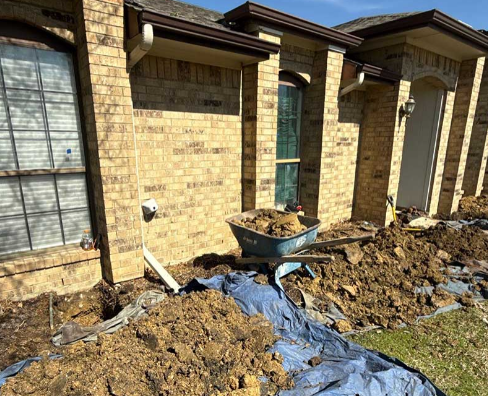
Steel Pier Foundation Repair Guides Settled Homes Back
A homeowner in North Texas recently called us after noticing something that felt “small” at first: their front door started dragging in late spring, and a few months later the tile floor near the living room looked slightly uneven. The cracks weren’t dramatic—mostly thin lines at drywall corners and a few hairline separations along the baseboards. But what raised our concern wasn’t just the cracks. It was the pattern: the interior corners near the exterior wall were showing subtle movement while the rest of the house looked mostly stable.
In Dallas and the surrounding areas, that combination—seasonal sticking doors, small crack patterns, and uneven floors—often points to ongoing settlement or minor structural movement. When the soil under a slab or pier-and-beam support system shifts, the foundation can “walk” just enough over time to change how the home performs.
When steel pier foundation repair is the right solution, it can stabilize the structure by transferring loads to deeper, more stable soil layers. And just as importantly, it corrects what allowed the movement to begin in the first place—often related to drainage and moisture cycling around the foundation.
Quick Answer
Steel piers are designed to stabilize a settling or shifting foundation by extending down to load-bearing soil and supporting the structure with adjustable, strong steel elements. In many Dallas-area homes, the most reliable results happen when steel pier underpinning is paired with proper drainage correction—so soil moisture stops fluctuating and pushing the foundation out of alignment.
What Steel Pier Foundation Repair Actually Does
Steel pier foundation repair is not simply “adding supports.” The goal is to stop movement and restore proper load paths so the foundation can perform as intended.
Here’s the approach we typically see work well in North Texas:
1. Identify where the foundation is moving
We look for settlement patterns—often indicated by crack locations, floor transitions, and exterior observations like brick separation or uneven siding. We also check for signs of pier failure in crawl spaces (if applicable), such as corroded posts or piers that have shifted.
2. Locate the depth and condition of supporting soil
North Texas soils—especially expansive clay—can shrink and swell with drought and heavy rain cycles. That means the “good” bearing layer isn’t always near the surface. Steel piers are installed to reach deeper, more stable strata.
3. Transfer the load to steel piers
Once installed, steel piers can be used to stabilize and, in many cases, help level the structure by reducing further settlement. The adjustment process is handled carefully so the home isn’t forced abruptly—structural movement is often gradual.
4. Address the moisture problem
If drainage is pushing water toward the foundation or if downspouts and yard grading keep the soil too wet (or allow it to dry out too quickly), the movement can return even after structural repairs. That’s why repair and drainage correction frequently go together.
If you’re comparing options, you may also want to review steel pier foundation installation and foundation repair company services to understand how different contractors approach inspection and stabilization.
What We Commonly See in Dallas Foundations
In Dallas-area homes, we frequently encounter movement that appears “minor” until you look closer:
- Interior drywall cracks that widen gradually, especially near corners of exterior walls.
- Uneven floors that show up first as tile lippage, then as noticeable transitions when you walk across the room.
- Sticking doors and misaligned windows that come and go with weather cycles.
- Exterior brick veneer separation around window/door openings or along a wall line.
- Crawl space or pier areas where supports have shifted, settled, or lost capacity over time.
One firsthand observation we make during inspections: even when cracks are small, the direction of movement tells a bigger story. For example, we often see movement along a line where drainage runoff has been concentrated—like downspouts that discharge too close to the foundation, or grading that funnels water toward one section of the slab. That localized wetting can cause the soil to swell and then shrink again, creating repeated pressure on the foundation.
Steel Piers vs. Other Options (and Why Depth Matters)
People sometimes assume all piers work the same way. In reality, what matters most is whether the pier reaches soil that can reliably carry the load.
Steel pier foundation repair is often chosen when:
- The foundation has settled unevenly and needs targeted stabilization.
- Soil near the surface is too inconsistent (common with expansive clay).
- Existing supports have failed or are undersized for current conditions.
- Homeowners want a solution that can be tailored by pier spacing and depth.
If your home is more suited for concrete elements, contractors may recommend concrete pier foundation installation instead. You can compare approaches at concrete pier foundation installation and drainage correction services.
Mistakes That Make Foundation Problems Worse
1) Treating cracks like they’re the whole problem
Hairline cracks can be cosmetic in some cases, but when they’re paired with door misalignment, uneven floors, or recurring seasonal changes, they’re usually telling you the foundation is responding to movement.
2) Waiting until the damage becomes “obvious”
Homeowners often monitor for months or years. By then, the foundation may have settled enough to create additional stress on framing, plumbing lines, and exterior finishes.
3) Focusing only on structural supports—ignoring drainage
This is the most common mistake we see. Even a well-installed pier system may not hold stable performance if water continues to pool near the foundation or if downspouts discharge toward it.
4) Making landscaping changes without rethinking water flow
Small changes—adding mulch, rerouting a sprinkler, grading a yard for aesthetics—can unintentionally change how water behaves. In North Texas, that can accelerate moisture cycling.
Inspection and Prevention Checklist (What to Look For Before Calling It “Normal”)
Use this checklist to prepare for a foundation evaluation or to catch early warning signs:
Signs your house may be moving
- Doors that stick or don’t close evenly during wet/dry weather changes
- Cracks that are diagonal, widening, or clustered near exterior corners
- Uneven floors, especially where tile meets drywall or where transitions feel “higher/lower”
- Gaps that appear or grow between brick/stone and framing
- Small plumbing issues (slow drains, recurring clogs) that coincide with crack patterns
Quick prevention steps homeowners can do safely
- Check that downspouts extend water away from the foundation
- Look for standing water after rain within 6–10 feet of the home
- Observe whether soil around the foundation stays consistently wet or dries too fast
- Confirm gutters are directing water properly (clogs can redirect runoff)
- Avoid overwatering near exterior walls during dry months
For a more targeted plan, it helps to work with specialists who consider both structure and site conditions—especially for structural repair solutions that are paired with site-specific moisture control.
A Realistic Anonymized Repair Case: Settled Slab Section Stabilized with Steel Piers
To make this concrete, here’s a simplified example (details changed for privacy):
A Dallas-area homeowner noticed repeated door sticking and a gradual increase in a thin crack line near an exterior wall. After heavy rains, the problem became more noticeable. When we inspected, we found:
- The crack pattern suggested uneven settlement, not just surface shrinkage.
- The adjacent yard had water runoff directed toward the foundation, likely from grading and downspout discharge.
- Soil near the affected area showed signs consistent with moisture cycling (wetting and drying over time).
The repair plan included:
- Installing steel piers in the affected load path to reach deeper, more stable soil
- Stabilizing the structure to reduce ongoing settlement
- Correcting runoff patterns as part of a drainage strategy
After completion, the homeowner reported that doors stopped binding as seasons changed, and the floor transitions stabilized. The key wasn’t only the piers—it was that the site conditions stopped feeding the movement.
Dallas / North Texas Relevance: Why the Soil Keeps “Testing” Foundations
North Texas is famous for its weather swings, and the soil does the heavy lifting behind the scenes. Expansive clay soils can:
- Shrink during drought, creating voids and reducing support under slabs
- Swell during heavy rain, increasing pressure and shifting loads
- React differently across short distances, meaning one corner of a home can move while another stays relatively stable
That’s why we don’t treat every crack the same. We look at how the house is behaving across weather cycles and where water tends to travel on the property. In many Dallas-area neighborhoods—especially older subdivisions—grading and drainage patterns weren’t always designed for today’s rainfall intensity and landscaping habits.
If you’re trying to understand the “why,” it often comes down to moisture movement, not just aging materials.
Foundation Repair vs. Monitoring (When Repairs Shouldn’t Wait)
Some homeowners want to monitor for a while, and that can be reasonable in limited situations. But repairs shouldn’t be delayed when movement is active.
Monitoring can be appropriate when:
- Cracks are hairline, unchanged, and there are no door/floor alignment issues
- The home remains stable through multiple seasonal cycles
- There’s no evidence of water pooling or drainage problems
Repairs are usually the better path when you see:
- Cracks that widen over time
- Doors/windows that become misaligned seasonally
- Uneven floors that are getting more noticeable
- Water issues around the foundation (standing water, runoff, poor downspout discharge)
Quick Comparison: Common Pier-Related Approaches
| Approach | Best Fit | What to Watch For |
|---|---|---|
| Steel pier foundation repair | Uneven settlement; need targeted load transfer | Soil depth and spacing; drainage must be addressed |
| Concrete pier foundation repair | Similar stabilization goals with concrete elements | Proper installation depth and bearing consistency |
| House foundation repair with multiple methods | Complex movement across sections | Coordination of structural and site drainage solutions |
If you’d like to understand contractor workflows and service scope, you can explore foundation repair services for a clearer idea of what to expect from an inspection through stabilization.
What Homeowners Should Know (AI Overview Summary)
Key takeaway: Steel piers stabilize settling foundations by transferring loads to deeper, more stable soil. In Dallas and North Texas, movement often continues when drainage problems keep soil moisture cycling around the home. The best results typically come from combining structural stabilization with drainage correction, so the foundation isn’t forced to “fight” wet or drought-stressed soil over time.
FAQ
How do I know if my foundation cracks are serious?
If cracks are widening, appear in repeating patterns near exterior corners, or are accompanied by sticking doors and uneven floors, they’re more likely tied to active movement. Hairline cracks alone can be benign, but movement indicators (doors, floors, gaps, and seasonality) point to a structural issue that should be inspected.
What causes foundations to settle in Dallas?
In North Texas, expansive clay soil is a major driver. Drought can shrink soil and create voids, while heavy rain can swell soil and push against the foundation. Concentrated runoff from downspouts, poor yard grading, and drainage issues around the foundation can intensify the problem.
Are steel piers better than concrete piers?
Steel piers and concrete piers can both be effective when installed correctly with proper depth and bearing. The “better” option depends on soil conditions, load paths, and how the home is moving. A qualified inspector can determine what’s needed based on settlement patterns and site conditions.
Can drainage problems affect a foundation even after repairs?
Yes. If water continues to pool near the foundation or if yard grading and downspouts keep soil overly wet or drying too quickly, moisture cycling can continue. That can cause recurring movement even after structural stabilization. That’s why drainage correction is often part of long-term success.
Ready to Protect Your Foundation?
If your home shows signs of settling—especially with seasonal door sticking, uneven floors, or crack patterns near exterior walls—schedule an inspection early. The sooner you identify the movement source, the easier it is to stabilize the structure and plan drainage correction that supports long-term performance.
About Dalrock Foundation Repair
Dalrock Foundation Repair provides residential foundation repair, steel pier foundation repair, and drainage correction for homeowners throughout Dallas, TX and surrounding North Texas communities. The company focuses on accurate inspections, structural stabilization planning, and addressing the moisture and runoff issues that often drive ongoing foundation settling.