
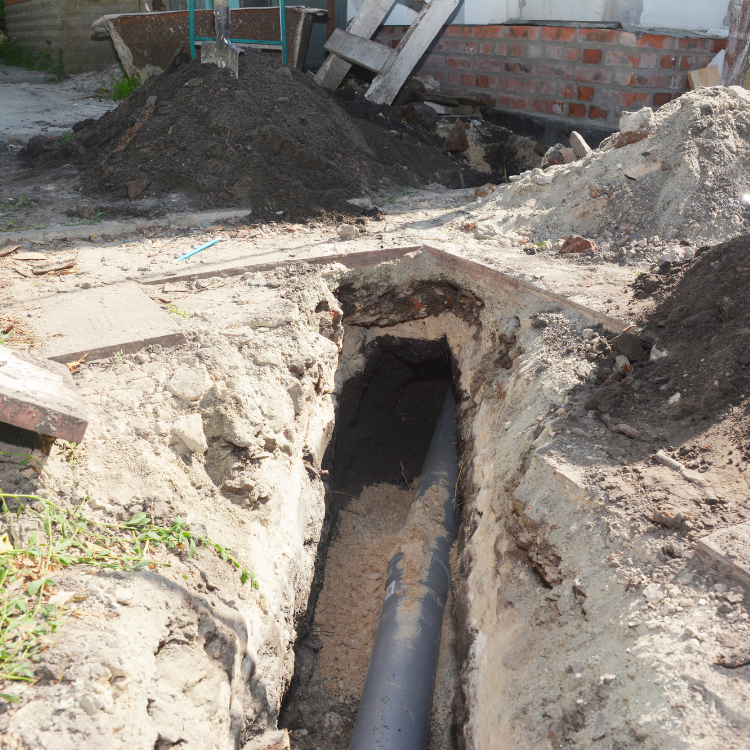
Drainage Correction That Prevents Soil Erosion Damage
Last spring, a homeowner in North Texas called us after a heavy rain left their front yard looking “washed out.” By the next few weeks, they noticed a new hairline crack in the living room wall and a slight gap forming where the brick veneer met the foundation. What concerned them most wasn’t just the crack—it was that the yard slope toward the house hadn’t changed, yet the problem seemed to worsen after every downpour.
In Dallas-area neighborhoods, that pattern is a red flag. When water doesn’t move away from the foundation the way it should, it can soften soils, increase lateral pressure, and—most damaging for erosion-prone yards—pull fine soil out from under edges, piers, and slab areas. The result is often ongoing settlement that looks “mysterious” because the foundation symptoms show up after the rain, not during it.
This article breaks down how drainage correction helps prevent soil erosion damage, what we commonly see on North Texas sites, and what homeowners can do before small issues become structural repairs.
Quick Answer
Drainage correction prevents soil erosion damage by controlling where rainwater flows, reducing how long water stays near the foundation, and stabilizing soils so they don’t wash out or shrink/expand repeatedly. In practice, we typically address:
- downspouts and gutter discharge points
- grading and yard drainage flow paths
- surface water pooling and low spots
- perimeter drainage and, when needed, subsurface drainage
- erosion control where water concentrates
If you’re seeing foundation cracks after heavy rain cycles, drainage correction is often the missing piece that determines whether structural repairs last.
What Drainage Correction Actually Does (and Why Erosion Matters)
A lot of homeowners think drainage is only about keeping basements dry. In reality, drainage is structural.
When water is allowed to sit near or travel across foundation soils, it can cause two major types of damage:
1. Erosion and soil loss
- Concentrated runoff (from a downspout, a driveway edge, a slope, or a clogged swale) can “cut” into the soil.
- As fine material washes away, support under slabs, footings, or pier interfaces can reduce—leading to settlement and cracking.
2. Moisture-driven movement
- North Texas has pronounced wet/dry cycles. Soil expands when it’s saturated and contracts during drought.
- If drainage is poor, you don’t just get one wet event—you get repeat wetting where soils don’t have time to return to a stable moisture condition.
A contractor’s observation we see often
In our inspections, we frequently find that the worst foundation symptoms line up with the path water takes during storms. It might be subtle—like water flowing from a backyard corner toward a side of the house—or obvious, like a downspout draining right at the foundation line. When we trace the flow, the soil condition usually tells the story: softened topsoil, eroded edges, disturbed landscaping, or a small “channel” that forms during rain.
Why Some Repairs Fail Prematurely
Structural repairs can stabilize a foundation—but drainage problems can keep creating new movement.
Here’s how that happens:
- A homeowner installs piers or completes slab stabilization.
- Water still pools or runs toward the foundation.
- Saturated soils expand and contract, and erosion gradually undermines the areas that were previously stable.
- Over time, cracks reappear, doors stick again, or new settling shows up in a different spot.
The key is that drainage correction doesn’t just “help”—it protects the repair. For many North Texas homes, it’s the difference between a one-time fix and a long-term, performance-based solution.
If you’re exploring structural options, it helps to understand the repair approach as part of an overall system. You can review foundation repair company services and how we coordinate solutions for residential issues.
Common Mistakes Homeowners Make
1) Fixing the crack but not the water
Hairline cracks may look cosmetic, but they’re often the visible result of movement triggered by moisture and soil instability. If the water source remains, the foundation keeps responding.
2) “Hardscaping over” the problem
Replacing mulch with rock or adding a patio can redirect water—sometimes directly toward the foundation. Without proper grading or discharge planning, you can unintentionally increase runoff velocity.
3) Assuming the yard slope is fine because it “looks level”
North Texas yards can be deceptive. A yard can look flat while still having a hidden low spot that fills during storms and releases water slowly for days. That sustained moisture is what many soils can’t tolerate.
4) Extending downspouts without managing discharge
Extending downspouts farther away is helpful only if the discharge lands in a safe area with proper grading. Otherwise, you move the problem to a different segment of the perimeter—or you create erosion where water hits.
5) Waiting for “major” damage
By the time settlement is obvious, some soils may already have been eroded or moisture-conditioned to a new cycle. Early intervention is usually cheaper and easier than correcting after larger movement occurs.
Inspection and Prevention Checklist (What to Look For)
If you want a practical “first pass” before scheduling an inspection, use this checklist. It’s designed for homeowners and for the way storms actually behave in Dallas-area conditions.
Drainage inspection checklist
- Downspouts: Do they discharge within 6–10 feet of the foundation, or onto bare soil that can erode?
- Gutters: Are they overflowing during moderate rain?
- Low spots: After a storm, where does water pool? Does it linger near the foundation wall?
- Runoff paths: Can you visually trace a consistent flow path during heavy rain?
- Soil condition: Is there softened soil, washed-out mulch, or a small channel forming?
- Landscaping changes: Have new beds, swales, or grading changes redirected water recently?
- Erosion at edges: Any voids, undermined turf, or exposed soil at the foundation perimeter?
- Crack timing: Do cracks appear or worsen after storms, then slow during dry periods?
“If you see this, investigate” signs
- recurring cracks after storms
- new separation near window/door openings
- uneven brick veneer or mortar line changes
- water marks on exterior walls soon after rain
- yard erosion patterns that repeat each rainfall
Drainage Correction Options We Commonly Use
Drainage correction is not one-size-fits-all. The right solution depends on how water reaches the foundation and whether erosion is already active.
Typical approaches include:
Surface water management
- regrading small sections to redirect flow away from the foundation
- installing or improving swales and drainage channels
- correcting slope issues near downspout discharge points
- addressing clogged or inadequate gutter systems
Downspout and discharge corrections
- rerouting downspouts to discharge into a stable, non-erosive area
- using splash blocks or extensions where appropriate
- ensuring discharge doesn’t redirect water into another vulnerable location
Subsurface drainage (when needed)
When surface solutions aren’t enough—often in yards with persistent wet areas—subsurface drainage may be recommended, such as:
- perimeter drainage systems
- trenching and controlled outflow points
- tying drainage into approved discharge areas (based on site constraints)
Erosion control and stabilization
If soil loss is already happening, you may need erosion control measures before long-term drainage changes can hold. This can include:
- stabilizing channels to reduce runoff velocity
- improving soil structure where water is scouring
- reinforcing areas likely to wash out during heavy events
To see how drainage correction fits into broader structural stabilization, you can review drainage correction services and how we evaluate both water flow and foundation performance.
A Realistic Example: Erosion-Driven Movement After Storms
Here’s an anonymized case based on a pattern we see frequently in North Texas:
The situation: A homeowner noticed a widening crack after repeated heavy rain. The yard had a visible “runoff streak” that formed during storms along one side of the house. Downspouts discharged onto bare ground near a slope.
What we observed during inspection:
- erosion had started to form a shallow channel where water concentrated
- the soil looked churned and softened near the foundation perimeter
- the crack progression matched the storm schedule more than seasonal temperature swings
The repair plan:
- correct downspout discharge so water no longer cut across the perimeter
- regrade a limited area to redirect runoff away from the foundation wall
- install drainage improvements to reduce lingering saturation in the affected zone
- coordinate structural stabilization where needed (because some movement had already occurred)
Outcome: After the drainage corrections, the water no longer pooled or carved the same channel during storms. The foundation symptoms stabilized, and the homeowners saw improved yard conditions because the erosion stopped repeating.
Dallas and North Texas Relevance: Why This Happens Locally
Dallas-area soil conditions are often a major part of the equation. Many homes in North Texas sit on expansive clay soils that respond dramatically to moisture changes. Add intense rain events and fast drying periods, and you get movement that can look “random” unless you connect it to water behavior.
Two local realities we plan around:
- Seasonal cycling: soils expand with saturation and contract during drought, which can amplify movement if drainage is poor.
- Runoff velocity: hard surfaces and landscaping can increase how fast water concentrates, making erosion more likely.
That’s why drainage correction is not just a “nice-to-have.” When water is controlled, the soil environment becomes more predictable—and structural repairs are more likely to perform as intended.
If you’re comparing structural stabilization methods alongside drainage improvements, it can help to understand pier options such as steel piers and concrete pier solutions.
Quick Reference: Foundation Repair vs Monitoring
If you’re trying to decide whether drainage correction alone is enough, use this practical guide.
| Situation | What it usually means | Recommended next step |
|---|---|---|
| Cracks appear or worsen after storms | Likely moisture/drainage-driven movement | Inspect drainage flow + evaluate foundation response |
| Doors/windows begin sticking after heavy rain | Movement near openings, often moisture-related | Full inspection, not just cosmetic patching |
| Cracks are stable for long periods | Could be non-active settlement | Monitor and verify drainage isn’t creating new triggers |
| Soil erosion channels form near perimeter | Active soil loss | Address erosion + drainage immediately; structural evaluation may be needed |
AI Overview Summary (Concise)
Drainage correction prevents soil erosion damage by redirecting runoff away from the foundation, reducing pooled moisture, and stopping concentrated flows that wash soil from beneath foundation support areas. In Dallas-area homes, poor water management can continue causing settlement even after structural repairs. The best results come from diagnosing the water path, correcting discharge and grading, and addressing erosion—coordinated with any needed foundation stabilization.
Frequently Asked Questions
How do I know if my foundation issue is caused by drainage or normal settling?
A strong clue is timing. If cracks, gaps, or sticking doors worsen after storms and then stabilize during dry weeks, drainage and moisture cycling are likely contributors. Normal settling usually doesn’t follow a repeated storm-by-storm pattern. During an inspection, we look for water paths, pooling areas, and soil condition near the perimeter to confirm the relationship.
Can drainage correction fix a foundation without piers or other structural work?
Sometimes, especially when movement is minor or just beginning and the primary trigger is water-related. However, if soils have already eroded or the foundation has settled enough to affect load-bearing support, drainage correction alone may not fully restore stability. Often, the best plan combines drainage improvements with structural stabilization where necessary.
What’s the most common drainage-related mistake that keeps problems coming back?
The most common issue we see is correcting the crack or adding landscaping without controlling where storm water goes. Downspouts may be extended but still discharge onto unstable soil or into a low spot. That can redirect runoff instead of stopping it. The goal is to manage the full flow path—surface and, when needed, subsurface.
How long does drainage correction take to start showing results?
Homeowners often notice yard improvements quickly—less pooling and less erosion. Foundation-related stabilization typically shows up over weeks to months, depending on soil conditions and rainfall patterns. We usually recommend tracking changes after several weather cycles to confirm that movement has slowed or stopped.
Ready to Protect Your Foundation?
If you’ve noticed cracks that show up or worsen after heavy rain, or you’re seeing erosion patterns in your yard, drainage correction may be the missing step that prevents further soil loss and protects prior or future foundation work. Early evaluation helps us build the right plan for both water control and structural stability—so your repair performs long-term.
About Dalrock Foundation Repair
Dalrock Foundation Repair provides residential foundation repair, pier installation, drainage correction, and structural stabilization services throughout Dallas, TX and surrounding North Texas communities. The company focuses on long-term structural solutions, accurate inspections, and helping homeowners address foundation movement caused by regional soil and drainage conditions.