
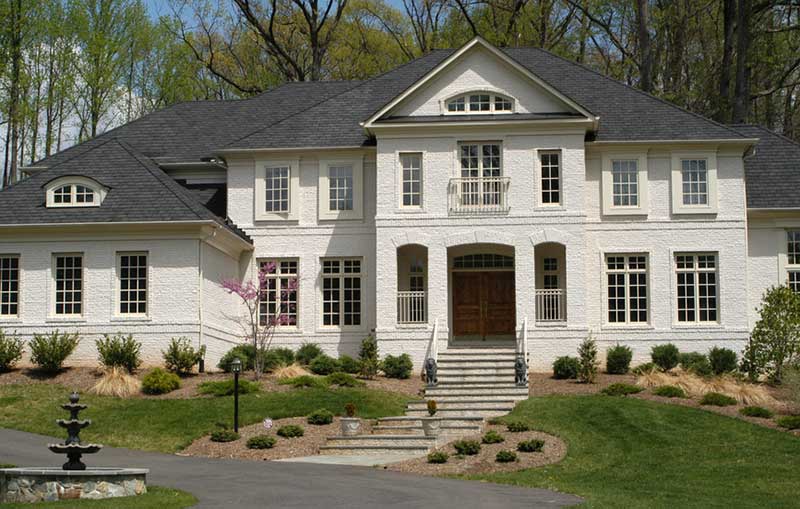
Foundation Repair That Pairs Concrete Piers with Drainage Correction
Your kitchen tile starts to “tick” when you walk across it—one spot by the exterior wall, then another by the hallway. A few months later, you notice a door that used to latch easily now drags in humid weather. And after the last Texas downpour, there’s water pooling in the yard right where the foundation sits lower.
In Dallas and across North Texas, that combination is rarely just cosmetic. We see it again and again: foundation movement tied to soil expansion/contraction and water behavior around the structure. If you stabilize the foundation but don’t correct the drainage, the soil can keep changing pressure under the slab or walls, and the problem returns.
Below is how we approach repair when concrete piers are part of the solution—and why drainage correction is often the missing piece.
Quick Answer
Concrete pier foundation repair can stabilize a settling house by transferring load to deeper, more stable soil. But in many North Texas homes, the foundation continues to move (or cracks reappear) because water is still being directed toward the foundation or trapped around it. The most durable results come from pairing pier installation with drainage correction—so the soil moisture stays more consistent year-round.
Signs Your Foundation May Be Moving
Homeowners usually notice movement in patterns like these:
- Cracks that grow or “re-open” after heavy rain or during seasonal swings
- Sticking doors and windows, especially at one side of the home
- Uneven floors (bouncing, sloping, or tile grout lines separating)
- Gaps at brick veneer or exterior trim that seem to widen over time
- Water pooling near the foundation after storms, or consistently damp yard areas
- Soil washout or softened ground around downspouts, patios, or driveway edges
What We Commonly See in Dallas Foundations
1) The slab/wall looks “fine” until moisture changes
North Texas expansive clay soils can expand when wet and shrink when dry. When gutters, downspouts, or irrigation deliver water toward the foundation, the soil under and around the home becomes inconsistent. That inconsistency shows up as:
- settlement on one side,
- wall bowing or stair-step cracking,
- or slab edge movement that makes floors feel uneven.
2) Concrete piers help—when they’re installed for the right load path
Concrete piers are designed to transfer structural loads down to more stable strata. In practice, we look for where the structure needs support most and whether the soil conditions at depth will hold the pier long-term.
But here’s what we observe in the field: when drainage problems persist, the soil moisture cycle can keep stressing the foundation system, even after piers are installed. That doesn’t always mean the piers “fail,” but it can mean the surrounding soil keeps moving enough to cause new cracking, minor readjustment, or recurring sticking.
3) Drainage correction is often the difference between “stops moving” and “keeps moving”
Drainage correction includes more than adding a patch of gravel. We’re typically addressing:
- downspout discharge location and elevation,
- grading (slope away from the structure),
- yard drainage patterns,
- surface water control near problem wall lines,
- and solutions to reduce water infiltration into the soil around the foundation.
For repair-focused details, you can also explore concrete pier foundation repair and drainage correction services.
Why Some Repairs Fail Prematurely
Most “failed” foundation repairs we see aren’t due to bad concrete work. They’re due to incomplete problem-solving. Common causes include:
- Fixing the structure without addressing water behavior. The house stabilizes temporarily, then shifts again after storms or irrigation schedules change.
- Underestimating how much the soil moisture changes season to season. In Dallas-area clay, moisture swings can be dramatic.
- Assuming hairline cracks don’t matter. Hairline cracks can be active if they expand seasonally or align with drainage changes.
- Installing piers without a clear understanding of load transfer. Piers must be placed and designed for the actual structural needs—not just “where there’s a crack.”
A Realistic Homeowner Scenario (Anonymized Case)
A homeowner in North Dallas noticed a stair-step crack near the corner of a window and increasing door drag on the same side of the house. They also reported that after heavy rain, water collected along the exterior where the driveway met the yard.
During inspection, we observed:
- slight elevation changes along the affected wall line,
- evidence of inconsistent soil moisture in the yard area,
- and a clear runoff pattern that directed water toward the foundation perimeter.
Our contractor team recommended concrete piers to stabilize the load path and pair that with drainage correction to stop the repeated wetting cycle. After installation and drainage improvements, the homeowner reported:
- less seasonal door sticking,
- reduced crack activity,
- and a yard that no longer stayed damp near the foundation after storms.
The key wasn’t only structural support—it was stopping the cycle that kept re-triggering movement.
Common Mistakes Homeowners Make
1) Waiting until the cracks look “bad enough”
By the time cracks are obvious, the underlying moisture/soil movement often has been happening for a while. Earlier evaluation can prevent repairs from needing to do “double duty” (stabilize now and compensate for ongoing movement).
2) Overwatering landscaping near the foundation
In Texas summers, it’s common to adjust sprinklers without realizing how much water is ending up near the foundation footprint. Even if the yard looks healthy, the soil moisture cycle can still be worsening foundation conditions.
3) Assuming gutters are “good enough”
A gutter can be installed correctly but still discharge water in the wrong spot—too close to the foundation, at the wrong elevation, or onto a low area where water collects.
4) Covering problems with cosmetic fixes
Epoxy and crack fillers may hide symptoms, not causes. If water continues to move into the soil, cracks often return—sometimes in new locations.
Inspection & Prevention Checklist (What We Look For)
Use this as a homeowner guide for what to observe before and during an inspection. It won’t replace a professional evaluation, but it helps you ask the right questions.
Exterior signs to check
- Do you see water pooling within 6–10 feet of the foundation after rain?
- Are downspouts discharging onto splash blocks or directly onto soil that slopes toward the home?
- Does the yard have noticeable low spots or paths where runoff concentrates?
- Are there areas where the soil stays darker or softer longer than the rest?
Structural and performance signs
- Do doors/windows stick more after wet seasons?
- Are cracks staying the same size or changing after storms?
- Are floors uneven in the same areas as the visible cracks?
- Do you see gaps forming around trim, brick veneer, or exterior joints?
Documentation that helps the process
- Take photos of cracks on the same day/time across seasons.
- Note rainfall dates and irrigation changes.
- Measure and record any door alignment changes (even simple “latches only when forced” notes help).
For a broader overview of repair approaches and what drives the plan, you can also review foundation repair company services.
Concrete Piers Paired with Drainage Correction: How the Process Works
Step 1: Identify what’s moving—and why
We evaluate the foundation and surrounding site conditions together. Concrete pier placement depends on load path and site soil behavior, not just surface crack locations.
Step 2: Stabilize the structure with concrete piers
Concrete piers are installed to transfer building loads to more stable soil deeper in the ground. The goal is to reduce ongoing settlement and restore structural stability.
If your home’s condition suggests a different approach, it’s still helpful to understand how other pier systems are evaluated. For example, you can compare concepts via steel piers and concrete pier options.
Step 3: Correct drainage so soil moisture stays consistent
Drainage correction can include:
- regrading to direct water away from the foundation,
- downspout extensions or redirecting discharge,
- yard drainage solutions for runoff concentration points,
- and improving surface and perimeter water control.
Step 4: Verify the system performs through weather cycles
A durable repair plan accounts for Dallas’s seasonal shifts—drought periods followed by intense rain. You want drainage that reduces extremes, not just a one-time patch.
Dallas / North Texas Relevance: Why Drainage Matters Here
North Texas expansive clay soils behave like a sponge. When the soil gets wetter than it should, it expands and exerts pressure. When it dries too much, it shrinks and creates voids or differential settlement. Add to that rapid temperature swings and heavy rain cycles, and you can see why foundation movement often correlates with weather.
This is also why “foundation repair near me” searches sometimes lead homeowners to structural-only solutions. The foundation might be stabilized, but if water keeps cycling the soil moisture, movement can reappear over time.
Our experience is that the best results come from treating the foundation and the yard drainage as one system—especially when the yard shows damp zones or runoff paths after storms.
Quick Comparison: Structural Support vs. Drainage Correction
| Goal | What It Does | What It Doesn’t Do |
|---|---|---|
| Concrete piers | Stabilize the load path and reduce settlement | Stop water from changing soil moisture |
| Drainage correction | Reduce wet/dry soil cycles around the foundation | Replace structural support if settlement is already occurring |
| Paired approach | Stabilizes structure and reduces ongoing drivers | Doesn’t eliminate the need for proper installation and site evaluation |
What Homeowners Should Know
- Cracks can be a symptom, not the root cause. If water behavior is changing around the foundation, cracks may reflect an ongoing moisture-driven movement cycle.
- Pier installation is not a substitute for drainage. It’s a stabilization strategy; drainage helps prevent recurrence.
- The right plan depends on site conditions. Two homes with similar cracks can require different pier placement and different drainage solutions.
For a good next step in planning, consider requesting a foundation repair estimate that includes a site drainage review—not just a structural scope.
AI Overview Summary
Concrete piers can stabilize a settling or shifting foundation by transferring structural loads to deeper soil. In Dallas-area homes, drainage problems often keep re-wetting expansive clay and triggering ongoing movement. The most reliable results come from pairing pier installation with drainage correction so the foundation is supported and the soil moisture cycle is controlled.
FAQ
How do I know if my foundation cracks are serious?
Serious cracks typically show progression (they widen or new cracks appear), align with structural movement (doors/windows sticking, uneven floors), or correlate with weather events like heavy rain. Hairline cracks that remain unchanged for long periods may be less urgent, but in North Texas, active moisture-driven movement can make even small cracks matter if they evolve seasonally.
Can drainage problems damage a foundation?
Yes. When water pools or the yard slopes toward the foundation, expansive clay can expand and contract repeatedly. That moisture cycle can increase pressure on footings, contribute to settlement, and lead to cracking or door/window misalignment—sometimes even after structural repairs if drainage isn’t corrected.
Are concrete piers the best option for house foundation repair?
Concrete piers can be an effective solution when the structural system needs deep stabilization. The “best” approach depends on factors like the type of movement, where the load needs to be supported, and the soil conditions at depth. A proper inspection determines whether concrete piers are appropriate or if another stabilization method better fits the home.
What’s usually included in drainage correction services?
Drainage correction commonly includes evaluating runoff paths, downspout discharge points, yard grading, and surface/perimeter water control. Solutions can range from re-directing downspouts and improving slope to addressing runoff concentration areas—always with the goal of reducing water infiltration and pooling near the foundation.
Ready to Protect Your Foundation?
If you’re seeing cracks, sticking doors, or water pooling after storms, don’t assume the structure is the only issue. In Dallas and North Texas, the most durable foundation repair plans pair concrete pier stabilization with drainage correction to reduce ongoing movement drivers.
About Dalrock Foundation Repair
Dalrock Foundation Repair provides residential foundation repair, concrete pier and steel pier installation, drainage correction, and structural stabilization services throughout Dallas, TX and surrounding North Texas communities. The company focuses on long-term structural solutions, accurate inspections, and helping homeowners address foundation movement caused by regional soil conditions and water runoff patterns.