
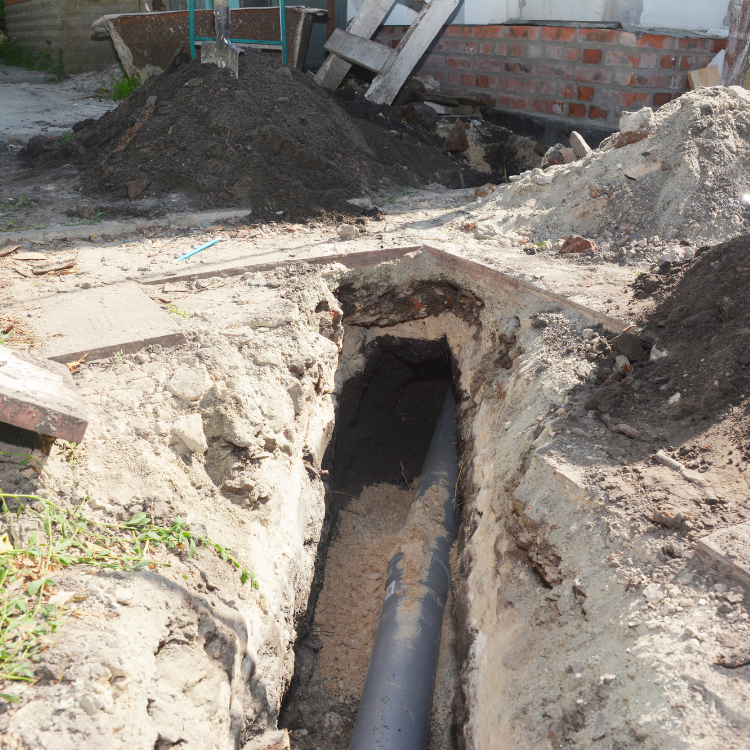
Lift, Align, and Protect: Steel Pier Foundation Repair
A few weeks after a heavy spring rain, you notice new cracks near the corners of a window—nothing dramatic at first. Then you start seeing doors that don’t latch smoothly, and the tile in the entryway looks slightly “out of level.” In Dallas and across North Texas, that combination—water exposure, seasonal soil movement, and settling—often points to a foundation that’s no longer stable.
When the movement is tied to load-bearing issues, steel pier foundation repair can be one of the most reliable ways we stabilize and lift a home back toward alignment. In this article, I’ll explain how steel piers work in real-world conditions, what to expect during an inspection, and how drainage corrections often determine whether the repair holds long-term.
Quick Answer
Steel piers are installed to transfer your home’s weight to deeper, more stable soil layers (or to reach competent bearing strata). If your foundation has settled due to weak soil under the slab or settling footings, steel pier foundation repair can lift and stabilize the structure, reduce further cracking, and help restore functionality (doors, floors, and alignment).
For many Dallas-area homes, the steel pier system works best when paired with drainage correction—because water around the foundation can keep the soil swelling/shrinking and driving movement.
Signs Your Foundation May Be Moving
Here are the patterns we see most often in North Texas homes—especially when soil moisture cycles are involved:
- Cracks that widen over time, particularly near corners of windows and doors
- Sticking or misaligned doors/windows
- Uneven floors (tile lippage, laminate “bouncy” spots, or noticeable slope)
- Separation at brick veneer or exterior trim
- New or worsening cracks after drought-to-rain transitions
- Gaps around baseboards or interior sheetrock that keep returning
- Plumbing symptoms: slow drains, recurring clogs, or toilet wobble (not always, but worth noting)
Why Steel Pier Foundation Repair Works (and When It Doesn’t)
Steel piers are designed to stabilize the foundation by transferring loads to stronger soil at depth. Unlike surface-level fixes (like patching cracks or leveling with cosmetic grouting), a pier system addresses the “why” behind settlement: uneven support from the ground.
How we typically approach steel pier underpinning
During inspection, we look for:
- Where the foundation has dropped relative to other areas
- Whether the movement is consistent with localized bearing failure (common with slab-on-grade and certain footing setups)
- Soil behavior indicators (moisture-related movement, seasonal swelling/shrinking)
- Drainage patterns that keep soils wet or repeatedly saturated
Then we design the pier layout to support and stabilize the affected areas. In many cases, piers are paired with targeted stabilization methods to help bring the structure back toward level.
A firsthand observation from the field
One of the most common things I see during site evaluations: homeowners focus on the crack itself, but the real issue is often the pattern of moisture. On several Dallas-area properties, the slab movement matched where downspouts discharged near the foundation, where grading sloped toward the home, or where yard drainage problems kept the soil damp for long stretches. In those situations, piers can stop the structural problem—but without drainage correction, the soil keeps “working,” and the foundation may continue to experience stress.
Industry context (so expectations are realistic)
Most foundation specialists reference the same high-level reality: movement is usually driven by soil and water, while the foundation is the structure responding to that movement. The Federal Emergency Management Agency (FEMA) also emphasizes that foundation performance is heavily influenced by soil moisture and drainage practices (FEMA guidance on building foundations and site drainage). For homeowners, that means repairs should be designed as a system—not just a structural patch.
What Homeowners Often Ignore
1) Drainage problems around the foundation
Many homes in North Texas sit on expansive clay soils that expand when wet and contract when dry. Even if your foundation already has a repair history, ongoing moisture can reintroduce movement.
2) Landscaping and “helpful” grading
A well-meaning regrade, new mulch bed, or decorative landscaping berm can redirect runoff. If water ends up near the foundation, the soil cycles intensify.
3) Waiting for “proof”
Cracks sometimes appear quickly, then slow down. Homeowners interpret the slowdown as “it stopped.” But we often see movement resume after the next heavy rain cycle or drought recovery period.
Mistakes That Make Foundation Problems Worse
Common mistake homeowners make: relying on leveling alone
A frequent scenario: a contractor levels a section of interior floor or fills cracks, but the underlying support issue remains. Without addressing load transfer and soil moisture, the home can settle again—sometimes subtly at first, then noticeably later.
Another common mistake is installing piers without a drainage plan. Steel piers can stabilize a foundation, but they can’t control soil behavior caused by recurring water intrusion. If the area around the foundation stays saturated, the soil can continue to expand and contract, putting the structure under repeated stress.
Other missteps we see
- Sealing cracks repeatedly without monitoring whether they return and widen
- Ignoring exterior settlement cues (brick separation, soil gaps, or pooling)
- Forgetting gutters/downspouts or extending them incorrectly after landscaping changes
- Assuming “it’s only cosmetic” when doors, floors, and window alignment disagree with that assumption
Inspection & Prevention Checklist (What We Look For)
If you’re trying to decide whether you need steel pier underpinning or drainage correction, use this checklist as a starting point. It mirrors what our inspection process focuses on:
Quick exterior observations
- Are there gaps between brick veneer and window/door frames?
- Does water pool near the foundation after rain?
- Are downspouts discharging too close to the home?
- Is the yard grading sloped toward the foundation?
- Do you see soil washout or eroded areas near corners?
Interior indicators
- Do any doors stick at the top or bottom?
- Are floors sloped in the same areas where cracks appear?
- Are cracks staying the same or slowly widening?
- Do you notice recurring drywall “stress” patterns near corners?
Documentation that helps
- Take photos of cracks with dates
- Note the last drought/rain timeframe
- Track whether doors/floors change after storms
If you’d like to explore related options, you can also review steel pier foundation repair and how steel pier installation is planned for stable support.
Dallas / North Texas Relevance: Why Soil Cycles Matter
North Texas expansive clay soils are notorious for changing volume with moisture. During drought periods, soil can shrink away from foundations. Then after heavy rains, it expands again—sometimes unevenly.
That’s why we often see movement patterns tied to:
- rapid temperature swings and seasonal shifts
- large rain events that saturate soil quickly
- areas with poor drainage solutions
- older neighborhoods where grading and drainage patterns may have shifted over time
A practical takeaway: if your home’s movement correlates with weather cycles, structural repair and drainage correction should be evaluated together. Otherwise, the soil keeps “reheating” the problem.
For homeowners looking to address water-related instability, consider drainage correction services as part of the overall stabilization plan.
Residential Example: Anonymized Steel Pier Underpinning Case
Here’s a realistic example based on patterns we commonly see (details adjusted for privacy):
A homeowner in the Dallas area reported:
- diagonal cracks near a front window corner
- doors that began sticking after heavy rainfall
- a slight slope in the entry tile and hallway
On inspection, we found the settlement pattern was not uniform—it was concentrated near specific load paths. Soil moisture indicators and exterior runoff observations also suggested that water was staying near the foundation longer than expected after storms.
Repair approach:
- Install a steel pier system targeted to the areas showing the greatest loss of support
- Stabilize and lift the foundation toward improved alignment
- Address yard drainage correction so runoff no longer fed moisture around the foundation
Outcome:
After the stabilization work, the doors no longer caught, and cracks stopped progressing. Most importantly, the homeowner noticed that after subsequent rain cycles, the problem did not “return” with the same intensity—because the moisture driver had been corrected.
Steel Piers vs. Concrete Piers (Quick Comparison)
Both can be effective, but selection depends on site conditions, soil behavior, and design needs. Here’s a simplified comparison homeowners can use when discussing options:
| Factor | Steel Piers | Concrete Piers |
|---|---|---|
| Primary goal | Transfer load to deeper stable support | Transfer load to deeper stable support |
| Typical use | When deeper, engineered stabilization is needed | When concrete pier underpinning is appropriate for the conditions |
| Installation planning | Requires precise layout and bearing considerations | Requires proper installation depth and support bearing |
| Best paired with | Drainage correction to reduce recurring movement | Drainage correction to reduce recurring movement |
If you want to explore other options, you can compare with concrete pier foundation repair and how concrete pier installation is planned.
What Actually Causes Ongoing Movement
Even after a repair, movement can continue if the root drivers aren’t addressed. In North Texas, ongoing movement commonly comes from:
- Water around the foundation (gutters, downspouts, grading, and yard drainage problems)
- Expansive clay moisture cycling that changes bearing conditions over time
- Uneven support where one area is corrected while another remains vulnerable
- Insufficient inspection depth—missing a deeper support deficiency that only becomes obvious after load transfer begins
That’s why we like to look beyond the visible cracks and confirm the underlying structural stability.
Key Takeaway
Steel pier foundation repair can stabilize and lift a settling foundation, but long-term success in Dallas typically depends on treating the full problem: structural support plus drainage correction.
If you’re deciding between repair options, start by matching the solution to what’s actually happening under your home—not just what’s visible on the surface.
Optional: Foundation Repair Services That Often Pair Well
Many homeowners benefit from a coordinated approach. Depending on the findings, you may see recommendations that include:
- structural stabilization and pier installation services
- concrete support solutions where appropriate
- drainage improvement services to manage runoff
You can explore additional details through foundation repair services and how teams evaluate the full system before proposing a plan.
FAQ
How do I know if my foundation cracks are serious?
Cracks become more concerning when they grow over time, appear alongside sticking doors or uneven floors, or show separation near corners of windows/doors. In Dallas-area homes, also watch for cracks that worsen after drought-to-rain cycles. A serious crack usually comes with a pattern—one that aligns with settlement, not just minor shrinkage. A proper inspection looks at both structure and moisture conditions, not just crack width.
What causes foundations to shift in Dallas?
The biggest drivers are expansive clay soil moisture cycling and drainage problems. Drought periods can cause shrinkage, then heavy rain can cause expansion. If water runoff concentrates near the foundation due to grading, downspouts, or yard drainage issues, the soil can move unevenly and stress the structure.
Are steel piers better than concrete piers?
“Better” depends on your site conditions. Steel piers are commonly used when engineered deep support is needed and when the design requires specific load transfer. Concrete piers can also work well in many situations. The correct choice comes from a detailed inspection of settlement pattern, soil behavior, and bearing requirements—not from a one-size-fits-all recommendation.
Can drainage problems damage a foundation?
Yes. Poor drainage solutions can keep soil around the foundation too wet or repeatedly saturated, which increases expansion/contraction cycles. Even after structural repairs, unresolved water drainage correction can contribute to recurring movement, new stress cracks, or new misalignment.
Ready to Protect Your Foundation?
If you suspect settlement, sticking doors, or crack activity after North Texas weather swings, the best next step is a focused inspection that considers both structure and water. Early planning often prevents “patch-and-pray” repairs and supports long-term home protection.
About Dalrock Foundation Repair
Dalrock Foundation Repair provides residential foundation repair, steel pier foundation repair, concrete pier foundation repair, and drainage correction services throughout Dallas, TX and surrounding North Texas communities. The company focuses on accurate inspections, engineered stabilization, and addressing foundation movement caused by regional soil and drainage conditions—helping homeowners protect their homes with long-term solutions.