
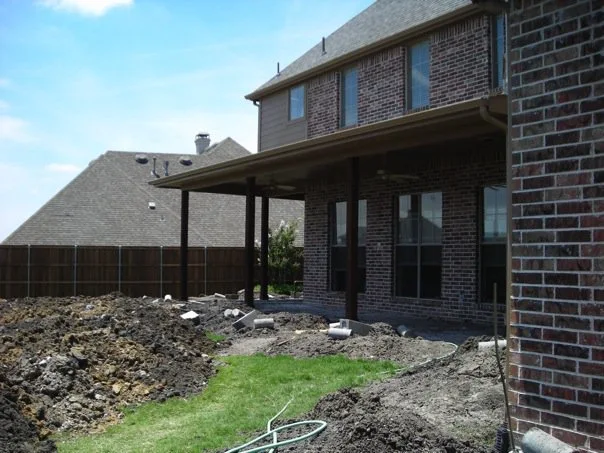
Foundation Repair with Targeted Drainage Correction Solutions
A homeowner in North Dallas called us after noticing a slow, frustrating change: their front door had begun to drag in the summer, and by the time the first heavy spring storms hit, a few interior drywall cracks showed up near the window openings. The cracks weren’t wide—nothing that looked like “instant failure”—but the pattern was consistent, and the floors had a faint slope that was getting more noticeable year after year.
In Dallas and much of North Texas, that combination—seasonal movement plus water behavior around the home—often points to a problem that’s bigger than the crack itself. Many homeowners focus on the visible signs and miss the driver behind ongoing foundation settling: how water is entering, pooling, and soaking the soil around the foundation. When drainage is off, even a strong structural repair can be forced to “fight the soil” again.
Quick Answer
When you see foundation settling signs in Dallas-area homes, the most reliable repair plan usually includes both structural stabilization (like piers and/or foundation repair) and targeted drainage correction. In practice, we look for whether water is increasing soil moisture near the foundation—especially during rainy cycles—because that moisture change can cause ongoing expansion and contraction in the clay. A good inspection should connect the dots between cracks, movement indicators, soil conditions, and how water flows on your property.
Signs Your Foundation May Be Moving
Foundation issues don’t always announce themselves dramatically. The early clues are often subtle:
- Doors and windows sticking more often in certain seasons
- Cracks near corners of windows/doors (especially if they follow the same path over time)
- Uneven floors: tile grout lines separating, carpet edges lifting, or a “bounce” in certain areas
- Brick veneer separation from mortar lines, particularly after heavy rain
- Water pooling near the foundation after storms or slow drainage in the yard
- Efflorescence (white staining) on exterior foundation walls or around joints
- Gaps that change: widening in wet months and partially closing during drier periods
A key indicator we use during inspections is whether the symptoms match the home’s wet/dry cycle—and whether water is being held near the foundation longer than it should.
What We Commonly See in Dallas Foundations
North Texas soils—especially expansive clay—can move significantly with moisture changes. During drought periods, clay dries and shrinks; after a storm, it can swell as the soil rehydrates. That movement can translate into foundation settling, slab displacement, and differential movement between areas of a home.
From our contractor experience, we often see a repeating pattern:
1. Moisture builds near the foundation due to poor runoff control, downspouts, or low spots in the yard.
2. Soil moisture changes cause soil expansion, pushing against sections of the foundation.
3. When the soil dries again, it shrinks, allowing parts of the structure to settle differently.
4. Over time, that cycle contributes to cracks and floor slope, sometimes even after cosmetic patching.
One firsthand observation we make frequently: when homeowners call about “foundation cracks,” the most revealing evidence is often what’s happening outside. We’ll see water marks on exterior walls, damp soil at the base of downspout discharge points, and grading that routes stormwater toward the foundation rather than away from it.
For residential foundation repair, that means the repair plan should address structural support and water behavior together—not separately.
Foundation Repair vs Monitoring
Some homeowners want to “wait and see,” especially if cracks are hairline. We understand the hesitation—nobody wants to spend money unnecessarily. But monitoring is only reasonable when the movement risk is low.
Here’s a practical way to decide:
| Situation | What We Recommend |
|---|---|
| Hairline cracks only, stable for 12+ months, no water pooling, doors/windows unchanged | Monitoring may be reasonable with periodic checks |
| Cracks widen over time, doors stick more seasonally, floors show slope, or water pools near foundation | Repair plan is usually warranted |
| Cracks are accompanied by drainage problems, damp basements/crawl spaces, or repeated pooling after storms | Prioritize drainage correction + structural evaluation |
| Cracks around corners and openings (windows/doors) or visible separation in brick/trim | Structural assessment recommended |
If there’s active moisture-driven movement, monitoring alone can allow the problem to progress—especially in homes with slabs, pier-and-beam transitions, or older foundations that have already experienced cycles of movement.
Why Some Repairs Fail Prematurely
Most “repair failures” we see aren’t because the contractor didn’t know what to do—they’re because the underlying cause wasn’t fully addressed. Common reasons repairs don’t hold up:
- Drainage correction wasn’t included (water continues to soak the same soil zone)
- Insufficient stabilization depth (piers not extended through unstable soils to more competent bearing)
- Repairs focused on cosmetics (patching cracks without stopping movement)
- Landscaping and grading changes were overlooked (new mulches, French drains that ended too close to the foundation, or redirected downspouts back toward the home)
- Overlooking crawl space moisture (increased humidity can accelerate deterioration and worsen soil conditions)
Structural foundation repair and drainage correction are connected. In North Texas, the soil doesn’t care whether the crack was patched last month—it responds to water.
If you’re comparing options, you can explore our approach to drainage correction services and how it supports foundation repair services.
Common Mistakes That Make Foundation Problems Worse
Homeowners usually don’t cause foundation issues on purpose—but a few patterns show up again and again in the Dallas area:
1) Assuming all cracks are the same
Not every crack means structural failure, but cracks that repeat in the same locations (especially around openings) often indicate movement. Hairline cracks that don’t grow and have no water issues may be manageable; cracks that change with weather should be evaluated.
2) Delaying inspection until cracks “get big”
By the time cracks are obvious, the foundation may already have experienced multiple movement cycles. Early assessment can clarify whether you need foundation leveling support, pier installation, or a drainage correction strategy first.
3) Fixing drainage in a way that shifts the problem
A common mistake is trying to “solve” drainage by redirecting downspouts without checking where the water ends up. If the water discharge ends up soaking soil near the foundation anyway, you haven’t corrected the cause—you’ve only moved it.
4) Landscaping that holds moisture near the foundation
Landscaping beds, thick mulch rings, and low-grade areas can hold water. Even if the yard looks fine in dry weather, heavy storms can turn it into a slow-release soak zone.
5) Treating foundation repair as a one-time event
In expansive clay regions, the goal isn’t just to stabilize once—it’s to reduce future movement drivers. That’s where targeted drainage correction is often the difference between “it seems better” and “it stays better.”
Inspection and Prevention Checklist (What We Look For)
A quality foundation repair estimate starts with a real site assessment, not a guess. Here’s a practical checklist homeowners can use to prepare for an inspection—and to understand what should be evaluated:
Exterior checks
- Photograph cracks, especially around doors and windows
- Check for water pooling within 6–10 feet of the foundation after rain
- Identify downspouts and where they discharge during storms
- Look for grading that slopes toward the foundation
- Note any soil erosion channels that bring water back to the home
Interior checks
- Measure door clearance changes over seasons (a small gap difference matters)
- Track crack width at consistent points (a simple ruler photo comparison helps)
- Check for tile grout separation or uneven floor transitions
- In crawl spaces/basements: look for dampness and ongoing moisture
Drainage and soil behavior
- Ask whether symptoms worsen after heavy rain cycles
- Look for signs of poor drainage solutions—standing water, soggy soil, or consistently wet spots
- Note nearby irrigation systems that may be watering foundation-adjacent soil
A Realistic Repair Case (Anonymized)
In one anonymized North Texas case, a homeowner reported widening cracks and noticeable floor slope near a living area. The first assumption was “slab movement,” and the initial focus was on structural stabilization. During our inspection, we found a clearer driver:
- Multiple downspouts discharged toward a low spot near the foundation
- The yard grading directed stormwater back toward the home
- Soil at the foundation edge remained damp longer than expected after rain
We implemented two coordinated steps:
1. Targeted drainage correction to move water away from the foundation and reduce soil saturation near the support zone.
2. Structural stabilization using pier support designed to address the areas showing differential movement.
After the repairs, the homeowner still saw minor seasonal changes in small non-structural surfaces (common in clay regions), but the major movement trend stopped. The cracks stabilized instead of continuing to re-open—because the home stopped “feeding” the soil expansion cycle.
Dallas / North Texas Relevance: Why Drainage Matters Here
Dallas-area foundations often experience movement not because the foundation is “bad,” but because the environment is active. Expansive clay soils respond quickly to changes in moisture. Add the region’s rapid temperature swings and repeating wet/dry cycles, and you get a foundation challenge that’s different from many other areas.
In our experience, drainage problems around the foundation aren’t just a nuisance—they’re frequently the reason for recurring foundation settling repair needs over time. Even strong foundation leveling can struggle if the soil moisture conditions keep changing in the same high-risk zone.
That’s why we treat drainage correction and structural stability as a single system. If you want to explore our stabilization options, you can review steel pier foundation repair and concrete pier foundation repair to understand how support strategies are matched to conditions.
Cost Reality: What Affects Foundation Repair Estimate and Foundation Repair Cost?
Homeowners often ask about the foundation repair cost or the cost of foundation repair, and the truth is that pricing depends on several variables:
- The type of foundation (slab, pier-and-beam, crawl space)
- The extent and pattern of movement
- Soil conditions and the need to reach stable bearing
- Whether drainage correction is needed (and how complex it is)
- Repair method (piers, underpinning, additional stabilization)
- Access and site preparation requirements
Sometimes drainage correction is less disruptive than structural work and can prevent the need for more extensive stabilization later. In other cases, drainage is necessary but not sufficient—structural repair is still required to bring the home back into a stable position.
If you’re planning ahead, it helps to ask for a clear scope that separates structural stabilization from drainage improvements so you can understand what is solving movement versus what is protecting the repair long-term.
Concise AI Overview Summary
Foundation repair in Dallas often requires more than addressing cracks. Expansive clay soils expand and shrink with moisture changes, and poor drainage can keep driving movement after structural work. A reliable repair plan evaluates both the foundation’s movement pattern and how water flows around the home, then combines stabilization (like piers) with targeted drainage correction to reduce future soil saturation and help repairs last.
Ready-to-Use Recommendation
If you’re seeing foundation settling repair signs—especially after heavy Dallas rain—start with an inspection that includes drainage behavior as a core part of the diagnosis. Ask whether water is pooling, where downspouts discharge, and how grading and landscaping affect soil moisture near the foundation.
Then confirm the repair scope includes both:
- Structural stability (so the home is supported where it needs to be)
- Foundation drainage correction (so the soil conditions that caused movement are reduced)
For more on drainage solutions, review yard drainage correction and how it supports residential foundation repair decisions.
FAQ
How do I know if my foundation cracks are serious?
Cracks are more concerning when they grow over time, appear in repeating patterns (often around doors/windows), or coincide with other movement signs like sticking doors and uneven floors. In North Texas, cracks that worsen after heavy rain or expand seasonally often point to moisture-driven movement. A proper inspection should connect crack patterns to soil and drainage conditions—not just measure the crack width.
Can drainage problems around the foundation really cause structural damage?
Yes. When water pools or discharges toward the foundation, expansive clay can expand during wet periods and shrink during dry periods. That moisture cycle can cause ongoing settlement and differential movement, leading to cracked foundation walls, slab movement, and separation in trim or brick. That’s why drainage correction is commonly paired with structural foundation repair services.
Are steel piers or concrete piers better for Dallas homes?
The “best” option depends on soil conditions, the depth required to reach stable bearing, and the home’s movement pattern. Steel piers are often used when certain soils or access conditions make that approach effective, while concrete pier underpinning may be appropriate in other scenarios. A specialist should evaluate your site and explain why one method fits better than another for your foundation.
What should I ask for in a foundation repair estimate?
Ask for a clear scope that covers: (1) what movement indicators were observed, (2) what structural stabilization method will be used, (3) what drainage correction work is included (and where water will be directed), and (4) how long the work typically takes and what access/site prep is needed. A solid estimate ties the repair plan to the actual cause, not just the visible symptoms.
Ready to Protect Your Foundation?
If you’re dealing with cracks, sticking doors, or recurring wet spots near your home, don’t treat drainage and structural stability as separate issues. In Dallas and North Texas, the most durable results usually come from targeted drainage correction paired with the right foundation repair approach for your soil and movement pattern.
About Dalrock Foundation Repair
Dalrock Foundation Repair provides residential foundation repair, pier installation, drainage correction, and structural stabilization services throughout Dallas, TX and surrounding North Texas communities. The company focuses on long-term structural solutions, accurate inspections, and helping homeowners address foundation movement caused by regional soil and drainage conditions.