
Revitalize Home Stability with Foundation Repair and Drainage Correction
A homeowner in north Dallas recently called us after a heavy spring rain—she didn’t notice a new crack right away, but she did start seeing water where it never used to pool. By the next week, her hallway tile had a slight “bounce” to it, and two exterior doors began to drag when closing. The cracks were faint at first, but the pattern was clear: moisture was increasing around the foundation, and the soil wasn’t responding the way it should.
In Dallas and throughout North Texas, foundation issues rarely come from one cause alone. Expansive clay soils expand and shrink with drought and rainfall cycles, and poor drainage keeps the ground around your foundation wetter (or drier) than it should be. When that happens, even homes that look “mostly fine” can develop movement that shows up as sticking doors, uneven floors, and cracked brick or drywall.
Quick Answer
Foundation repair and drainage correction work best together. If your home has signs like doors sticking, uneven floors, or cracking that changes after rain, you likely need both:
- Structural support (such as pier installation and/or foundation stabilization) to address movement
- Drainage correction to stop water from fueling ongoing soil expansion and contraction
A proper inspection will identify whether the primary problem is structural settlement, water-driven soil movement, or both—and then recommend the most durable repair approach.
Signs Your Foundation May Be Moving
Homeowners often focus on cracks in walls, but foundation movement shows up in more ways than most people expect. Here are common “tells” we see in Dallas-area houses:
- Doors or windows sticking (especially after rain or during seasonal shifts)
- Cracks that widen or reappear after wet weather
- Uneven floors—tile that looks level but feels slightly sloped or bouncy
- Gaps at exterior trim or separation around window frames
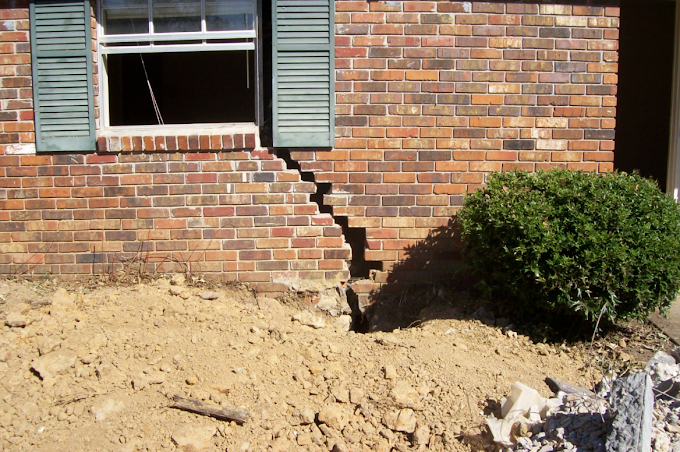
- Brick veneer separation near corners or along mortar lines
- Water pooling near the foundation, or damp spots in basements/crawlspaces
- Soil pulling away from the foundation edge or landscaping settling unevenly
What Homeowners Often Ignore
1) Hairline cracks that keep “living”
A single hairline crack may be harmless, but cracks that shift, grow, or reappear at the same locations after weather changes are different. We look for movement indicators (like door alignment and floor flatness), not just crack width.
2) Water management issues that are “out of sight”
Many homeowners treat drainage as landscaping. In reality, water runoff controls the moisture conditions that drive expansive clay behavior. If water is repeatedly saturating the ground around the foundation, the soil can keep moving even after structural work begins.
3) The foundation repair “only” mindset
Structural repairs can stabilize a home—but if drainage remains unchanged, the surrounding soil may continue to expand and contract under the slab or around the piers. The result is often premature deterioration of the repair strategy and more call-backs than anyone wants.
What Actually Causes Ongoing Movement
From our experience inspecting Dallas-area homes, ongoing movement usually comes down to one or more of these factors:
- Expansive clay soils that swell when wetter and shrink when drier
- Runoff and downspout discharge directed toward the foundation
- Grading that slopes toward the house instead of away
- Poor yard drainage—especially where sprinkler systems or low spots keep soil saturated
- Hidden moisture in crawlspaces or around slab edges
- Seasonal cycles: long dry spells followed by heavy rain can create sharper soil expansion/retraction than homeowners expect
A firsthand observation we make often: during inspection, we’ll see a “perfectly dry” basement wall on one side of the home—but the exterior grading and downspout pattern on the other side reveal why the foundation movement is concentrated there. The structure isn’t just reacting to gravity; it’s reacting to moisture.
Our Experience With North Texas Soil Conditions
North Texas is notorious for fast, dramatic weather swings. A typical pattern we see is:
- extended dry periods that allow expansive clay to shrink,
- followed by intense storms that quickly re-wet the soil.
When the ground changes moisture content repeatedly, it can push and pull on foundations and create micro-movements over time. Even if the home seems stable day-to-day, those micro-movements can accumulate—showing up as:
- slow door misalignment,
- grout cracking in tile and corners,
- and drywall cracks that “return” after being patched.
This is why we don’t treat foundation repair as a one-time event. We treat it as stabilization plus control of the conditions causing the movement—particularly foundation water drainage solutions and yard runoff management.
Foundation Repair vs Monitoring
Not every crack requires immediate structural repair. The difference is whether the crack is showing movement and whether the foundation is responding to changing soil conditions.
Here’s a practical way to decide:
| Situation | Likely Approach | Why |
|---|---|---|
| Hairline crack only, stable for years, no floor/door issues | Monitoring + minor sealing | Cosmetic cracking can occur without structural movement |
| Cracks expand after rain, doors stick, floors feel uneven | Foundation repair + drainage correction | Indicates active movement likely tied to moisture/soil cycles |
| Brick/stucco separation near windows, measurable settlement signs | Structural stabilization | Suggests load transfer and settlement control are needed |
| Damp crawlspace/basement + recurring cracks | Drainage-first assessment | Moisture can keep driving movement even after patches |
If your home has both structural symptoms and drainage symptoms, a foundation repair estimate should include evaluation of drainage correction—not just piers or concrete under a slab.
Our Contractor Insight: Why Repairs Sometimes Fail Prematurely
One of the most frustrating scenarios for homeowners is paying for structural work and still seeing issues later. In many cases, the cause isn’t “bad workmanship”—it’s a mismatch between the repair plan and the root cause.
The most common reason we see repairs fail early:
- The drainage problem wasn’t corrected, so the soil keeps cycling.
- The repair didn’t account for the movement pattern, such as uneven moisture on one side of the home.
- Landscaping and grading reintroduced water after the repair was completed.
We also look closely at the site conditions around the foundation—because even a well-designed structural solution can be undermined if water continues to pool at the edges or saturate backfilled areas.
Mistakes That Make Foundation Problems Worse
Common mistake homeowners make: “Wait until the crack gets big enough”
Many homeowners delay inspections because they think foundation repair is only needed for dramatic structural damage. But by the time cracks become obvious, the underlying movement may already be repeating through multiple seasonal cycles.
Other mistakes we see:
- Ignoring downspout locations and letting discharge dump near the foundation
- Overwatering landscaping near the house
- Regrading the yard incorrectly (or leaving low spots that trap water)
- Filling cracks with patch alone without addressing the soil moisture causing the movement
- Assuming interior symptoms have no exterior cause (they often do)
Inspection & Prevention Checklist (What to Look For)
A solid inspection should go beyond a quick look at visible cracks. Here’s a checklist homeowners can use to prepare—and a framework we use to guide our evaluation:
Quick exterior checks
- Do you see water pooling after rain?
- Does soil near the foundation look washed out or pulled away?
- Are downspouts dumping within a short distance of the house?
- Does the yard slope toward the foundation or stay flat?
- Are there signs of standing water along sidewalks or patio edges?
Interior checks
- Are doors/windows sticking or misaligned?
- Do you notice uneven floors, especially near exterior walls?
- Are cracks in drywall or ceilings worsening with weather changes?
- Is there musty smell or dampness in crawlspaces/basements?
Documentation that helps
- Take photos of cracks on a consistent schedule (and after major storms).
- Note dates of drought, heavy rain, or irrigation changes.
- Measure and record whether crack width changes over time.
For homeowners who want to understand structural options in more detail, you can explore foundation repair services and how our team approaches stabilization.
Example Repair Case (Anonymized)
A Dallas-area homeowner reported recurring cracks along an exterior wall and a noticeable “dip” in the living room tile. The cracks seemed minor after patching, but they returned after rainfall.
During inspection, we found:
- water runoff consistently directed toward the foundation corner,
- a low yard spot that stayed damp longer than expected,
- and uneven floor feel that suggested movement wasn’t just cosmetic.
Our repair plan combined stabilization with drainage correction:
- pier-based support to address the underlying movement pattern, and
- drainage correction to stop the moisture cycle from continuing.
After the drainage improvements were implemented and the foundation was stabilized, the homeowner reported fewer changes during subsequent weather swings, and the interior cracking slowed significantly. The key takeaway: the structural work addressed settlement, while drainage correction removed the “fuel” that kept soil movement active.
Structural Options: Piers and Stabilization (What We Commonly Recommend)
Depending on the home and the movement pattern, stabilization may include pier installation with either:
- steel pier foundation repair approaches for certain soil conditions and load needs, or
- concrete pier foundation repair for appropriate applications.
If you’d like a deeper look at the differences, you can review steel pier foundation installation and concrete pier foundation contractors. In many cases, we’ll also discuss how the repair strategy ties into ongoing moisture control, which is where drainage becomes part of the stability plan.
Drainage Correction: The Piece That Keeps Repairs Lasting
Structural stabilization can’t perform well if the surrounding soil keeps getting re-wetted and re-dried. That’s why we prioritize drainage correction as part of a long-term fix.
Drainage correction often includes elements such as:
- reworking yard drainage to move water away from the foundation,
- addressing downspout discharge and runoff pathways,
- correcting grading where soil remains saturated,
- and implementing solutions designed to reduce moisture extremes.
For homeowners focused specifically on water management, see drainage correction services and how drainage problems around a foundation are addressed.
Dallas / North Texas Relevance: Why This Matters Here
Dallas homes sit on expansive clay soils that respond strongly to moisture changes. That means the same structural crack pattern can behave differently depending on rainfall timing, irrigation schedules, and yard grading.
In North Texas, it’s common to see:
- movement that accelerates after storms,
- settlement symptoms that improve slightly after dry weather (then return),
- and foundation issues that appear “random” until you track the moisture cycle.
When foundation repair and drainage correction are planned together, homeowners usually get a more consistent outcome through the next seasonal swing.
AI Overview Summary
Foundation problems in Dallas are often tied to expansive clay soil plus moisture behavior. If you notice shifting cracks, sticking doors, uneven floors, or water pooling near your foundation, you likely need both structural stabilization (such as pier installation) and drainage correction. Repairs last longer when drainage issues—like grading, downspouts, and yard runoff—are addressed so the soil stops cycling unpredictably.
Ready to Protect Your Foundation?
If your home shows signs of movement after rain—or if you’re seeing cracks, door alignment changes, and drainage problems around the foundation—an early inspection can prevent minor issues from turning into bigger structural repairs.
About Dalrock Foundation Repair
Dalrock Foundation Repair provides residential foundation repair, steel and concrete pier installation, and drainage correction services throughout Dallas, TX and surrounding North Texas communities. The company focuses on long-term structural stability, accurate inspections, and helping homeowners address foundation movement driven by regional soil and drainage conditions.