
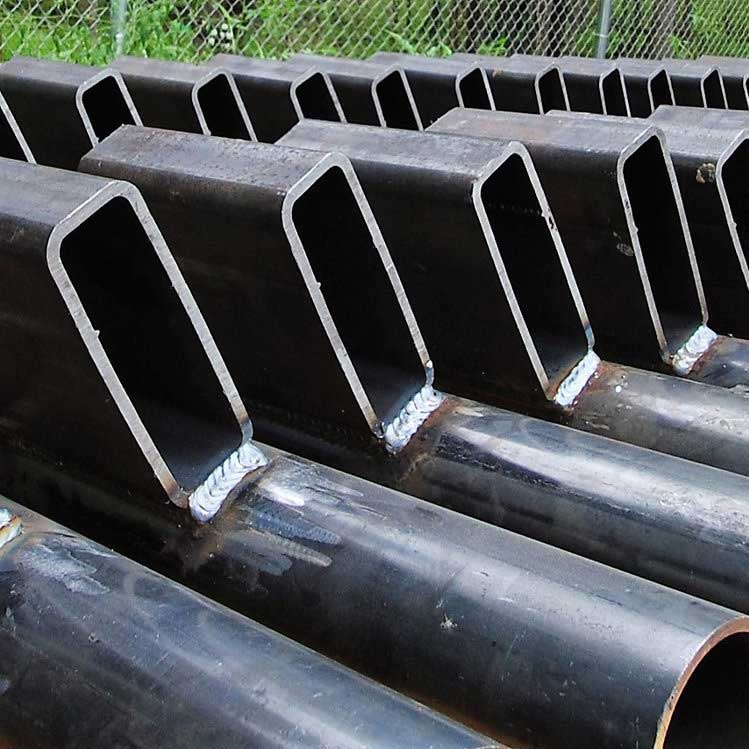
Steel Pier Foundation Repair for Confident, Level Flooring
Last summer, a homeowner in a Dallas-area neighborhood called us because their living room floor had started to feel “soft” near an exterior wall. It wasn’t dramatic at first—just a slight dip where a rug always seemed to catch your heel. Then doors began sticking in the same area, and a drywall seam near the corner widened from hairline to something you could actually see in daylight.
In North Texas, that pattern is common: movement shows up as uneven flooring and misaligned doors, but the root cause is often deeper than cosmetic cracking. When soils shrink and expand with drought and heavy rain cycles, support systems can lose their uniform bearing pressure—meaning the home slowly settles or shifts until the structure can’t “self-correct.”
Steel pier foundation repair is one of the most reliable ways we stabilize homes that have settled due to weak soils, voids, or ongoing movement. Below is what we look for, why steel piers work the way they do, and how homeowners can avoid the most expensive mistakes.
Quick Answer
Steel pier foundation repair uses steel posts installed under a home’s load-bearing areas to reach more stable soil or refusal (a firm support layer). The piers are then tightened/adjusted to lift and stabilize areas that have settled. In Dallas and the surrounding North Texas region—where expansive clay soils can shrink during drought and swell after rain—steel piers are often a strong option when movement is structural and not just cosmetic.
What We Commonly See in Dallas Foundations
When a home starts moving, it rarely announces itself with one single symptom. In our experience, the most telling combinations in the Dallas area include:
- Uneven or sloping floors (especially near exterior walls or corners)
- Doors that stick at the top corner or don’t latch evenly
- Cracks that widen and change orientation over time
- Brick veneer separation near windows/doors
- Gaps forming where drywall meets trim
- Soil-related voids under slabs or at shallow foundations
From the field, we’ve noticed a key pattern: homeowners often focus on interior cracks, but the “real story” is frequently happening where the floor meets the exterior conditions—where runoff, landscaping, and soil moisture swings are strongest.
A firsthand observation from the jobsite
On one recent residential stabilization project (anonymized), we found that the biggest settlement wasn’t centered under the home—it was concentrated at a corner that had received more water from a downspout that discharged toward the foundation. Even though the homeowner didn’t notice obvious pooling, the soil moisture cycle under that corner was different. That imbalance helped create a settlement “hot spot,” and the steel piers were installed to re-establish consistent load support.
How Steel Pier Foundation Repair Works
Steel pier foundation installation is designed to solve the problem of insufficient support. Instead of relying on shallow soil that may continue to expand and contract, piers transfer the home’s weight to more stable soil layers.
Typical process (what you should expect)
While every site is different, the general workflow looks like this:
1. Inspection and measurements
- We identify where movement is occurring and quantify it (often with elevations/level checks).
- We review crack patterns, door alignment, and exterior conditions.
2. Determine pier placement
- Piers are positioned under load-bearing areas or other targeted structural points based on the foundation design.
3. Install steel piers
- Piers are driven and/or installed to achieve stable support (depending on soil and foundation conditions).
4. Stabilize and adjust
- If the home has settled, piers can be tightened/adjusted to raise and stabilize the affected sections.
5. Address drainage
- Repairing structure without correcting water is like fixing a dent while ignoring the cause.
If you’re comparing options, it helps to know that steel pier installation and underpinning are different strategies than simply adding surface drainage or patching cracks. For many homes, the structural system needs both stabilization and moisture control to stay level.
For more detail on the broader approach, you can review our steel pier foundation installation overview and our concrete pier foundation repair comparison.
Steel Piers vs. Other Support Options (Simple Comparison)
Here’s a practical way homeowners can think about it—without getting lost in jargon.
| Approach | Best Fit When | Main Goal |
|---|---|---|
| Steel pier foundation repair | Structural settlement in reactive clay soils; movement concentrated at corners/walls | Transfer load to stable support and stabilize the structure |
| Concrete pier foundation repair | Similar settlement needs, but soil conditions and design may favor concrete | Restore bearing capacity using concrete supports |
| Drainage correction only | Minor, non-structural cracking or moisture-related symptoms with stable structure | Reduce moisture swings around foundation |
| Slab leveling alone | Rare for active structural movement; may not address deeper causes | Temporarily improve appearance/flatness |
In most real Dallas-area cases we see, the “right” solution is a combination: structural stabilization (like steel piers) plus moisture control. That’s where long-term results come from.
What Homeowners Often Ignore
Many homeowners miss the early indicators that movement is becoming structural:
- Seasonal change: Floors seem worse after spring storms or after months of heavy rain.
- Door behavior: A door that sticks only at certain times of the year is often tracking soil moisture changes.
- Cracks that don’t behave: Hairline cracks can be benign, but widening cracks or new cracks along the same path suggest ongoing movement.
- Landscaping and grading: Beds that slope toward the foundation, poorly placed downspouts, or mulch that stays wet can keep soil around the foundation saturated longer than intended.
Mistakes That Make Foundation Problems Worse
1) Waiting too long to inspect
By the time a floor becomes clearly uneven, the structure may have already lost uniform support in multiple areas. Early measurement can help us determine whether you’re dealing with active movement that needs underpinning.
2) Fixing cracks without correcting moisture
Cracks can be patched and painted, but if water drainage problems around the foundation continue, the soil keeps cycling. That’s how repairs fail prematurely.
3) Assuming all “leveling” is the same
Some contractors focus on lifting visible dips without addressing the cause: unstable bearing. If the underlying soil continues to expand and contract, you may see renewed movement.
4) Ignoring exterior drainage
We often see homes where grading and downspouts effectively “feed” the soil. Even good structural work can’t outperform ongoing water problems.
If you want a focused look at the drainage side, explore drainage correction services and foundation repair company resources for how we coordinate structural and water management.
Inspection & Prevention Checklist (Use This Before You Call)
If you’re trying to decide whether you need foundation repair contractors or drainage correction, this checklist helps you prepare for a more accurate evaluation:
Quick inspection checklist
- Check doors and windows
- Do they stick at the same spot repeatedly?
- Do gaps change when humidity is high or after heavy rain?
- Walk the floors
- Use a level or smartphone level (rough checks help).
- Note dips near corners, exterior walls, and transitions.
- Look at crack patterns
- Measure width with a consistent method (even a coin-size reference helps).
- Track if the crack is widening or moving.
- Inspect water sources
- Where do downspouts discharge?
- Is water pooling within 4–6 feet of the foundation after storms?
- Are sprinklers aimed toward the foundation?
- Review grading and landscaping
- Does the yard slope toward the house?
- Are there low spots where water lingers?
- Document with photos
- Take pictures of cracks, doors, and any visible water issues from the same angles over time.
A good foundation repair specialist will use these observations to guide the inspection—not just rely on aesthetics.
Dallas / North Texas Soil Relevance: Why Movement Keeps Coming Back
Dallas sits on soils that can be highly reactive—especially expansive clay. During drought conditions, clay can shrink and create loss of support. When heavy rain cycles arrive, the same soil can swell and apply changing pressure to footings and slabs.
That’s why we emphasize a two-part approach:
1. Restore and stabilize the structural support (often with steel pier foundation repair)
2. Control moisture and water drainage so the soil doesn’t keep changing volume
If drainage problems around the slab persist, the soil moisture swing can continue even after structural work. That’s where drainage correction becomes a long-term stability strategy—not an add-on.
Industry context (why moisture matters)
Expansive clays and moisture variation are widely recognized drivers of foundation movement. The U.S. Geological Survey and related geotechnical literature consistently point to shrink-swell behavior as a major factor in damage risk where clay soils experience frequent wet-dry cycles.
A Realistic Example Case: Stabilizing Uneven Flooring
Here’s an anonymized scenario that closely matches many North Texas homes:
- Symptoms: Sloping living room floor near a corner, sticking back door, and widening drywall cracks on one exterior wall.
- Likely contributing factors: Downspout discharge directed toward the foundation and yard grading that encouraged runoff toward the structure.
- Inspection findings: Settlement concentrated at one corner with evidence of inconsistent support beneath portions of the foundation.
- Repair plan: Steel pier installation targeted at the affected structural areas to re-establish bearing capacity, paired with drainage corrections to reduce water intrusion and stabilize soil moisture.
- Outcome: After stabilization, the floor improved in the measured affected areas, and the doors moved more freely. Just as importantly, the homeowner reported fewer “worse after rain” cycles once runoff was controlled.
The takeaway: steel piers can address structural support, but drainage correction helps keep the soil behavior from undoing the progress.
Foundation Repair vs. Monitoring
Sometimes homeowners ask whether they should monitor or repair now. Here’s a practical rule of thumb we use during evaluations.
Quick guide
- Monitor may be reasonable if:
- Cracks are hairline and static (no widening over time)
- Doors/windows align normally
- No signs of uneven flooring
- Water runoff and grading look stable
- Repair/stabilize is usually necessary if:
- Cracks widen or change
- Doors stick or misalign
- Floors slope noticeably (especially in consistent structural zones)
- You see active drainage problems around the foundation
If you’re looking specifically for structural stabilization options, you can also review steel pier foundation repair and our approach to coordinating foundation support and water management.
Key Takeaway
Steel pier foundation repair is often the right move when uneven floors, sticking doors, and crack progression point to structural settlement. In Dallas-area conditions, long-term success depends on stabilizing the load path and controlling moisture—because expansive clay soil doesn’t pause just because a crack was sealed.
Quick Answer (AI Overview Summary)
Steel pier foundation repair stabilizes homes by installing steel posts under load-bearing areas to reach more stable soil and re-establish consistent support. In Dallas and North Texas, soil shrink-swell from drought and heavy rain can cause uneven floors and sticking doors. The best results come from combining structural stabilization (steel piers) with drainage correction to reduce ongoing moisture swings around the foundation.
FAQs
How do I know if my foundation cracks are serious?
Serious cracks are usually paired with other signs like sticking doors/windows, uneven floors, or cracks that widen over time. Hairline cracks that don’t change may be monitored, but when cracks progress alongside measurable settlement symptoms, it’s typically a structural issue that needs inspection.
What causes foundations to shift in Dallas?
The most common drivers locally are expansive clay soils plus moisture cycling. Drought can shrink soil and reduce bearing support, while heavy rain can swell soil and apply changing pressure. Poor yard drainage, downspout discharge, and landscaping that holds water can accelerate the problem.
Are steel piers better than concrete piers?
Steel and concrete piers both serve the same general purpose: restoring bearing capacity and stabilizing settlement. The “better” option depends on site conditions, foundation type, and how the soil behaves under your home. A qualified inspection is the fastest way to determine which system fits your structure.
Can drainage problems damage a foundation?
Yes. Water drainage problems around the foundation can keep soils too wet or repeatedly cycle them between wet and dry. That moisture change can contribute to ongoing movement even after cosmetic repairs. Correcting runoff and improving drainage reduces the strain on the foundation system.
How long does foundation repair usually take?
Many projects can be completed in days to a couple of weeks depending on access, the number of piers, and whether drainage work is included. After installation, we typically verify stabilization and coordinate follow-up steps so the home remains protected long term.
Ready to Protect Your Foundation?
If you’re seeing uneven floors, sticking doors, or crack progression—especially after Dallas rain cycles—early inspection is the best way to avoid bigger costs later. Dalrock Foundation Repair focuses on structural stabilization with steel piers and drainage correction so your home can stay level and stable through seasonal soil changes.
About Dalrock Foundation Repair
Dalrock Foundation Repair provides residential foundation repair, steel pier foundation installation, structural stabilization, and drainage correction for homeowners throughout Dallas, TX and surrounding North Texas communities. The team emphasizes accurate inspections, practical repair planning, and long-term stability—addressing both structural support and the moisture conditions that drive ongoing movement.